Your Feed Is Your New Moodboard: How Personal Style Is Shaping the Digital World
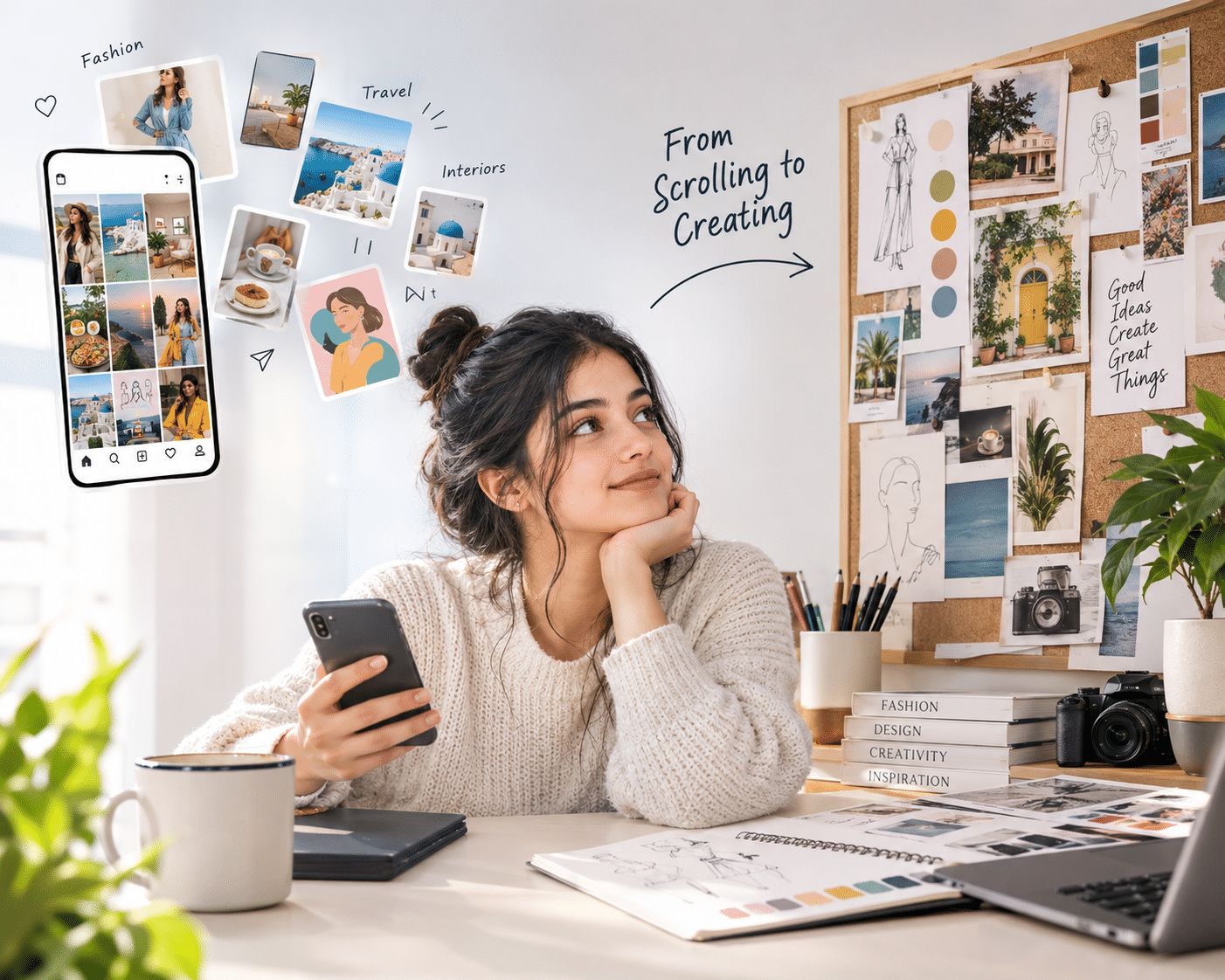
Scroll through social media for a few minutes, and you will probably see more than photographs. You will find outfit inspirations, beautifully designed rooms, creative illustrations, aesthetic café corners, travel edits, and short videos that make ordinary moments look extraordinary.
The internet has become a place where people do not just consume content. They use it to discover their interests, express their personalities, and experiment with new ideas.
This shift is creating exciting possibilities for students, artists, designers, and aspiring content creators. A simple interest in photography, fashion, or visual storytelling can become the beginning of a much larger creative journey.
From Scrolling for Inspiration to Creating Your Own Style
Social media makes it easy to discover different visual styles. One day, you might save pictures of minimalist interiors. The next, you may find yourself exploring vintage clothing, colourful illustrations, or cinematic photography.
These changing interests can become a personal moodboard—a collection of ideas, colours, textures, and references that reflect what inspires you.
However, developing a recognisable style involves more than copying popular posts. It means understanding why certain visuals appeal to you and learning how to interpret those influences in your own way.
For example, someone interested in fashion might combine traditional patterns with modern silhouettes. A budding graphic designer could experiment with bold typography and unusual colour combinations. Someone who enjoys interiors might explore how natural light and simple furniture create a welcoming atmosphere.
The possibilities begin with observation, but originality grows through experimentation.
Why Visual Content Is Everywhere
People often understand ideas more quickly when they can see them. A short video can demonstrate a styling technique, a series of photographs can tell a story, and a graphic can explain information in a simple format.
This is one reason visual communication matters across social media, digital marketing, entertainment, fashion, and design.
Brands use visual content to communicate their identity. Creators use it to share experiences and interests. Businesses also use social platforms to introduce products and help people discover new ideas.
In October 2026, Meta highlighted the growing role of social platforms, creators, and AI-assisted inspiration in India’s festive shopping trends. This reflects how digital discovery increasingly connects entertainment, inspiration, and purchasing decisions. Source: Hindustan Times
For aspiring creatives, the lesson is simple: understanding how visuals communicate can be useful far beyond social media itself.
AI Tools Are Changing the Creative Process
Another noticeable development is the use of artificial intelligence to explore visual ideas. People can experiment with illustrated portraits, imaginative scenes, stylised photographs, and digital concepts using AI-powered tools.
In India, AI-generated visual styles such as anime-inspired portraits and cinematic edits have attracted significant interest. Source: Moneycontrol
These tools can make experimentation easier, especially when someone wants to explore several visual directions before choosing one.
Still, generating an image is only one part of creative work. A strong visual concept also needs a clear purpose, thoughtful composition, suitable colours, and an understanding of its intended audience.
AI can help explore possibilities, but human judgement helps determine which ideas are useful, appropriate, and worth developing further.
How to Develop Your Own Creative Identity
You do not need expensive equipment or a large following to begin developing your creative skills. Start with small projects and pay attention to what interests you.
1. Create a personal moodboard. Collect references for colours, photography, fashion, interiors, illustrations, or anything that catches your attention.
2. Experiment with different formats. Try making a poster, sketching an outfit, photographing an interesting space, or creating a short visual story.
3. Learn the fundamentals. Explore composition, colour theory, typography, lighting, proportions, and visual balance, depending on your interests.
4. Use trends as inspiration, not instructions. Popular styles can give you ideas, but you do not have to follow every trend to create something meaningful.
5. Review your progress. Save early attempts alongside improved versions. Comparing your work over time can help you understand what you have learned.
These small habits can gradually turn casual interest into practical creative ability.
Can a Creative Interest Become a Career?
For some people, experimenting with visual content leads to an interest in professional creative fields. Fashion design, graphic design, interior design, animation, jewellery design, and fine arts all offer different ways to explore ideas and communicate visually.
Each field requires its own combination of knowledge and practical skills. Enjoying fashion videos, for instance, is different from learning how to develop garment concepts. Similarly, admiring attractive rooms is only the beginning of understanding space planning and interior design.
Structured learning and practical projects can help bridge that gap.
At KID – Krishna Institute of Design in Indore, students can explore creative projects, receive guidance, and develop portfolio work. Anyone considering a programme should review the current curriculum, facilities, and practical learning opportunities to determine which course suits their interests.
A portfolio can be particularly useful because it shows how ideas develop—from initial inspiration to sketches, experiments, and more refined results.
Your Online Taste Can Be the Beginning, Not the Destination
It is easy to spend hours saving inspirational posts without actually creating anything. While collecting references can be useful, the next step is to do something with them.
Choose one idea you have saved and reinterpret it. Change the colours, explore a different layout, combine unexpected influences, or create an entirely new concept.
You may discover that you enjoy the process more than simply looking at the finished work of others.
The digital world will continue to introduce new trends, tools, and creative possibilities. You do not need to follow every one of them. What matters is learning to recognise what interests you and developing the skills to express it.
Your feed can introduce you to inspiration, but your creativity decides what happens next.