What skills do design companies look for in freshers?
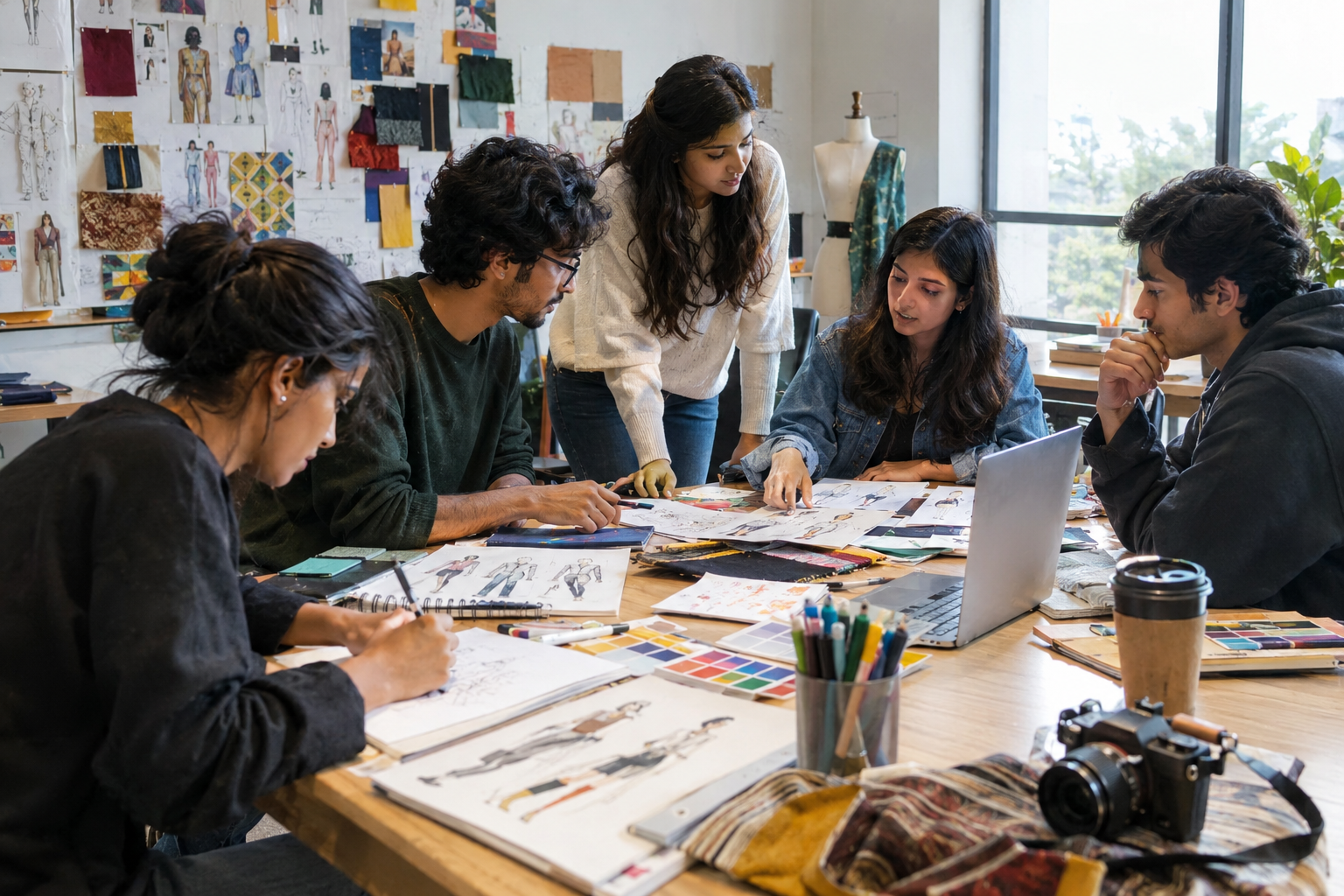
Designs which provide oppurtunities.
The design industry is filled with talented people who have a deep curiosity about creativity, patterns, colours, and new ideas. Students who choose design as a career often have a strong passion for the creative fields and spend years developing their knowledge and skills. As the design industry continues to grow and contribute to businesses and the wider economy, more students are aspiring to build careers in fashion, graphic design, interior design, product design, textiles, and other creative fields.
As the number of design students and businesses increases, companies are looking for freshers who can bring creativity, knowledge, enthusiasm, and a willingness to learn. While technical qualifications are important, companies also value qualities that demonstrate how a designer thinks and approaches problems. For freshers, the most important skills include creativity, observation, patience, curiosity, communication, technical knowledge, and the ability to continuously learn.
Creativity is one of the most important qualities companies look for in a designer. A good designer should be able to develop fresh ideas and look at ordinary things from a different perspective. Creativity is not limited to creating something completely new; it can also involve improving an existing idea, combining different concepts, or finding an innovative solution to a problem.
Patience is another essential skill. Design involves considerable attention to detail. Whether a designer is working with colours, fabrics, patterns, layouts, ornaments, or textures, even small mistakes can affect the final result. Freshers must therefore be willing to experiment, make mistakes, receive feedback, and improve their work rather than expecting immediate perfection.
Observation skills are equally valuable. Designers need to notice details that others may overlook. In fashion design, for example, a designer may need to observe clothing, colours, patterns, materials, cultural influences, and changing trends. Strong observation helps designers understand why something looks appealing and how different elements can be combined effectively.
Curiosity also plays a major role in developing a successful designer. People who enjoy travelling, reading books, visiting new places, exploring cultures, and learning about history often find inspiration in unexpected places. Different destinations, traditions, architecture, nature, and cultural practices can provide ideas for clothing, interiors, products, patterns, and visual designs. Many successful designs are inspired by the world around us.
A strong understanding of design principles and technical tools is also important for freshers. Depending on their specialisation, students may need knowledge of colour theory, typography, materials, textiles, sketching, pattern-making, digital design software, or other industry-specific tools. Today, designers are also increasingly exploring artificial intelligence and other emerging technologies to generate ideas, experiment with concepts, and improve their creative processes. However, technology should support creativity rather than replace the designer’s own thinking and judgment.
Finally, enthusiasm and a willingness to learn can make a major difference for a fresher. Companies understand that students may not have extensive professional experience when they enter the industry. What they want to see is potential, dedication, discipline, and the ability to learn from mentors and colleagues. A strong portfolio that demonstrates creativity, experimentation, problem-solving, and consistent effort can often speak louder than qualifications alone.
In conclusion, design companies look for much more than technical skills in freshers. Creativity, patience, observation, curiosity, knowledge, adaptability, and enthusiasm are essential qualities for building a successful design career. Developing these skills takes years of practice and continuous learning. A passionate designer who remains curious, observes the world carefully, accepts feedback, and keeps experimenting can create meaningful designs and build a strong future in the creative industry.