Why Handmade Art Is Finding Its Place in a Digital Generation
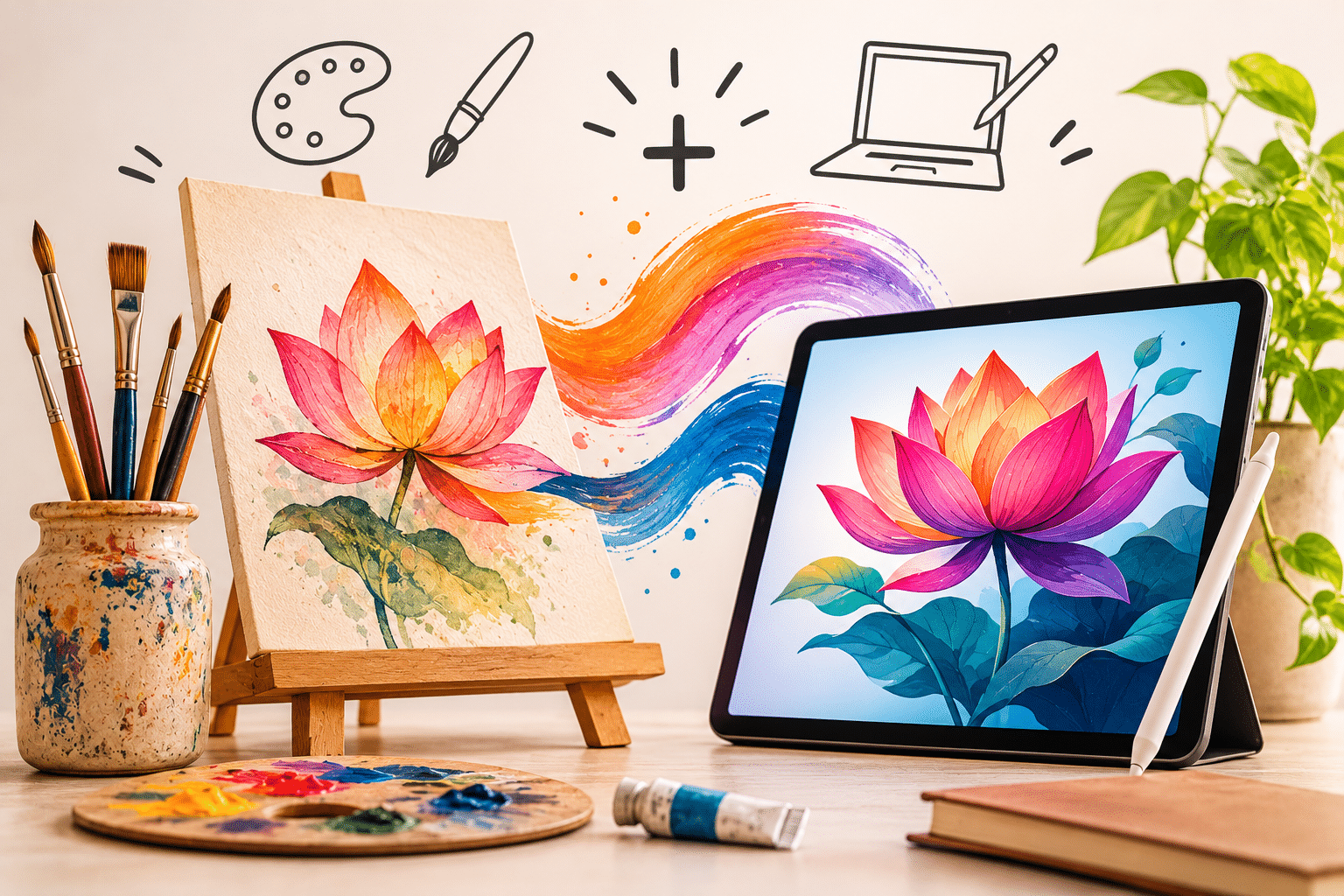
We live in a world where almost everything can be created with a few clicks. Digital illustrations, AI-generated images, computer graphics, and online design tools have made creativity more accessible than ever. Yet, something interesting is happening alongside this technological growth: handmade art is receiving renewed attention.
From hand-painted illustrations and pottery to sketchbooks, traditional paintings, and handcrafted decorations, people are rediscovering the beauty of creating something with their own hands.
But why is handmade art becoming meaningful in a generation surrounded by digital technology? The answer lies in its individuality, creative process, emotional value, and the human touch that makes every piece different.
What Makes Handmade Art Special?
Handmade art is created through direct artistic effort using physical materials and traditional or experimental techniques. It can include drawing, painting, sculpting, printmaking, pottery, paper crafts, and mixed-media artwork.
Unlike digitally created images, handmade pieces often contain small variations, visible textures, brush marks, and details that reflect the artist’s process.
These characteristics make every artwork feel personal. Even when two artists follow the same subject or technique, their results may look completely different because each person brings a unique perspective to the work.
This individuality is one of the reasons handmade art continues to attract attention.
1. The Beauty of Imperfection Is Becoming Valuable
Digital tools allow artists to adjust, undo, resize, and refine almost every detail. While these features are useful, handmade art offers a different experience.
A slightly uneven brushstroke, an unusual pencil mark, or an unexpected colour combination can become part of an artwork’s character.
These imperfections are not necessarily mistakes. Sometimes, they give a piece its identity and make it feel more authentic.
Modern audiences are increasingly appreciating creative work that feels personal rather than overly polished. This has encouraged artists and designers to explore handmade textures and natural details in their projects.
2. Traditional Art Techniques Are Inspiring Modern Creativity
Traditional artistic techniques are not disappearing. Instead, many are finding new ways to connect with contemporary creative practices.
Some examples include:
- Watercolour painting: Its flowing colours and soft textures inspire illustrations and visual compositions.
- Charcoal drawing: Its expressive lines and dramatic contrasts remain valuable for artistic studies.
- Printmaking: Traditional printing methods inspire modern posters, patterns, and experimental graphics.
- Pottery and sculpture: Three-dimensional forms encourage artists to explore shape, texture, and material.
- Collage: Combining photographs, paper, fabric, and drawings creates distinctive mixed-media artwork.
Learning these techniques helps artists understand the fundamentals of composition, form, colour, texture, and visual expression.
3. Digital Art and Handmade Art Are Working Together
The rise of digital art does not mean traditional art has to compete with technology. In fact, both can complement each other.
Many artists begin with a pencil sketch, develop the concept using watercolours or ink, and then refine it digitally. Others scan handmade textures and incorporate them into posters, illustrations, animation backgrounds, or branding projects.
For example, a graphic designer might create a hand-drawn illustration and use digital software to adjust its colours and layout. An illustrator may combine traditional painting techniques with digital editing to develop a finished composition.
This combination allows artists to experiment with different methods and create work that feels both personal and contemporary.
4. Handmade Art Creates a Stronger Personal Connection
Art is not only about producing attractive images. It is also a way to express feelings, memories, experiences, and ideas.
A handmade painting may communicate an artist’s emotions through its colours, textures, and brushwork. A sculpture may tell a story through its shape and material. A sketchbook can capture observations and creative thoughts that develop over time.
Because handmade work often shows the process behind its creation, viewers may feel a stronger connection with the artist and the story behind the artwork.
This makes handmade art meaningful in personal collections, exhibitions, gifts, and creative spaces.
5. Sustainability Is Encouraging Thoughtful Art Practices
Sustainability is becoming an important consideration across many creative industries, including art and design.
Artists are exploring ways to reuse materials, reduce unnecessary waste, and give discarded objects a new purpose.
Old newspapers, fabric pieces, cardboard, natural materials, leftover packaging, and unused household objects can become valuable resources for creative experiments.
For example, an artist might create a mixed-media composition from recycled paper or transform discarded fabric into a textile artwork.
These approaches encourage resourcefulness and show that creativity does not always require expensive materials.
6. Handmade Art Is Influencing Modern Design Industries
The influence of handmade creativity can be seen in several professional design fields.
Fashion design: Hand embroidery, textile painting, block printing, and handcrafted details add individuality to clothing and accessories.
Interior design: Handmade pottery, woven materials, wall art, and decorative objects bring texture and character into modern spaces.
Graphic design: Hand lettering, sketch-based illustrations, and paper textures create distinctive visual identities.
Animation and illustration: Hand-drawn concepts and traditional textures can give digital projects a more expressive appearance.
Product and jewellery design: Handcrafted forms and material experimentation inspire unique objects and accessories.
This shows that traditional artistic skills can remain relevant even as creative industries adopt new technologies.
7. How Can Students Develop Their Handmade Art Skills?
For students interested in fine arts, developing practical artistic skills begins with curiosity and regular experimentation.
Here are a few ways to get started:
- Maintain a sketchbook and draw something every day.
- Experiment with pencils, charcoal, watercolours, and acrylic paints.
- Study shapes, proportions, light, shadow, and composition.
- Visit art exhibitions and observe different artistic styles.
- Try mixed-media projects using different materials.
- Explore how traditional artwork can be developed into digital creations.
- Build a portfolio that shows both experiments and completed projects.
The most important thing is to practise consistently and remain open to new ideas. Artistic confidence develops gradually through observation, experimentation, and learning.
How Fine Arts Education Supports Creative Growth
Learning fine arts involves much more than understanding how to draw or paint. It encourages students to develop observation, imagination, visual communication, and problem-solving skills.
A structured learning environment can help aspiring artists explore different mediums, understand artistic principles, and build confidence through practical projects.
At Krishna Institute of Design (KID), Indore, students interested in creative fields can explore artistic ideas, develop practical skills, and discover different directions within the design and art world.
Whether someone enjoys traditional painting, illustration, sculpture, or digital creativity, developing a strong artistic foundation can open the door to further creative exploration.
Conclusion
Handmade art is finding its place in a digital generation because creativity is about more than speed and technology. It is also about expression, experimentation, individuality, and the experience of making something meaningful.
Digital tools will continue to transform the creative world, but traditional artistic techniques still offer valuable ways to understand materials, develop ideas, and express personal perspectives.
The future of art does not have to choose between handmade and digital. Some of the most interesting creative possibilities can emerge when both worlds come together.