Have a Game Idea? Here’s How to Turn Your Creativity into a Real Game
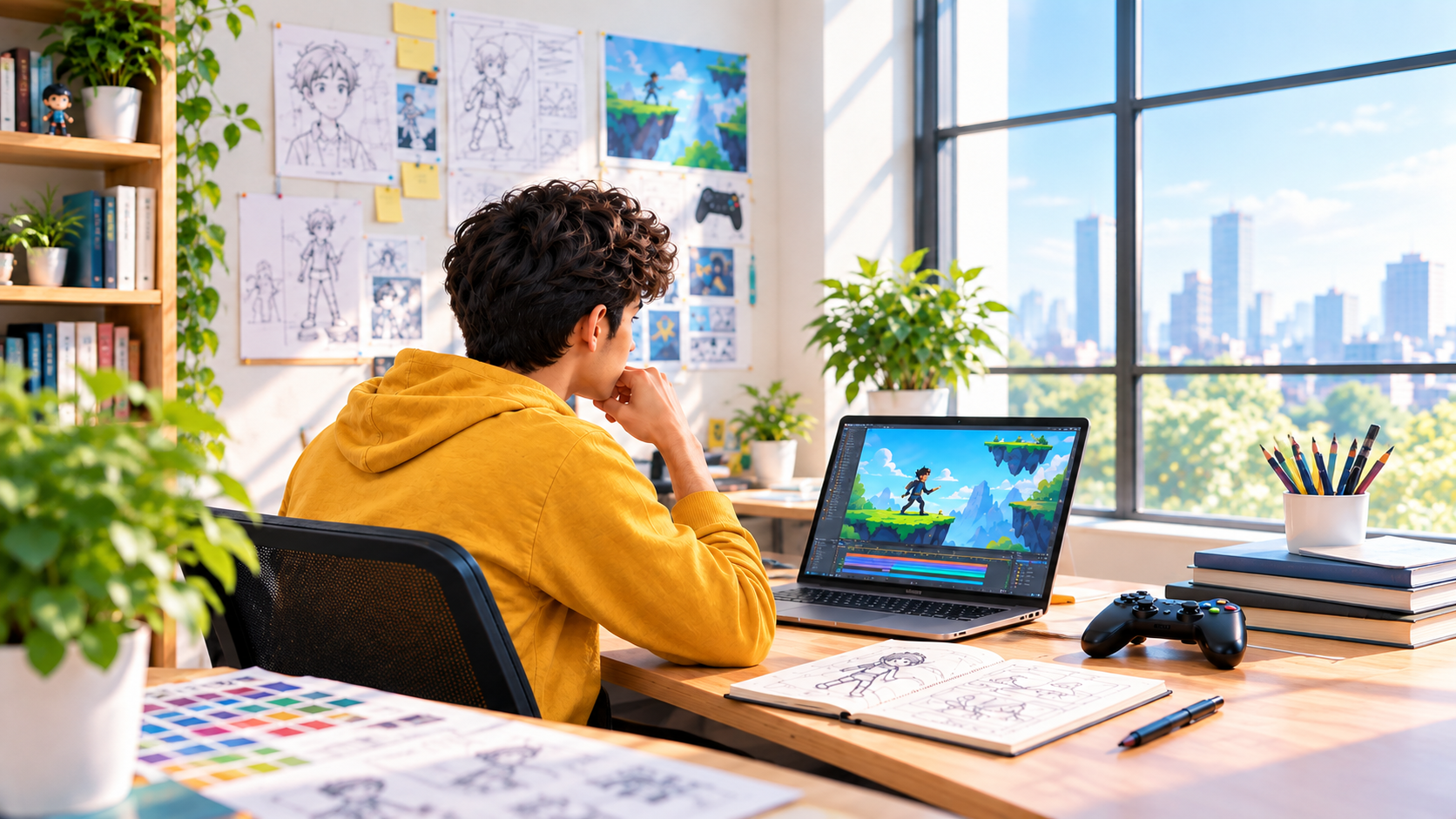
Have a Game Idea? Here’s How to Turn Your Creativity into a Real Game
A great game often starts with something very simple—a character idea, an interesting story, a unique challenge, or even a thought like, “What if a game worked this way?” But having an idea is only the beginning.
Turning that idea into an actual game requires much more than knowing how to play games. It involves creativity, storytelling, visual thinking, gameplay planning, technology, and the ability to solve problems along the way.
For students and beginners interested in this field, the biggest question is often: Where do I actually start?
The answer begins with understanding how game design works and developing the right skills step by step.
What Does Game Design Actually Involve?
Game design is not limited to creating attractive graphics or writing code. A game needs a complete experience that keeps players interested.
A designer may work on characters, environments, stories, levels, rules, challenges, rewards, and the overall flow of the game. Every small decision can affect how a player experiences it.
For example, imagine designing a simple adventure game. You need to think about:
- Who is the main character?
- What is the purpose of the game?
- What challenges will the player face?
- How will the difficulty increase?
- What makes the next level interesting?
- How will the story and visuals support the gameplay?
These questions show why game design is both a creative and problem-solving field.
Why Learning Through Projects Makes a Difference
One common problem beginners face is understanding concepts in theory but not knowing how to apply them.
Watching tutorials can help you learn individual techniques, but working on a complete project teaches you something different. You start discovering how different skills connect with each other.
A small game project can teach you how to plan an idea, develop characters, create environments, organize levels, test gameplay, identify problems, and improve your work.
This process also helps build confidence because you can actually see your ideas taking shape instead of keeping them only in a notebook.
Choosing the Right Learning Environment
If you are searching for a game design institute in Indore, it is worth looking beyond the course name.
The learning environment can have a major effect on your progress. Look for opportunities to work on projects, experiment with ideas, receive guidance, and develop work that can eventually become part of your portfolio.
A good creative learning environment should encourage students to ask questions and try different approaches. Not every project will work perfectly—and that is part of learning.
The goal is not simply to finish assignments. It is to understand why something works, why something fails, and how to improve it.
Skills That Can Help You Build a Career in Game Design
Game design brings together several different creative and technical abilities. You do not necessarily need to master everything on your first day.
Some useful areas to explore include:
Game Concept Development
Before building anything, you need a clear concept. Learning how to develop a game idea, define its audience, and establish its basic gameplay direction gives your project a strong foundation.
Storytelling and Character Development
Characters and stories can give a game personality. Understanding character motivations, environments, and narratives can make gameplay more meaningful.
Level and Gameplay Design
A well-designed level should give players a reason to continue. Learning about challenges, progression, interaction, and difficulty can help create a more engaging experience.
Visual and Creative Skills
Game worlds need visual direction. Knowledge of design, composition, colour, environments, characters, and visual storytelling can help you communicate your ideas more effectively.
Testing and Problem Solving
The first version of a game is rarely perfect. Testing helps identify confusing controls, boring sections, technical problems, or gameplay issues. Learning to accept feedback and make improvements is an important part of the process.
Your Portfolio Can Tell Your Story
For someone entering a creative industry, a portfolio can be more useful than simply saying, “I am interested in game design.”
A portfolio gives people something they can actually see.
Instead of collecting only certificates or classroom exercises, try building projects that demonstrate your thinking. A simple game concept, character design, level idea, environment artwork, or playable prototype can show how you approach creative problems.
You do not need dozens of projects. A few thoughtful pieces that demonstrate different skills can create a much clearer picture of your abilities.
At KID – Krishna Institute of Design in Indore, practical projects, creative exploration, guidance, and portfolio development can be part of the learning journey for students exploring design-related careers.
Start Small Instead of Waiting for the Perfect Idea
One mistake many beginners make is trying to create a huge game as their first project.
You might imagine an open-world adventure with hundreds of characters, complicated missions, and endless levels. It sounds exciting, but completing something that ambitious can quickly become overwhelming.
Instead, start with something manageable.
Create one character. Design one environment. Build one short level. Experiment with one gameplay mechanic.
Finishing a small project teaches you lessons that planning a huge project cannot.
Once you understand the process, you can gradually take on more ambitious ideas.
Is Game Design Right for You?
You do not have to be an expert gamer to explore game design.
Curiosity, creativity, patience, observation, and willingness to experiment can be just as important. If you enjoy creating stories, designing characters, solving puzzles, exploring digital art, or thinking about how interactive experiences work, the field may be worth exploring.
The best way to find out is to start creating.
Build Skills, Experiment, and Keep Creating
Game design is a field where learning continues even after a course ends. Tools change, technology develops, and player expectations evolve.
What remains valuable is the ability to think creatively, understand the user experience, solve problems, accept feedback, and turn an idea into something people can interact with.
You do not need to begin with a perfect game.
You simply need an idea and the willingness to start.
With structured learning, practical projects, guidance, and consistent experimentation, that first simple idea can become the beginning of a much larger creative journey.