AI vs Human Creativity: Why Design Skills Matter More Than Ever in 2026
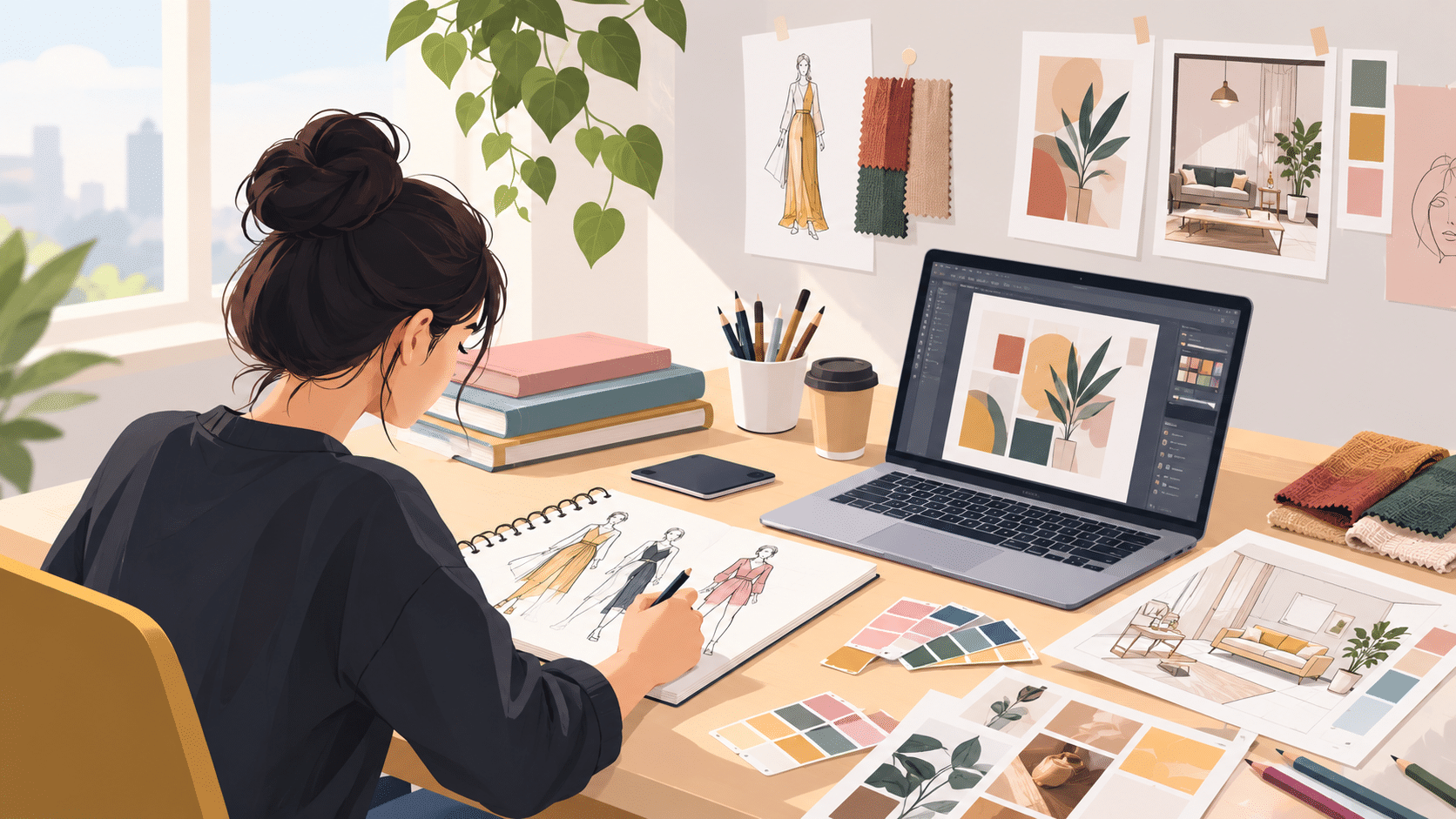
Artificial intelligence is changing the way people work, learn, and create. Today, AI tools can generate images, suggest colour combinations, create layouts, and turn simple text into visual concepts within seconds. For students planning their careers after 12th, this raises an important question: Is design still a good career choice when technology can create so much?
The answer is yes, but the way designers work is evolving.
Design is not simply about making attractive images. It involves understanding people, solving problems, communicating ideas, and making thoughtful decisions. While AI can support the creative process, human imagination, observation, and judgment remain important parts of meaningful design.
For students interested in fashion, interior spaces, graphic design, animation, or jewellery, this is an opportunity to learn how creativity and technology can work together.
How Is AI Changing the World of Design?
AI tools are making certain creative tasks faster. Designers can use them to explore visual references, experiment with colour palettes, develop early concepts, and organise ideas before creating a finished project.
For example, an interior design student might explore different room themes before preparing a detailed layout. A graphic design student could compare visual directions for a brand. A fashion student might research silhouettes, colours, and styling ideas for a new collection.
However, generating an image is only one part of the process. Someone still needs to decide whether the idea is suitable, practical, original, and appropriate for its intended audience.
This is where design knowledge becomes valuable.
Students who understand the principles behind their work can use technology more thoughtfully than those who depend entirely on automated results.
5 Creative Design Careers Worth Exploring in 2026
Choosing a career becomes easier when you understand what different design fields involve. Here are five areas students can explore according to their interests.
1. Graphic Design: Creativity Meets Digital Communication
Graphic design combines images, typography, colours, and layouts to communicate messages. Designers create brand identities, advertisements, packaging, social media graphics, and digital content.
Although AI can generate visual ideas, designers still need to understand visual hierarchy, readability, brand identity, and audience expectations.
Skills to develop: Typography, composition, colour theory, branding, and digital design software.
2. Interior Design: Creating Spaces That Work Better
Interior design goes beyond choosing furniture and decorating rooms. It involves planning spaces that balance appearance, comfort, movement, lighting, and practical requirements.
AI can help explore different styles, but real design decisions must account for measurements, materials, budgets, safety, and the needs of the people using a space.
Skills to develop: Space planning, technical drawing, material knowledge, lighting, and 3D visualisation.
3. Fashion Design: Turning Ideas into Wearable Creations
Fashion design offers opportunities for students who enjoy clothing, fabrics, styling, and visual experimentation. The process can include researching trends, sketching garments, selecting materials, developing patterns, and creating finished pieces.
AI may help designers explore concepts, but understanding fabric behaviour, garment construction, fit, and comfort requires practical knowledge.
Skills to develop: Fashion illustration, fabric selection, garment construction, trend research, and creative development.
4. Animation and Game Design: Building Digital Experiences
Animation and game design combine storytelling, visual creativity, technology, and problem-solving. Students may explore character design, storyboarding, environments, motion graphics, visual effects, or interactive experiences.
AI-assisted tools can support parts of production, but compelling characters, engaging stories, and enjoyable experiences still depend on creative decisions and careful development.
Skills to develop: Storytelling, drawing fundamentals, animation principles, 3D tools, and game design concepts.
5. Jewellery Design: Where Detail Meets Imagination
Jewellery design brings together creativity, craftsmanship, materials, and precision. Designers develop concepts for rings, earrings, necklaces, and other accessories while considering proportions, usability, manufacturing methods, and aesthetics.
Digital tools can help visualise concepts, but an understanding of materials, construction, and the practical requirements of a finished piece remains essential.
Skills to develop: Jewellery sketching, material knowledge, design development, proportion, and digital modelling.
The Skills AI Cannot Develop for You Automatically
Learning a design tool is useful, but becoming a capable designer requires more than knowing which buttons to press.
Here are five abilities students should work on from the beginning:
- Observation: Notice how colours, objects, spaces, and everyday products influence people’s experiences.
- Problem-solving: Understand the purpose of a project before deciding how it should look.
- Creative thinking: Explore multiple solutions instead of accepting the first idea.
- Communication: Explain your choices and understand feedback from others.
- Adaptability: Learn new tools while strengthening the fundamentals that make your work effective.
These skills can support students across different design disciplines, even as software and technology continue to change.
How Students Can Start Learning Design After 12th
You do not need to wait until college begins to explore your creative interests. Small projects can help you discover what you enjoy and where you need improvement.
Start with these practical steps:
Step 1: Choose a creative challenge. Design a poster, plan a small room, sketch a clothing collection, or develop a jewellery concept.
Step 2: Study the basics. Learn about colour, proportion, composition, materials, and the principles relevant to your chosen field.
Step 3: Experiment with tools. Explore suitable design software and AI-assisted tools, but treat their output as a starting point rather than a finished answer.
Step 4: Create multiple versions. Compare your first attempt with improved versions. Identify what changed and why the result became more effective.
Step 5: Build a portfolio. Save your strongest projects, sketches, references, and explanations of your design decisions. A portfolio can demonstrate how you think and how your skills develop over time.
Choosing the Right Design Institute Matters
The learning environment you choose can influence how confidently you develop your abilities. When comparing design courses, look beyond attractive advertisements and consider what students actually learn.
Check the course curriculum, practical assignments, faculty guidance, software exposure, workshop facilities, and opportunities to develop a portfolio. Ask whether students work on projects that help them understand real design challenges.
Students exploring creative education in Indore can also learn more about the programmes offered by Krishna Institute of Design (KID). Compare available courses with your interests and long-term goals before making a decision.
A good learning experience should help you understand design principles, experiment with ideas, accept feedback, and gradually become more independent in your work.
The Future Belongs to Creative Thinkers Who Keep Learning
AI is changing the design industry, but change does not mean that creativity has lost its value. Instead, it makes thoughtful decision-making, practical knowledge, originality, and adaptability even more important.
Students do not need to compete with technology at everything it can do. They need to learn how to use useful tools, understand the problems they are solving, and develop the judgment to create work that serves a real purpose.
If you enjoy imagining new possibilities, improving everyday experiences, or expressing ideas visually, design may be worth exploring.
Start with curiosity. Practise consistently. Learn from mistakes. Build a portfolio that reflects your thinking.
Technology can help you create faster, but learning to think like a designer can help you create with purpose.