Your Career Doesn’t Have to Be Ordinary: Exploring Creative Courses After 12th
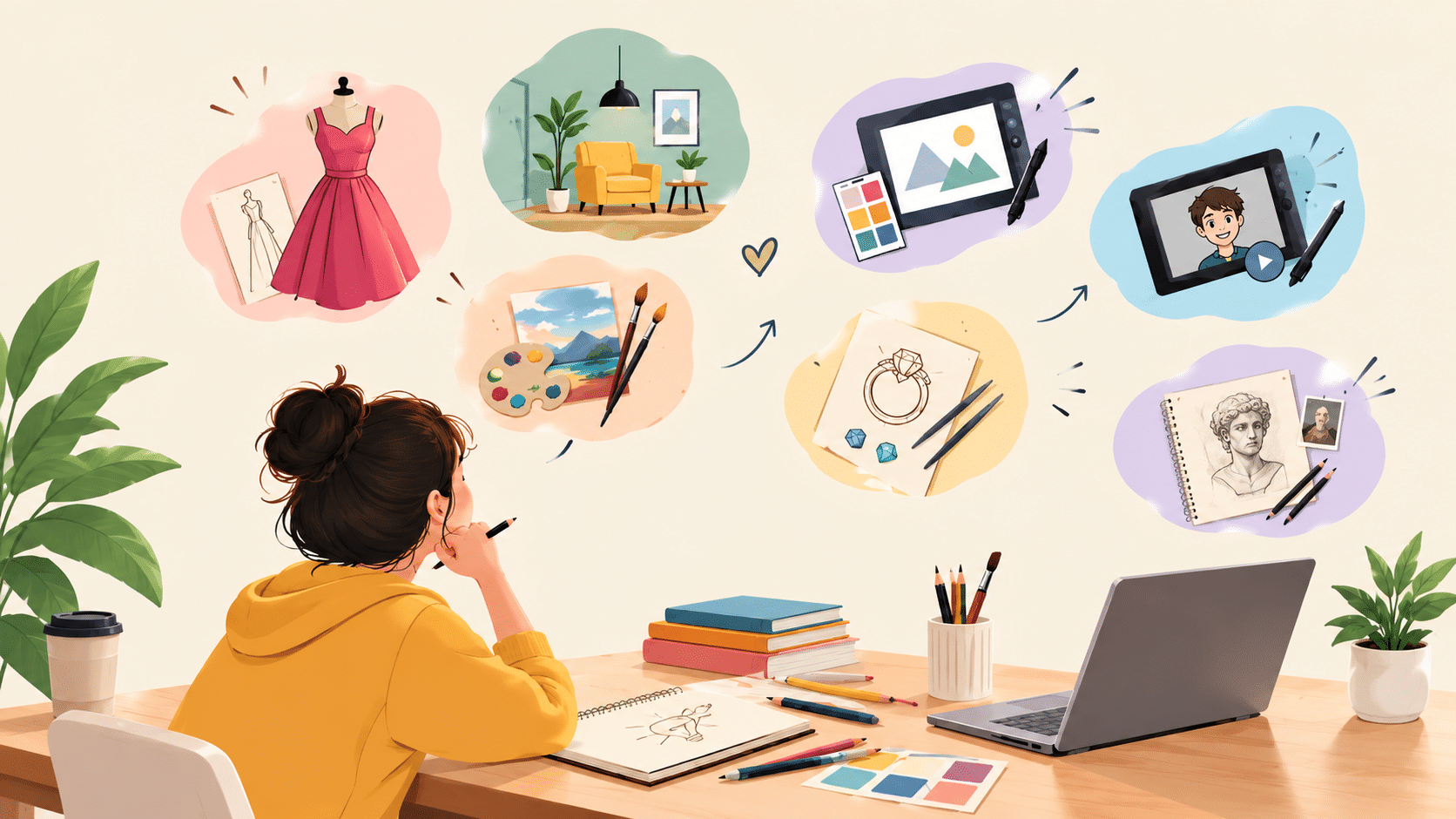
What if the career you are looking for is not the one everyone expects you to choose?
After completing 12th, students often face an important decision. Some already know what they want to do, while others are still exploring their interests. With advice coming from family, friends, teachers, and social media, choosing the right direction can feel confusing.
However, a successful career does not have to follow the same path as everyone else’s. If you enjoy drawing, designing, photography, fashion, technology, or creating new ideas, a creative career may be worth exploring.
The first step is understanding your interests and discovering how you can turn them into practical skills.
What Does It Mean to Build a Creative Career?
Creativity is not limited to painting or drawing. It can involve solving problems, communicating ideas, designing products, developing digital content, or finding new ways to improve everyday experiences.
For example, a fashion designer turns ideas into clothing, while an interior designer plans spaces that are comfortable and functional. A graphic designer communicates messages through visuals, and an animator brings characters and stories to life.
Although these fields look different, they share something important: creative thinking becomes valuable when it solves a problem or communicates an idea.
Therefore, choosing a creative course is not simply about following a hobby. It is about developing the knowledge, techniques, and practical experience needed to apply your interests professionally.
Which Creative Course Should You Choose After 12th?
There is no single course that suits every student. Your choice should depend on what interests you, what you enjoy learning, and the kind of work you would like to explore.
Here are some creative fields worth considering.
1. Fashion Design
If you enjoy clothing, colours, fabrics, styling, and understanding changing trends, fashion design may interest you. Students can explore garment construction, fashion illustration, textiles, design concepts, and collection development.
The field combines imagination with practical decisions about materials, fit, function, and presentation.
2. Interior Design
Do you notice how furniture, lighting, colours, and layouts change the feeling of a room? Interior design may be a suitable direction to explore.
Students learn to think about space planning, materials, lighting, furniture arrangements, and the needs of people using a space. The goal is to create interiors that are attractive, comfortable, and functional.
3. Graphic Design
Graphic design is a good field to investigate if you enjoy visual communication. Designers create logos, posters, social media graphics, brochures, packaging, and other visual materials.
Along the way, students can develop skills in typography, composition, colour theory, branding, and digital design tools.
4. Animation and Visual Effects
If you enjoy animated films, digital storytelling, games, or cinematic effects, animation and visual effects may capture your interest.
These fields can involve character design, movement, storyboarding, 3D modelling, compositing, and digital production. They combine technical understanding with creativity and visual storytelling.
5. Jewellery Design and Fine Arts
Students interested in detailed craftsmanship, drawing, painting, materials, or artistic expression can also explore jewellery design and fine arts.
Jewellery design focuses on developing wearable pieces, understanding materials, and communicating design ideas. Fine arts encourages observation, experimentation, artistic techniques, and personal expression.
How Do You Know Which Field Is Right for You?
Choosing a course becomes easier when you look beyond what sounds popular.
Start by asking yourself a few questions. What activities do you enjoy doing without being asked? Which subjects make you curious? Do you prefer working with physical materials, digital tools, people, or spaces? Would you enjoy developing ideas independently or collaborating with a team?
Next, try small projects related to your interests. Create a poster, sketch a room layout, experiment with clothing designs, or develop a simple animation. These activities can help you understand the work involved in different fields.
Also, remember that enjoying something casually is different from studying it professionally. A course may involve technical exercises, deadlines, feedback, and repeated practice. Learning about these requirements before enrolling can help you make a more confident decision.
Why Practical Learning Matters
Creative careers require more than theoretical knowledge. Students need opportunities to apply what they learn, test ideas, recognise mistakes, and improve their work.
For example, understanding colour theory is useful, but applying it to an actual design teaches you how different colours interact. Similarly, reading about space planning is helpful, while developing a room layout shows how furniture, movement, lighting, and available space affect one another.
Practical projects also help students develop problem-solving skills. Instead of stopping when an idea does not work, they learn to review the result and try a different approach.
At KID – Krishna Institute of Design, Indore, students can explore creative fields through projects, guidance, and portfolio development. Before choosing a programme, prospective students should review the current curriculum, facilities, course duration, eligibility requirements, and practical learning opportunities.
Build a Portfolio, Not Just a Collection of Certificates
A portfolio is a collection of work that demonstrates your skills, ideas, and creative development. It can become particularly useful when applying for internships, further study, freelance projects, or relevant jobs.
You do not need to wait until your course is finished to begin building one.
Save your strongest projects and document how they developed. Include early sketches, experiments, improvements, and final outcomes when they help explain your process.
Over time, your portfolio can show how your thinking has developed and which areas interest you most. It also gives you a practical way to reflect on your progress.
Can a Creative Career Offer Long-Term Opportunities?
Creative fields offer different career possibilities, including design studios, media companies, advertising agencies, production teams, freelance work, and independent projects. However, opportunities vary by specialisation, location, experience, and industry requirements.
A course alone does not guarantee employment or a particular income. Your practical skills, portfolio, communication, professional attitude, and willingness to continue learning all matter.
Technology and industry expectations also change. Therefore, staying curious, learning new tools, and regularly improving your work can help you adapt as your career develops.
Start With Curiosity, Then Take the Next Step
You do not need to have your entire future planned immediately after 12th. What matters is making an informed choice instead of selecting a course simply because other people recommend it.
Explore different creative fields, try small projects, compare course options, and ask questions about the actual learning experience. Most importantly, give yourself enough time to understand what suits your interests and goals.
Your career does not have to look ordinary to be meaningful. With the right training, consistent practice, and a willingness to learn, a creative interest can develop into a valuable skill and open the door to different professional possibilities.