From AI to Animated Worlds: Why Animation Could Be Your Next Big Creative Move
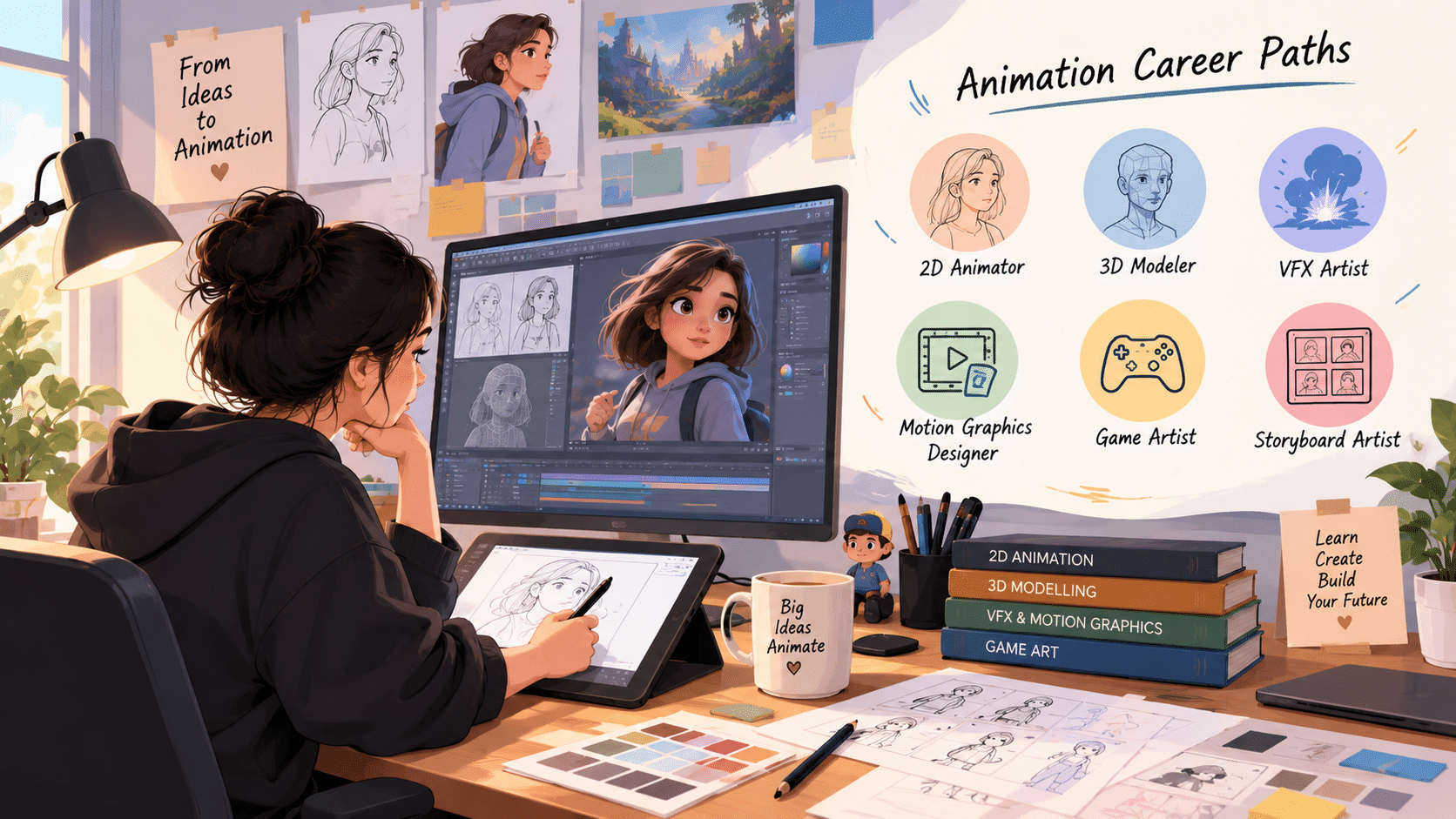
Imagine creating a character that feels alive, designing a game world people want to explore, or turning a simple sketch into a moving visual story. What once required traditional drawing techniques alone can now involve 3D modelling, digital effects, real-time rendering, and AI-assisted creative tools.
Animation is evolving beyond cartoons and movies. It plays a role in gaming, advertising, online videos, education, and digital storytelling. For students who enjoy drawing, technology, and imaginative ideas, this creates an exciting opportunity to explore a creative career.
But how do you turn that interest into a practical skill? The journey begins with understanding the different areas of animation, choosing the right training, and learning how to bring ideas to life.
Animation in 2026: More Than Just Moving Pictures
Today’s audiences experience animated content in many forms. Game characters respond to players, advertisements use motion to communicate messages, and visual effects help filmmakers create scenes that would be difficult to capture in real life.
Another important development is the use of AI-assisted tools. These can help artists explore concepts, generate early visual ideas, or speed up selected production tasks. However, strong storytelling, visual judgement, character development, timing, and creative direction remain essential.
For aspiring artists, the goal is not simply to learn the latest software. It is to understand how to use creative tools to communicate an idea effectively.
What Can You Learn in Animation?
A good animation learning path combines artistic fundamentals with technical practice. Depending on the programme, students may explore several areas.
1. 2D Animation and Visual Storytelling
Two-dimensional animation brings illustrations and characters to life through movement. Students can learn about poses, timing, expressions, and how movement communicates emotion.
Storyboarding is another important skill. It helps artists plan scenes before production begins, making it easier to organise a story visually.
2. 3D Modelling and Animation
Three-dimensional animation involves creating digital characters, objects, and environments. Artists can develop models, add textures, arrange lighting, and animate movement.
These skills can be useful in films, games, product visualisation, and other digital experiences. Learning the fundamentals takes practice, particularly when working with complex models and realistic movement.
3. Visual Effects and Motion Graphics
Visual effects, commonly called VFX, combine digital elements with footage or other visual material. They can help create imaginary environments, atmospheric effects, and cinematic scenes.
Motion graphics use animated text, shapes, illustrations, and graphic elements to communicate information. They are often used in advertisements, title sequences, explainers, and online content.
4. Game Art and Digital Worlds
If you enjoy video games, you may be interested in creating characters, environments, props, and cinematic sequences. This area combines visual design with an understanding of how digital worlds are built.
Depending on the role, additional skills in game engines, 3D modelling, or interactive design may be useful.
How to Choose the Best Animation Institute in Indore
Choosing an institute is an important decision because the learning experience can influence how confidently you develop your skills.
When researching the best animation institute in Indore, begin by checking the curriculum. Does it cover the areas you want to explore, such as 2D animation, 3D modelling, motion graphics, or VFX? Are students given practical assignments that help them apply what they learn?
Faculty guidance also matters. Constructive feedback can help you identify weaknesses, improve your technique, and develop a stronger understanding of visual storytelling.
Look into the available facilities, software exposure, project work, course duration, eligibility requirements, and qualification offered. Ask how students build portfolios and whether they receive opportunities to complete projects from beginning to end.
Students exploring creative education can contact Krishna Institute of Design (KID) to request current information about relevant programmes and admission details.
Rather than relying only on rankings or promotional claims, compare your options and choose a programme that matches your interests, learning needs, and future goals.
What Careers Can Animation Skills Lead To?
Animation offers several possible career directions, depending on your training, portfolio, and areas of specialisation.
- 2D or 3D animator: Create movement for characters, objects, and scenes.
- 3D modeller: Build digital characters, props, and environments.
- VFX artist: Develop visual effects for films, videos, and digital productions.
- Motion graphics designer: Create animated visuals for advertising, branding, and online content.
- Game artist: Design characters, environments, and other visual elements for games.
- Storyboard artist: Plan scenes and visual sequences before production.
Some professionals work with studios, while others pursue freelance projects or build independent creative businesses. Opportunities vary by location, experience, and specialisation, so it is important to develop realistic expectations and keep improving your skills.
How to Start Building Your Animation Portfolio
You do not need to create a full animated film to begin. Start with manageable projects that help you practise one skill at a time.
For example, animate a bouncing ball to understand timing and weight. Create a simple character expression sheet, model a basic object in 3D, or design a short motion graphic using text and shapes.
As you improve, organise your strongest projects into a portfolio. Show the final result and, where relevant, include sketches, storyboards, or screenshots that explain your creative process.
Focus on quality rather than quantity. A few well-developed projects can demonstrate your progress more clearly than many unfinished experiments.
Also, remember that software alone cannot make a project successful. Observation, patience, storytelling, and attention to detail are what help your work stand out.
Your Creative Future Starts with One Frame
Animation brings art and technology together, giving creative people different ways to communicate ideas and build visual experiences. The field continues to change, but learning the fundamentals and practising consistently remain valuable starting points.
If you are considering animation after 12th, explore the different specialisations, compare suitable courses, and begin experimenting with small projects. Ask questions, welcome feedback, and allow yourself time to improve.
Every animated world begins with an idea. Your next step is to learn how to bring yours to life.