Recycle, Reuse & Redesign
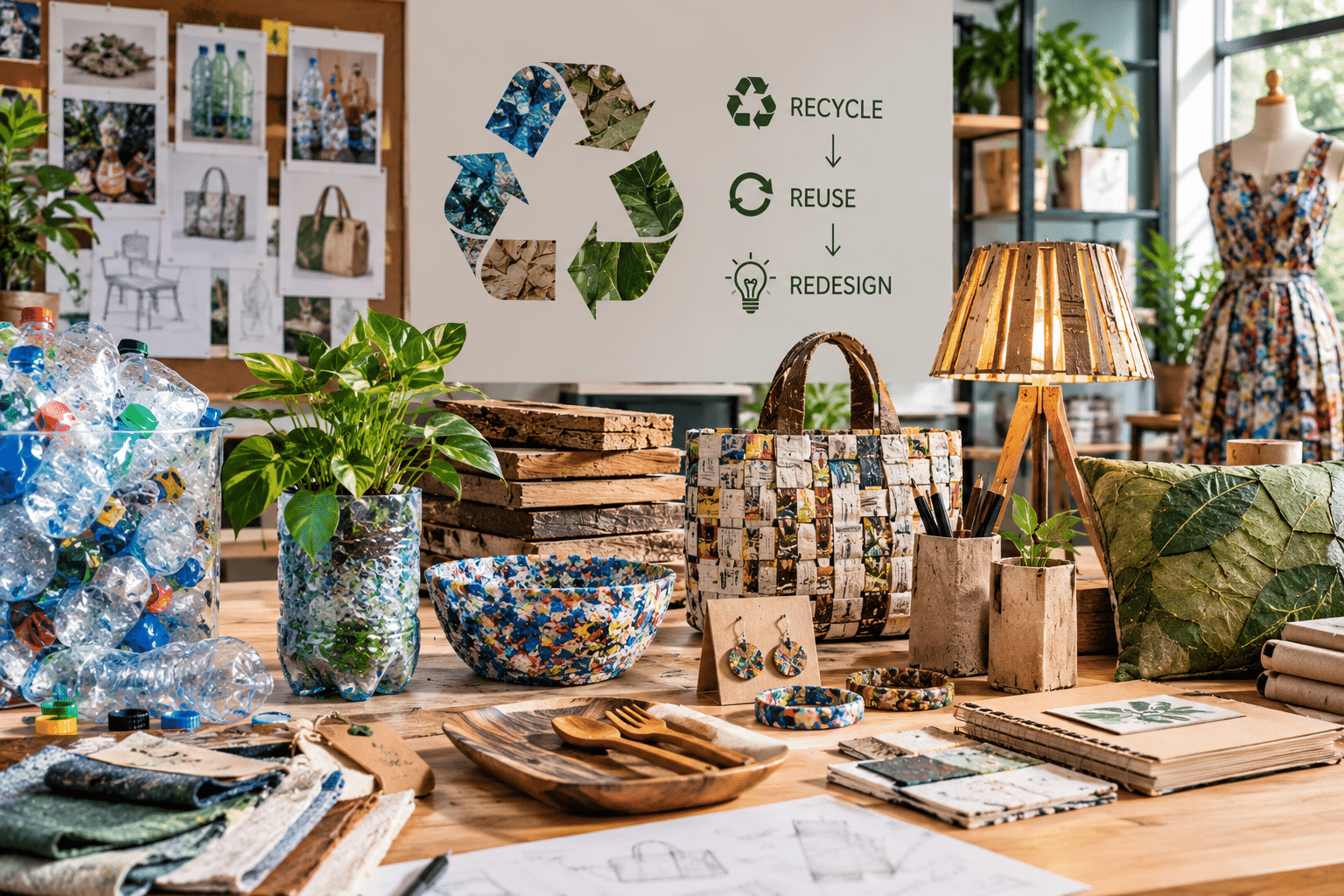
Recycling waste into product design.
Design is one of the most remarkable forms of creativity developed by both nature and humankind. It brings beauty, functionality, colour, and identity to brands, clothing, interiors, textiles, products, and countless other aspects of everyday life. Over the centuries, design has evolved significantly, and Indian design traditions have earned immense respect and admiration across the world. India has a rich heritage of patterns, textiles, handicrafts, colours, and artistic traditions that have influenced designers internationally. Historically, Indian craftsmanship and textiles were exported to different parts of the world and were admired by European societies and royal families.
Today, however, design is entering an exciting new phase: turning waste into valuable and attractive products.
The concept of recycling is no longer limited to simply reducing waste. It has become an opportunity for designers, entrepreneurs, researchers, and manufacturers to transform discarded materials into innovative products. Plastic, paper, wood, fabric, bamboo, plant waste, and many other materials can be reused to create products ranging from home décor and furniture to fashion accessories, jewellery, packaging, and everyday household items.
Plastic waste, for example, can be transformed into pots, decorative objects, furniture, accessories, and other useful products. Instead of allowing plastic to accumulate in landfills or pollute the environment, designers can give it a second life through creative product development. Similarly, plant materials and leaves can be used in sustainable interior products, natural colours, decorative items, and packaging. These innovations demonstrate that materials considered waste can become valuable resources when combined with creativity and technology.
Wood waste is another important resource. Pieces of discarded wood can be converted into kitchenware, plates, utensils, furniture, decorative objects, and interior products. With thoughtful design, carving, colouring, and finishing, waste wood can become a premium-looking product rather than something that is simply thrown away.
Paper waste also offers enormous possibilities. Used books, newspapers, cardboard, and other paper materials can be transformed into bags, baskets, cups, decorative objects, stationery, and even fashion accessories. These products not only reduce waste but can also provide affordable alternatives to conventional products. In this way, recycling can combine sustainability, affordability, functionality, and aesthetics.
Bamboo is another excellent example of how natural materials can inspire innovation. Bamboo can be used to manufacture furniture, tables, chairs, decorative products, household items, and even innovative forms of transportation. In different parts of India, designers and entrepreneurs have experimented with bamboo bicycles and other products, demonstrating how traditional materials can be adapted using modern technology and design.
The fashion and jewellery industries also have significant opportunities in recycling. Designers are increasingly exploring recycled fabrics, newspapers, plastics, discarded textiles, and other unconventional materials to create clothing and accessories. Similarly, plastic, glass, and other recycled materials can be transformed into jewellery and ornaments that offer attractive alternatives to expensive materials. With sophisticated craftsmanship and finishing, recycled products can become fashionable, desirable, and commercially successful.
This movement represents more than just creativity. Recycling-based design can contribute to environmental protection, economic development, entrepreneurship, and employment. By converting waste into useful products, we can reduce the amount of material sent to landfills, conserve natural resources, reduce production costs, and create new business opportunities.
For India, the potential is particularly significant. The country has a vast tradition of handicrafts, textiles, weaving, pottery, woodworking, bamboo craftsmanship, and other forms of traditional design. Combining these traditional skills with modern recycling technologies could create an entirely new generation of sustainable Indian products. Such products could carry both environmental value and the distinctive identity of Indian craftsmanship.
There is also a major opportunity for researchers and designers. More systematic research is needed to understand which waste materials can be safely and effectively reused and how they can be converted into durable, attractive, and commercially viable products. Researchers can explore in fashion, architecture, interior design, furniture, packaging, jewellery, consumer products, and many other industries.
The world is surrounded by materials that are often treated as useless simply because their first purpose has ended. But waste does not necessarily mean the end of a material’s usefulness. With imagination, research, technology, and good design, discarded materials can acquire a completely new identity.
The future of design could therefore be not only about creating something new, but about creating something valuable from what already exists.
Recycling-based product design has the potential to turn waste into opportunity, creativity into business, and environmental challenges into innovative solutions. If India can combine its rich design heritage with modern recycling practices, it can create products that are sustainable, affordable, beautiful, and globally competitive.
The next great product may not come from a new material. It may come from the waste we throw away today.