A Tiny Sketch Can Become Something People Wear: The Hidden World of Jewellery Design
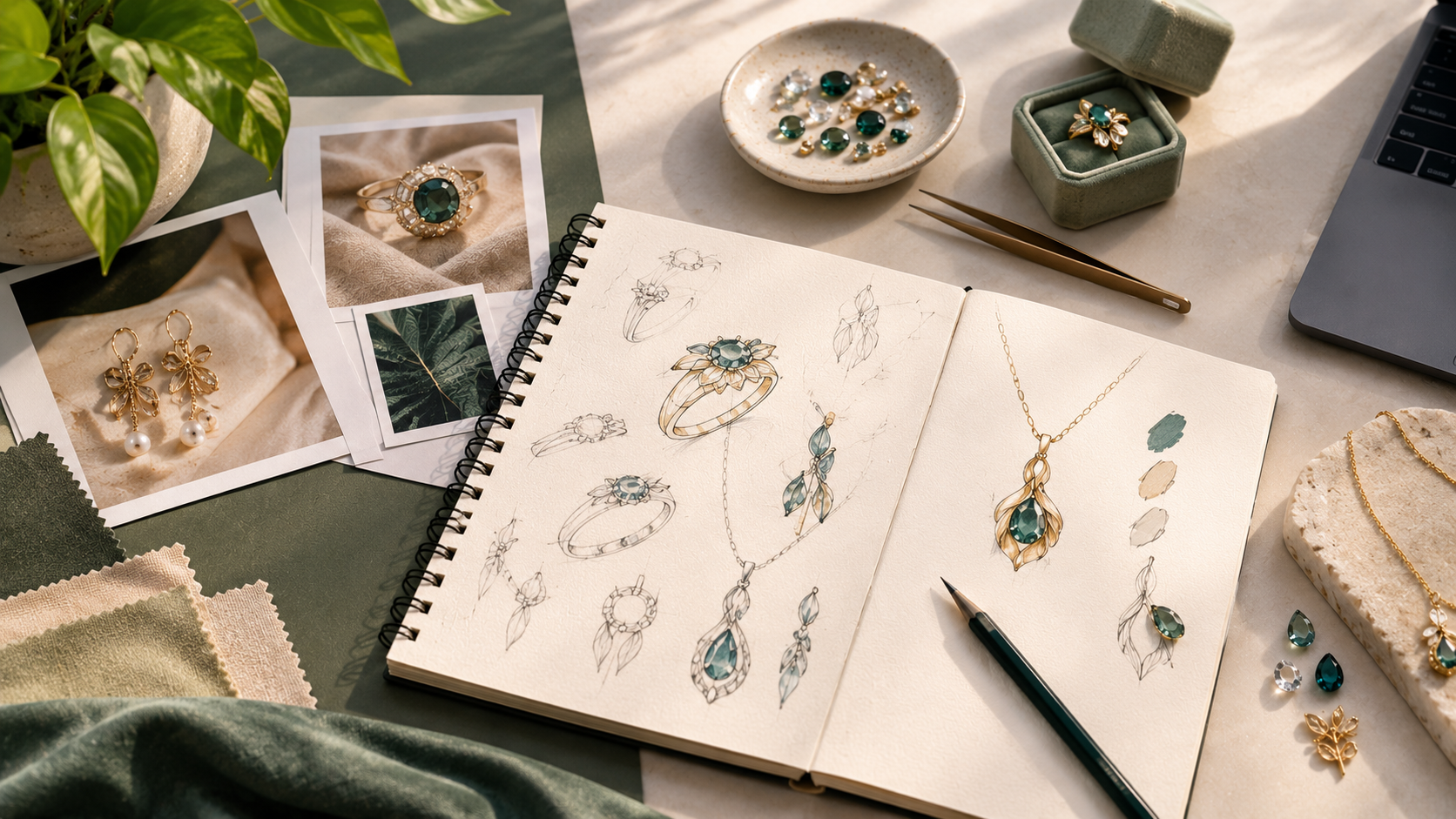
A small line on a sheet of paper may not look like much.
It could be the beginning of a ring. A curve might become the shape of a pendant. A few circles could turn into a pattern for earrings. What looks like a simple sketch can eventually become a piece of jewellery that someone chooses to wear for years.
That is the interesting part of jewellery design.
The finished piece may be small, but the thinking behind it can involve observation, proportion, materials, detailing, creativity, and plenty of experimentation. For students who enjoy working with ideas and visual details, a diploma in jewellery design can be a practical way to explore this creative field.
Jewellery Design Starts Before the Jewellery
When people see a finished necklace or ring, they usually notice the final appearance first.
A jewellery designer sees more.
They may think about the shape, balance, size, patterns, materials, comfort, and how the different elements work together. Even a small change in proportion can completely alter the appearance of a piece.
This is why jewellery design is not simply about drawing attractive ornaments. It involves learning how to think about an object before it exists.
A strong design begins with questions.
What is the idea behind it? Who might wear it? What should make it interesting? How can the concept be made practical?
These questions can turn a simple inspiration into a proper design process.
Look Around You for Better Ideas
Good ideas do not always arrive while sitting at a desk.
A leaf can inspire a pendant. Architecture can influence a geometric ring. Traditional patterns can lead to a contemporary collection. Even everyday objects can suggest unusual shapes or textures.
For aspiring jewellery designers, observation becomes an important skill.
Instead of simply looking at something, try to understand its shape, rhythm, texture, and proportions. Then ask yourself how those qualities could be translated into jewellery.
This habit can gradually make your sketchbook more interesting.
Your Sketchbook Is a Place to Experiment
Not every jewellery idea needs to be perfect.
In fact, some of the most useful sketches may be the ones that do not work.
A student might draw one ring and then create five variations. Another version may have a different stone arrangement. A third might change the proportions completely. Through these small experiments, a designer begins to understand which decisions improve the concept.
That is why regular practice matters.
A diploma in jewellery design can give students opportunities to explore ideas through sketches, design exercises, projects, and creative experimentation rather than simply trying to produce a perfect design immediately.
The process itself becomes part of the learning.
Learn to Notice the Details
Jewellery is a field where details can make a significant difference.
The thickness of a band, the placement of a stone, the curve of a surface, or the relationship between two shapes can affect the overall result.
Students therefore need to develop patience.
Rushing through a design can make small problems easy to miss. Taking time to examine a concept can reveal opportunities to improve it.
This attention to detail can also become useful beyond jewellery design. It strengthens observation and encourages a more thoughtful approach to creative work.
Creativity Needs Technical Understanding Too
An interesting idea is only one part of jewellery design.
A designer also needs to understand how a concept can work as a real object. Materials, proportions, construction, finishing, and practical considerations can all influence the final design.
This is where structured learning can make a difference.
Students can gradually move from basic concepts to more developed designs as they understand how creative decisions connect with practical requirements.
At KID – Krishna Institute of Design, students can explore jewellery design through practical projects, creative guidance, experimentation, and portfolio development. This allows them to work through ideas and understand the design process more clearly.
Do Not Be Afraid to Redesign
One of the most useful lessons in creative work is learning that the first version does not have to be the final version.
Perhaps a pendant feels too heavy visually. Maybe a ring looks too complicated. The pattern might not have enough balance. Instead of abandoning the idea, redesign it.
Remove something.
Change the shape.
Simplify the pattern.
Try another arrangement.
Each revision gives you another opportunity to understand design.
Over time, this process can make students more confident because they begin to see mistakes as information rather than as failure.
Build a Portfolio From Your Experiments
A jewellery design portfolio can become a visual record of your development.
It might include early sketches, refined concepts, different variations, material explorations, completed projects, and selected final designs.
The goal is not to fill every page with work.
Instead, choose pieces that show how you think and how your ideas have developed.
For students pursuing a diploma in jewellery design, building this collection during their learning journey can be valuable. It gives them a way to look back at their progress while also presenting their skills through actual work.
Your Style Does Not Have to Appear Immediately
Many beginners worry that they do not have a unique style yet.
That is completely normal.
Style usually develops through exposure and practice. You try different ideas, discover what interests you, learn from other designers, experiment with techniques, and gradually begin making choices that feel more natural to you.
One student may be drawn towards minimal jewellery. Another may enjoy intricate traditional-inspired designs. Someone else may prefer bold geometric forms.
There is room for different perspectives.
The important thing is to keep exploring instead of forcing yourself to have a signature style from the beginning.
Where Can Jewellery Design Take You?
Jewellery design can open different creative directions depending on the skills and interests a student develops.
Some may want to focus on jewellery concepts and collections. Others may explore illustration, styling, product development, craftsmanship, or related creative areas.
The field can also teach transferable skills such as visual thinking, attention to detail, presentation, research, and creative problem-solving.
That makes the learning valuable beyond a single type of jewellery.
Start With One Idea
You do not need an entire jewellery collection to begin.
Start with one idea.
Draw a shape that interests you. Observe something around you. Create three different versions. Ask what could make the design better. Then try again.
That simple process can teach you more than you expect.
A diploma in jewellery design can provide a structured environment in which those small ideas can be explored, developed, and turned into stronger creative work.
Because jewellery design is not only about the final piece.
It is about everything that happens before it — the observation, the sketch, the experiment, the mistake, the revision, and finally, the moment when an idea starts to look like something real.
Sometimes, a tiny sketch really can be the beginning of something much bigger.