How technology is transforming fashion, product, and visual design ?
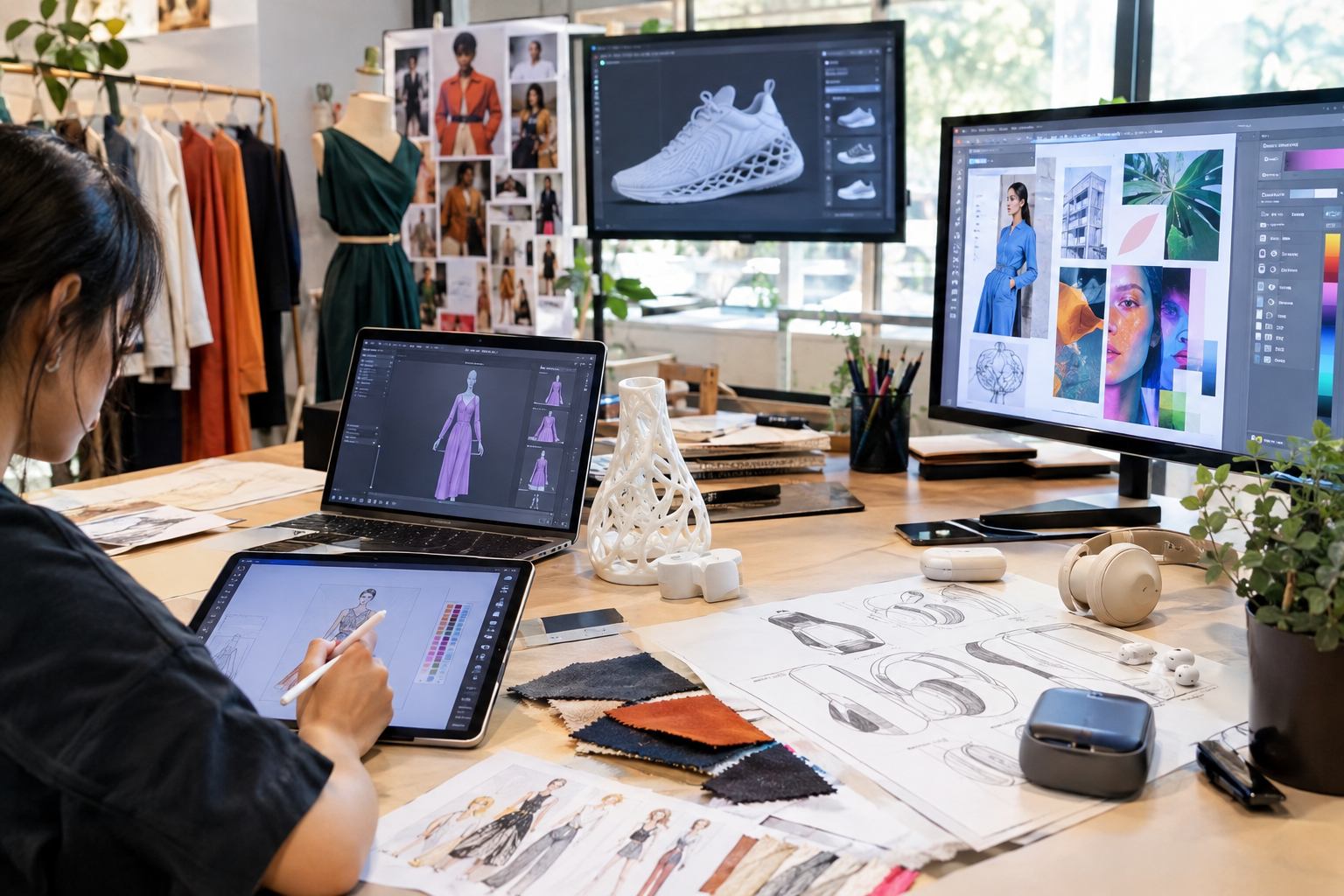
Technology inculcating new designs.
Technology is growing rapidly across the world and has become an important part of our everyday lives. It has changed the way people work, communicate, create, and even express themselves. One of the major areas impacted by technology is the design industry. Fashion design, product design, and visual design have all experienced major changes because of new technologies, digital tools, software, and modern machines.
In the past, designing a product, dress, pattern, or visual artwork could take a lot of time. Designers often had to draw everything by hand and create several physical samples before reaching the final design. This process could take weeks or even months. Because of this, unique designs were sometimes expensive and were mainly available to people who could afford them. Today, technology has made the design process faster, easier, and more accessible.
In fashion, digital tools have changed the way clothes and patterns are created. Designers can now use computer software to make sketches, develop patterns, select colours, and create different styles. Some technologies can even create a digital version of clothing before it is physically produced. This helps designers see how a design may look and make changes without wasting fabric or other materials. Digital fashion has also introduced new ways of creating clothing and experimenting with creative ideas.
Technology has also transformed product design. Designers can use computer-aided design (CAD), 3D modelling, and digital prototypes to develop products. Instead of making many physical models, designers can first create and test their ideas digitally. This saves time, reduces costs, and makes it easier to identify problems at an early stage. From furniture and electronic devices to tools and everyday objects, technology has helped designers create products that are more useful, attractive, and user-friendly.
Visual design has also grown significantly because of technology. Today, designers can create posters, advertisements, illustrations, logos, animations, websites, and social media content using digital software. Smartphones, tablets, and computers have made many design tools available to students, professionals, and ordinary users. People no longer need expensive equipment or a large studio to begin learning design. Many creative tools are now easily accessible through mobile applications and computer software.
Another important change is the increase in creativity and experimentation. Technology allows designers to try different colours, shapes, patterns, textures, and styles quickly. Digital tools also make it possible to combine photography, illustration, animation, video, and 3D elements in new ways. Artificial intelligence and other advanced technologies are creating even more opportunities for designers to explore ideas and develop new forms of creative work.
Technology has also increased the demand for modern and personalised designs. People today have access to fashion, products, and visual content from different parts of the world through the internet and social media. Trends can spread quickly, and consumers can discover new styles almost instantly. This has created more opportunities for designers and has also increased competition in the design industry.
Overall, technology has made fashion, product, and visual design faster, more creative, and more accessible. It has reduced the time needed to develop ideas and has given people from different generations the opportunity to learn and experiment with design. From students to professionals, more people can now participate in the creative process. As technology continues to develop, it will create even more possibilities for designers and change the way we understand fashion, products, and visual design in the future.