Interior Designing Course in Indore: Turn Your Creativity Into a Career
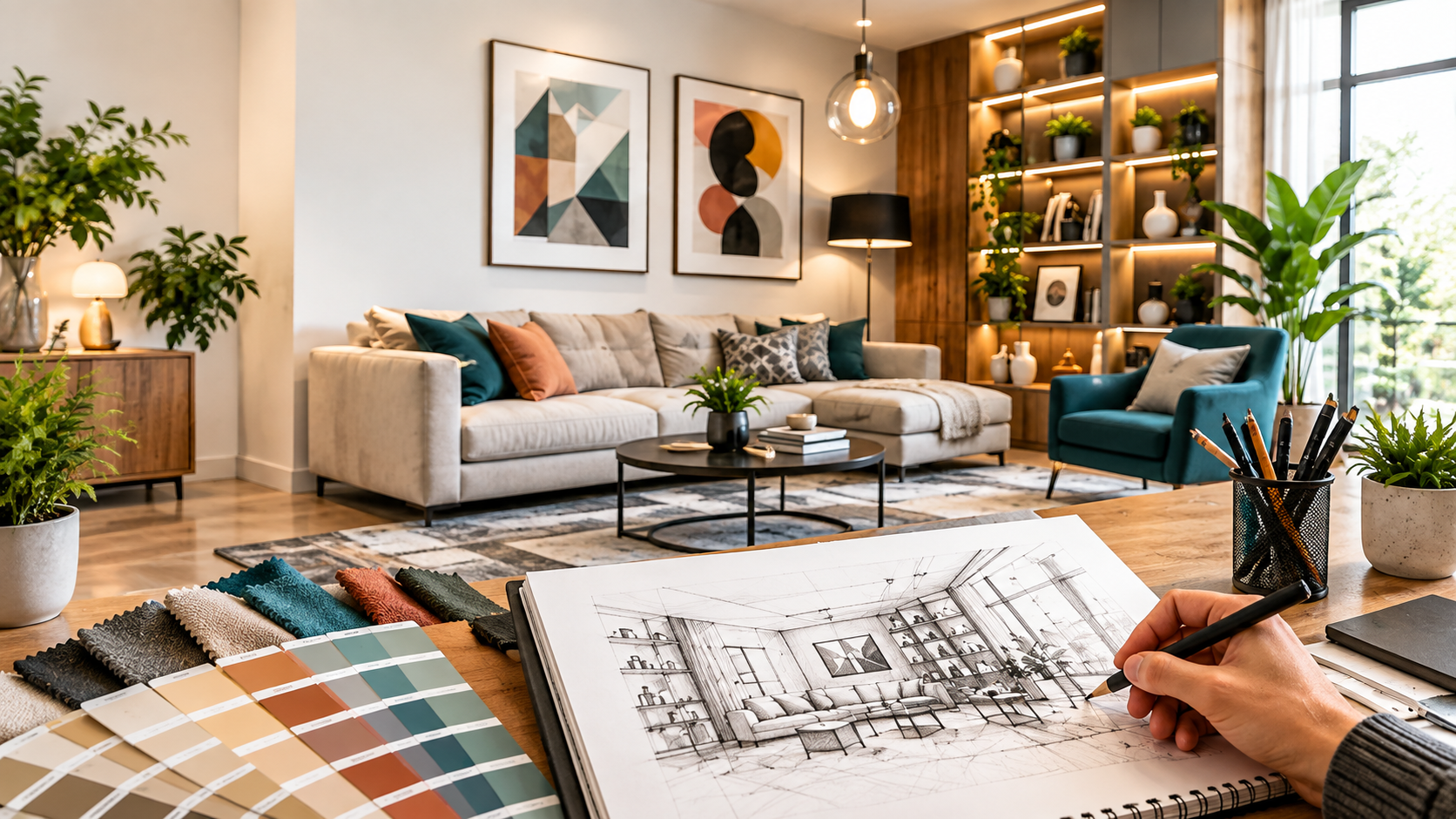
Have you ever walked into a room and immediately started imagining how it could look better? Maybe you thought about changing the sofa, adding warmer lighting, choosing a different wall colour, or simply arranging the furniture in a smarter way. If you often notice these little details, interior design might be more than just an interest for you.
Interior design is about creating spaces that look good while also making sense for the people who use them. A beautiful room is not necessarily a well-designed room. Good design considers comfort, movement, lighting, storage, materials, colours and the purpose of the space. This is what makes interior design both creative and practical.
For students who want to turn their creativity into a professional skill, an interior designing course in Indore can be a useful starting point. It can introduce you to the fundamentals of design while giving you an opportunity to understand how creative ideas are developed into complete spaces.
What Is Interior Design Really About?
Many people think interior design is mainly about choosing furniture, colours and decorations. These elements are certainly part of the process, but an interior designer has to think much further.
Consider a small bedroom. You cannot simply fill it with beautiful furniture and call it a good design. You need to think about how much walking space is available, where storage should go, how natural and artificial light will work, and how the furniture will fit without making the room feel crowded.
The same thinking applies to offices, cafés, restaurants, shops and other spaces. Every project has a purpose, and the designer’s job is to understand that purpose and create a space around it.
Why Are More Students Interested in Interior Design?
Interior design can be an exciting career for people who want to combine creativity with practical problem-solving. Instead of working on the same type of task every day, designers may work on different spaces, concepts and client requirements.
One project might involve creating a comfortable home interior, while another could involve planning a modern office or developing the visual concept for a café. Each project brings its own requirements, which can keep the work interesting.
As you gain skills and experience, there are different directions you can explore, including interior design firms, design studios, visualisation work, furniture-related businesses and freelance projects.
What Will You Learn in an Interior Designing Course?
Starting a course is not simply about learning how to make a room look attractive. You need to understand the principles behind your design decisions.
A good learning process can introduce you to space planning, furniture layouts, colour theory, materials, textures, lighting and design presentation. You can also learn how to communicate your ideas through drawings, layouts and digital visualisations.
Modern design work also makes software skills useful. Learning 2D and 3D design tools can help you present your concepts clearly and understand how different elements may come together in a finished space.
The goal is not to learn software just for the sake of using it. The important thing is understanding how technology can help you communicate and improve your design ideas.
You Don’t Have to Be a Perfect Artist
One of the biggest doubts beginners have is whether they need excellent drawing skills before starting interior design.
You don’t.
Drawing and sketching can certainly be helpful, and they improve through regular practice. However, interior design also requires observation, planning, creativity and problem-solving.
Imagine that a client has a small living room but wants plenty of seating and storage. Or perhaps a room receives very little natural light. These situations require you to think creatively and find practical solutions.
So, if you enjoy creating ideas but feel your drawing skills are not strong enough, don’t let that stop you. Skills can be developed with time and practice.
Why Practical Projects Matter
There is a big difference between reading about interior design and actually designing a space.
When you create your own floor plan, you begin to understand measurements and proportions. When you experiment with materials, you learn how different textures and finishes affect a room. When you create a 3D model, you start seeing how your concept might appear from different angles.
Projects also give you room to make mistakes. You might create a layout that doesn’t work or choose a combination that feels unbalanced. That is part of learning. You can identify the problem, make changes and understand why the revised idea works better.
With enough practice, these experiences help you become more confident in your decisions.
Build Your Portfolio While You Learn
If you want to pursue interior design professionally, your portfolio can become one of your most important tools.
A portfolio shows what you can actually create. It can include room concepts, floor plans, furniture arrangements, colour boards, material selections, sketches and 3D visualisations.
You don’t need to wait until you complete your course before starting one. Save your strongest projects as you learn and update your portfolio regularly.
Over time, your portfolio can also show your development as a designer. It can demonstrate not only what your final designs look like, but also how you think through a design problem.
Why Consider Studying Interior Design in Indore?
For students looking to begin their design journey, Indore can be a convenient place to study while staying connected to an active residential and commercial environment. Looking at different homes, offices, cafés, stores and public spaces around the city can itself become a way to observe how design works in everyday life.
However, the location should not be the only factor when choosing a course. Pay attention to what you will learn, how much practical work is included, what design tools you will use and whether you will receive useful guidance during projects.
The right learning environment should encourage you to experiment rather than simply memorise concepts.
Learning Interior Design at KID Indore
For students exploring an interior designing course in Indore, KID – Krishna Institute of Design can be an option for developing creative and practical design skills.
The learning experience can help students understand the different stages involved in developing an interior concept, from the initial idea and planning to visual presentation. Working on projects also gives students an opportunity to practise their skills and gradually become more comfortable presenting their design decisions.
For someone starting from the beginning, this practical approach can make it easier to understand the field and discover which areas of interior design they enjoy most.
What Career Options Can You Explore?
Interior design offers several possible career directions. Depending on your interests and skills, you can explore roles such as interior designer, junior designer, 3D visualiser, space planner or furniture and interior stylist.
You can also consider freelancing once you have developed enough experience and built a portfolio that represents your work. With time, some designers choose to work independently and take on their own projects.
Your first career step does not have to determine your entire future. As you gain experience, you may discover a specific area that you want to specialise in.
Is Interior Design Right for You?
You don’t need to know the answer immediately.
If you enjoy looking at rooms and thinking about how they could be improved, you already have a reason to explore the field. Perhaps you enjoy colours and furniture, or maybe you are interested in architecture, technology or creating things from scratch.
What matters is your curiosity and willingness to learn.
Your first design will probably not be your best design—and that is completely normal. Every project gives you another opportunity to practise, experiment and improve.
Start With Your First Design Idea
Interior design is a field where creativity can become something practical. You can take an empty space, understand the needs behind it and gradually develop an idea that makes the space more comfortable, useful and visually appealing.
If you are considering an interior designing course in Indore, don’t choose a course only because of its name or location. Look for practical learning, project experience, useful design software, guidance and opportunities to build a portfolio.
You don’t have to be an expert when you begin. Start with curiosity, keep practising and allow every project to teach you something new. Your next great design idea could be the beginning of your creative career.