Your Home Is Telling a Story: Learn the Art of Interior Design
Have you ever entered a room and immediately felt relaxed, inspired, or comfortable? Sometimes, you cannot explain exactly why the space feels so good. The furniture fits naturally, the lighting feels right, and the colours create a sense of balance. These small details are often the result of thoughtful interior design.
Interior design is not just about decorating a room or following the latest trends. It is about understanding how people use spaces and finding creative ways to make those spaces more comfortable, practical, and visually appealing.
For students who enjoy creativity, observation, and problem-solving, exploring an interior design course in Indore can be a valuable first step towards understanding this fascinating field.
What Makes a Space Feel Right?
A well-designed space brings several elements together. Furniture, colours, lighting, materials, and room layouts should complement one another rather than compete for attention.
Consider a small living room. Too much furniture may make it feel crowded, while poor lighting can make it appear dull. However, a thoughtful arrangement, suitable colours, and a few carefully selected accessories can completely change the experience.
The same principle applies to bedrooms, offices, restaurants, shops, and other spaces.
Interior designers look beyond appearance. They consider how people move through a room, where they need storage, how natural light enters, and what activities take place there. These decisions help create spaces that look attractive while serving a clear purpose.
Interior Design Begins With Observation
You do not need to start with expensive materials or complicated software to develop an interest in interior design. In fact, one of the most useful habits is learning to observe your surroundings.
Look at the furniture arrangement in your home. Notice how sunlight changes a room throughout the day. Pay attention to the colours used in cafés, hotels, offices, and showrooms.
Ask yourself a few simple questions:
- Why does this room feel spacious?
- How does the lighting change its atmosphere?
- Are the colours working well together?
- Could the furniture be arranged more effectively?
- What makes the space comfortable to use?
These questions help develop design awareness. Over time, ordinary places can become sources of inspiration for new ideas.
Why Practical Skills Matter in Interior Design
Creativity is important, but a successful interior design project also requires planning and technical understanding.
For example, a furniture arrangement may look attractive in a sketch, but will it leave enough room to walk comfortably? A particular material may look beautiful, but is it suitable for the intended use? Will the lighting support the activities taking place in the room?
Designers must consider measurements, functionality, materials, budgets, and the needs of the people who will use the space.
A structured interior design course in Indore can help aspiring designers explore these concepts through practical exercises, layout planning, material studies, and design projects.
Rather than focusing only on finished results, students benefit from understanding how an idea develops, how problems are solved, and how a design improves through feedback.
How to Start Developing Your Design Skills
You can begin building your creative confidence with a few simple activities.
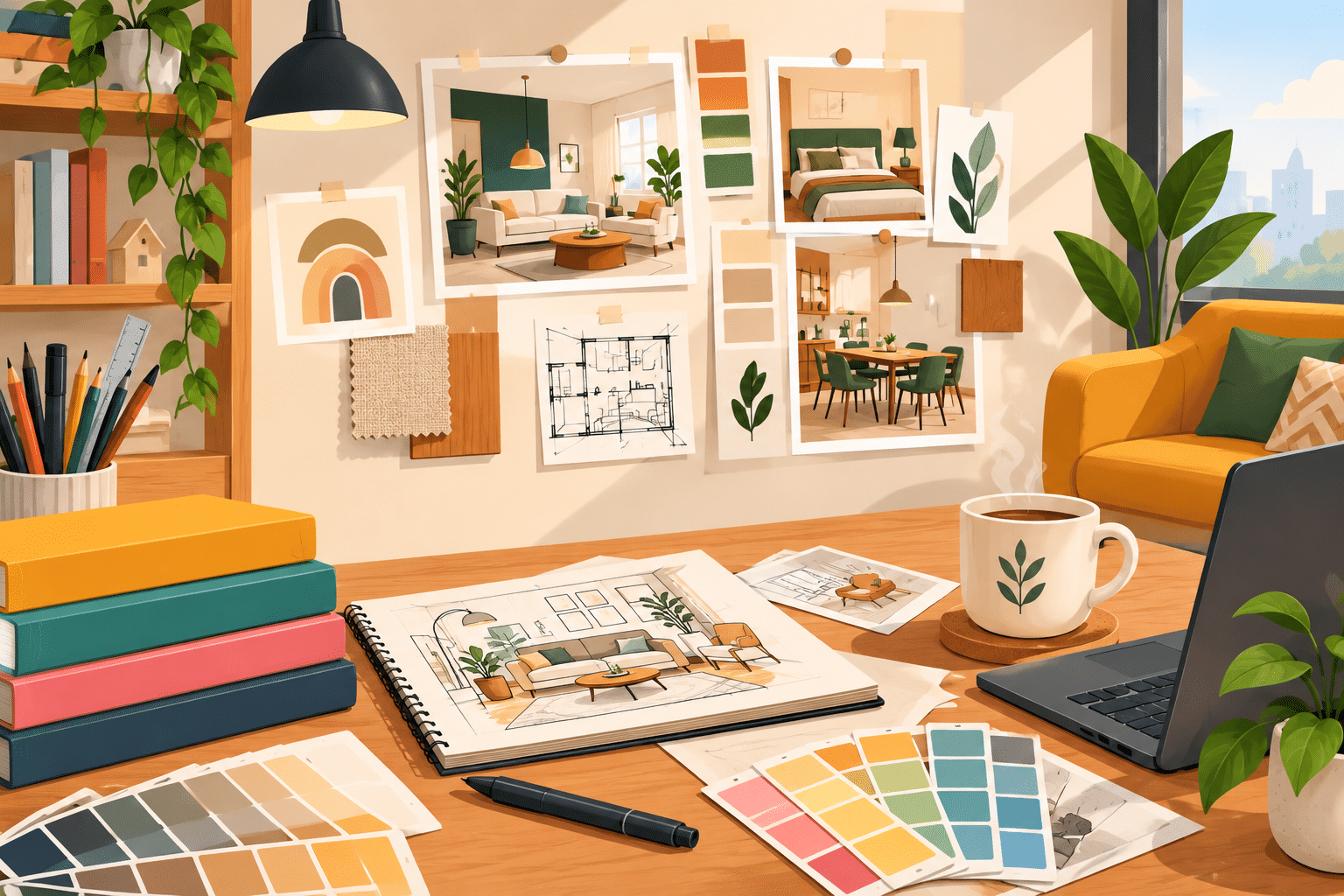
1. Create a mood board. Collect colours, fabric samples, furniture references, and pictures that express a particular style. Arrange them together to explore how different elements might work in one space.
2. Practise basic room layouts. Choose a room and sketch its walls, doors, windows, and furniture. Experiment with different arrangements while keeping movement and functionality in mind.
3. Explore colours and materials. Compare warm and cool shades, smooth and textured finishes, and different combinations of wood, fabric, metal, or stone.
4. Study real spaces. Observe how homes, cafés, libraries, and workplaces are designed. Think about what works well and what could be improved.
5. Keep a design portfolio. Save your sketches, mood boards, layout experiments, and completed projects. Include a few notes explaining your ideas and the decisions behind them.
These activities encourage you to think like a designer and provide examples of your progress over time.
Choosing the Right Learning Environment
If you are considering a career in interior design, choosing where to study is an important decision. Look beyond the course name and understand what the learning experience includes.
Review the curriculum, practical assignments, faculty guidance, available facilities, and opportunities to develop a portfolio. It is also helpful to examine student projects and understand how the programme balances creative exploration with technical learning.
At KID – Krishna Institute of Design, Indore, students can explore creative projects, receive guidance, and work towards developing portfolio pieces. Prospective students should check the current programme details directly with the institute to understand the subjects, facilities, and learning opportunities available.
The aim is to develop skills gradually, learn from mistakes, and become more confident in turning ideas into practical design concepts.
What Career Possibilities Can Interior Design Offer?
Interior design can lead to several creative directions, depending on a person’s interests, training, and experience. These may include residential interiors, commercial spaces, furniture planning, styling, design visualisation, and related creative work.
Each direction requires its own combination of skills. Some roles involve working closely with clients, while others focus more on drawings, materials, layouts, or visual presentations.
A strong portfolio, practical knowledge, communication skills, and continued learning can help aspiring designers demonstrate their abilities. It is wise to explore different roles before deciding which area best matches your interests.
Great Design Makes Everyday Life Better
Interior design is ultimately about people. A beautiful room is valuable, but a room that also feels comfortable, supports everyday activities, and uses its space wisely can make an even greater difference.
You do not need to know everything about design before you begin. Start by observing, experimenting, sketching, and asking questions. Each small project can teach you something new.
If you enjoy imagining how spaces could look and function, an interior design course in Indore may be worth exploring as part of your creative journey.
Sometimes, the most interesting design ideas begin with a simple question: What could this space become?