How Do Movies Create Impossible Worlds? The Magic Behind Animation and VFX
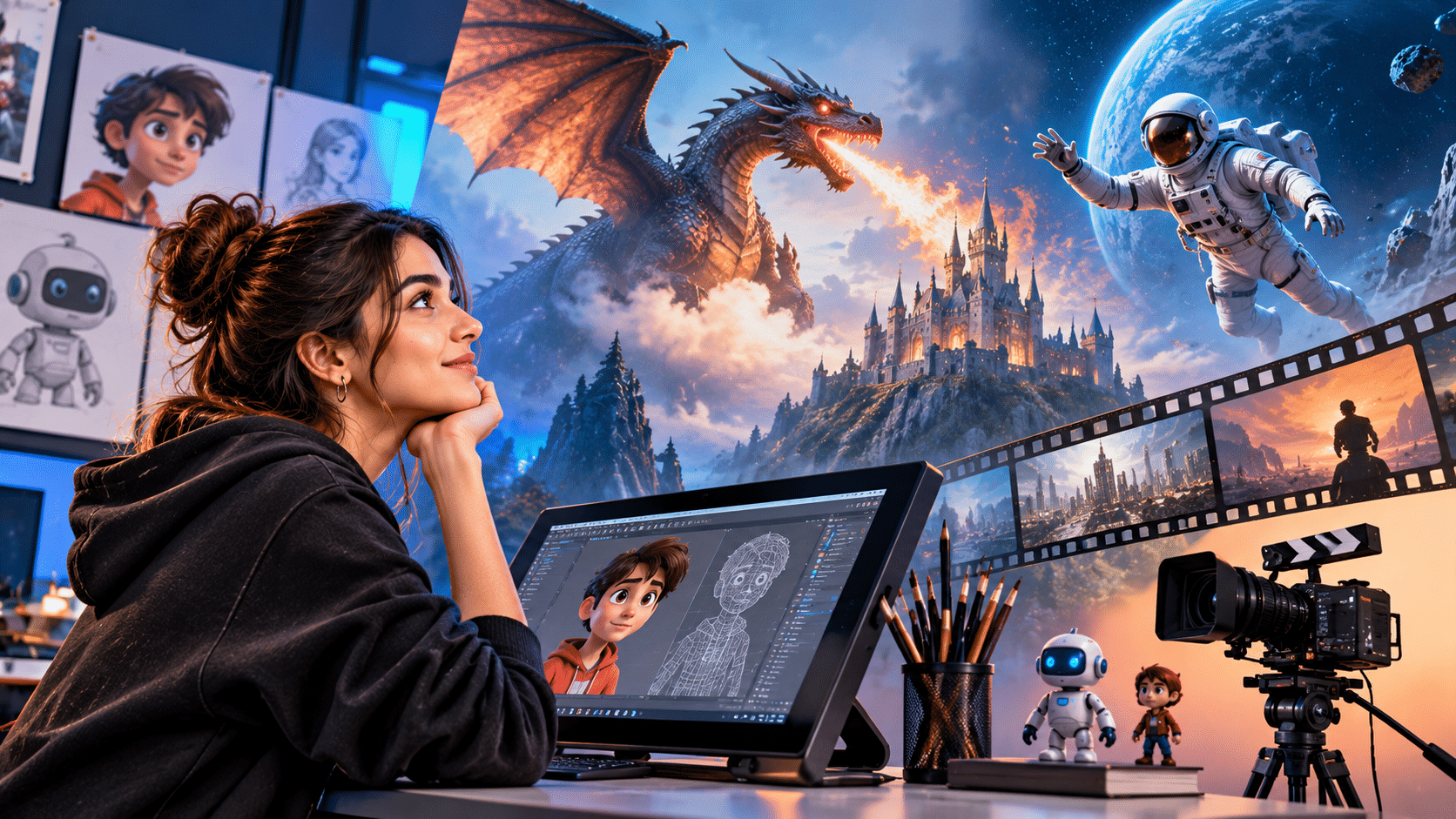
Have you ever watched a movie where a character flies through the sky, a city disappears in seconds, or an imaginary creature looks completely real? These moments often leave us wondering how filmmakers create things that do not exist in the real world. The answer lies in the fascinating world of animation and visual effects (VFX).
Behind every breathtaking visual scene is a combination of creativity, technology, imagination and countless hours of artistic work. What audiences see on screen as magic is actually the result of talented artists bringing extraordinary ideas to life.
Today, animation and VFX are transforming not only movies but also gaming, advertising, television, digital media and entertainment. Let’s explore how this creative industry works and why it is becoming an exciting field for aspiring designers.
1. Turning Imagination into a Visual Experience
Every imaginary world begins with an idea. Before a fantasy kingdom, futuristic city or animated character appears on screen, artists first imagine what it should look like.
Animation artists develop characters, environments, objects and movements that help communicate a story. They use drawings, digital illustrations and computer-generated imagery to transform creative concepts into visual experiences.
For example, an animated character may begin as a simple pencil sketch. Through modelling, texturing, rigging and animation, that sketch gradually becomes a character capable of expressing emotions and moving naturally.
This process shows how imagination and technical skills work together to create something extraordinary.
2. How Does VFX Make the Impossible Look Real?
Visual Effects, commonly known as VFX, allow filmmakers to create scenes that would be difficult, expensive or dangerous to capture in real life.
Imagine a movie featuring a massive explosion, a futuristic landscape or a character standing in the middle of a fictional world. VFX artists use specialised software and digital techniques to create these effects.
Some important VFX techniques include:
- Compositing: Combining different visual elements to create one complete scene.
- Motion Tracking: Following the movement of objects or cameras to integrate digital elements.
- Green Screen: Replacing a background with a digitally created environment.
- 3D Modelling: Creating digital objects, characters and environments.
- Visual Simulation: Producing realistic effects such as smoke, fire, water and explosions.
These techniques help filmmakers create visually impressive experiences that capture the audience’s imagination.
3. Animation Is More Than Just Cartoon Making
Many people associate animation only with cartoons, but the industry has grown far beyond that.
Today, animation is used in films, video games, educational content, advertisements, product presentations and digital storytelling.
From realistic 3D characters to attractive motion graphics, animation helps communicate ideas in ways that ordinary images and text sometimes cannot.
Different areas of animation include 2D animation, 3D animation, character animation, motion graphics and visual storytelling. Each area offers opportunities for creative individuals who enjoy combining art with technology.
4. The Creative Skills Behind Animation and VFX
Creating impressive digital visuals requires more than knowing how to operate software. Artists need a strong understanding of visual storytelling, design principles and creative problem-solving.
Some important skills include:
- Drawing and visualisation
- Colour theory and composition
- Character and environment design
- 2D and 3D animation techniques
- Understanding lighting, textures and movement
- Digital illustration and editing
- Attention to detail and creative thinking
Learning these fundamentals can help students build a strong foundation before exploring advanced digital tools.
5. Where Can Animation and VFX Take Your Career?
The growing use of digital content has created opportunities for creative professionals across different industries.
Students interested in animation and visual effects can explore career paths such as:
- 2D and 3D Animator
- VFX Artist
- Motion Graphics Designer
- Character Designer
- 3D Modelling Artist
- Compositing Artist
- Game Artist
- Visual Development Artist
These professionals may work with animation studios, film production companies, gaming companies, advertising agencies and digital media businesses.
The right career direction depends on individual interests, practical skills, creative abilities and the quality of work demonstrated through a portfolio.
6. Learn Creative Digital Skills at Krishna Institute of Design, Indore
If you enjoy animated movies, digital illustrations, visual storytelling and special effects, learning animation and VFX could be an exciting step towards your creative future.
Krishna Institute of Design (KID), Indore, provides design-focused learning opportunities for students interested in developing their creative abilities and exploring different areas of the design industry.
Through its creative programmes, KID offers opportunities to explore areas such as:
- Graphics Design: Understanding visual communication, digital artwork, layouts and creative design concepts.
- Animation: Exploring the art of bringing characters, objects and visual stories to life.
- VFX: Developing an understanding of visual effects and digital techniques used to create impressive screen experiences.
- Practical Learning: Building creative abilities through assignments, projects and hands-on activities.
- Portfolio Development: Learning to present creative ideas and completed work professionally.
At Krishna Institute of Design, the focus is on helping students explore their interests, develop design knowledge and gain practical exposure. For aspiring digital artists, this can be a starting point for understanding the creative possibilities of animation, graphics and visual effects.
7. Is Animation and VFX the Right Choice for You?
If you enjoy imagining fictional characters, experimenting with digital artwork, understanding movie effects or creating visual stories, this field may be worth exploring.
You do not need to begin as an expert artist. Curiosity, patience, creativity and a willingness to practise are important qualities for anyone starting their journey.
Start by exploring different animation styles, observing how visual effects are used in movies and experimenting with basic digital design projects. Gradually, you can discover which area matches your interests and develop the skills needed to move forward.
Final Thoughts: Where Imagination Meets Technology
The next time you watch a movie featuring an imaginary universe, a spectacular transformation or a character that looks incredibly real, remember that every visual detail has a creative story behind it.
Animation and VFX have made it possible to turn ideas that once existed only in imagination into experiences that millions of people can enjoy.
For students who love creativity and technology, this field offers an opportunity to explore, experiment and build something unique.
After all, why just watch impossible worlds on screen when you can learn the skills to create them yourself?