Can Fine Arts Become a Career? A Practical Guide for Creative Students
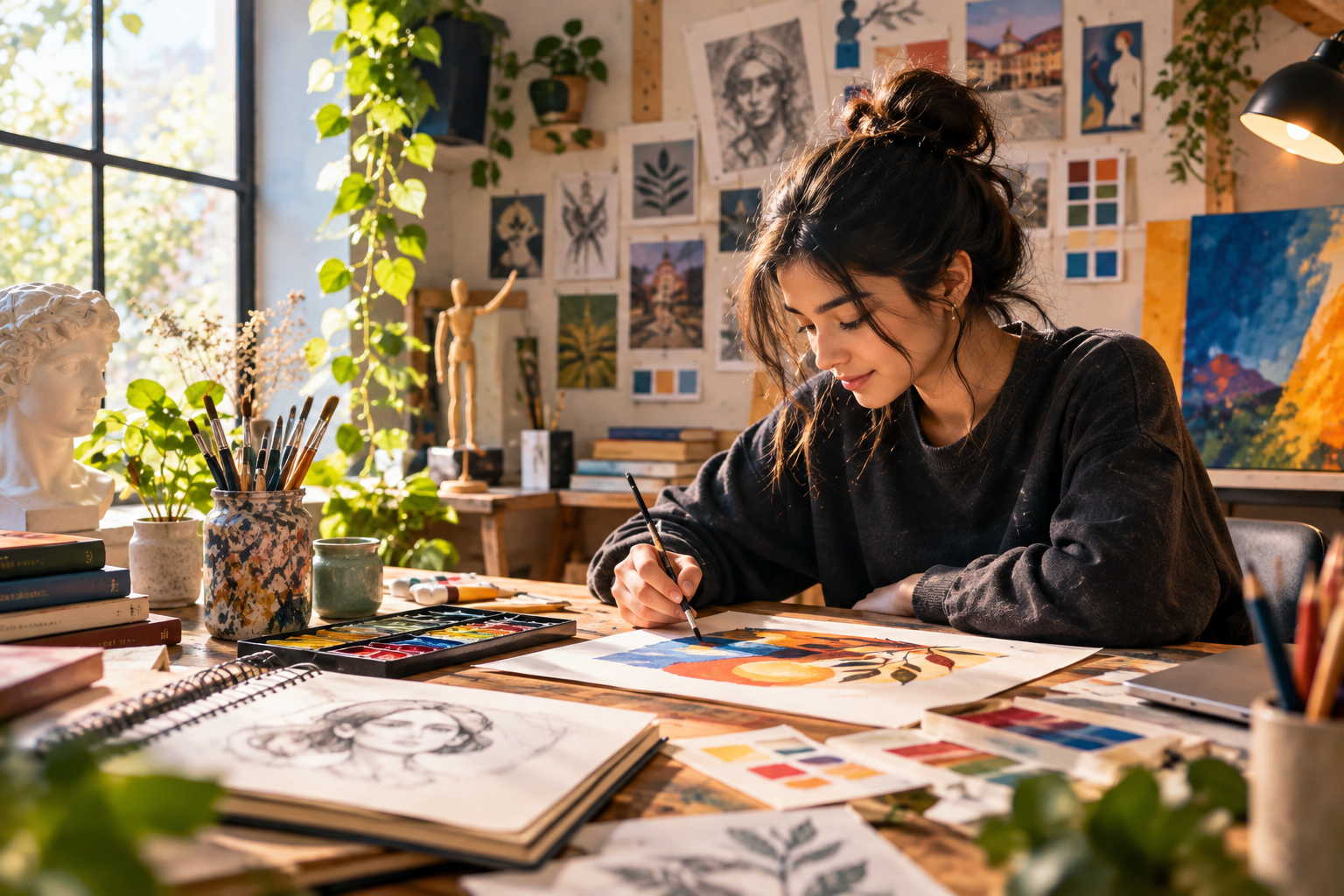
What if something you have always enjoyed doing could become more than just a hobby?
For many students, drawing, painting, sketching, experimenting with colours, or creating visual ideas feels natural. They may spend hours working on something simply because they enjoy the process. Yet when it is time to choose a career, an important question often appears: Can fine arts really become a career?
This uncertainty is understandable. Students want to choose a path that allows them to be creative while also helping them develop practical skills for the future. Understanding what fine arts actually involves can make that decision easier.
Fine Arts Is More Than Drawing
One of the biggest misconceptions about fine arts is that it is only about drawing or painting.
In reality, fine arts involves observation, imagination, composition, colour, materials, experimentation, visual communication, and personal expression. Students learn how to look at ordinary things differently and communicate ideas through visual forms.
Drawing may be an important starting point, but it is only one part of the creative journey.
A good artist also learns to ask questions. Why does a particular colour combination work? How does composition affect the viewer? What makes an artwork feel balanced? How can an idea be communicated without using words?
These questions encourage deeper creative thinking.
The First Problem: “I Don’t Know What to Create”
Many students experience creative blocks, especially when they are given a blank page and told to create something original.
The solution is often closer than they think: observe more closely.
Look at people, nature, buildings, objects, textures, shadows, colours, and everyday situations. Visit exhibitions, explore different art forms, maintain a sketchbook, and make quick drawings without worrying about creating a finished masterpiece.
A simple observation can become a concept, and a concept can eventually become a complete artwork.
With regular observation, students can gradually develop a stronger visual vocabulary and become more confident about generating ideas.
Learning Through Practice Makes a Difference
Reading about art techniques can provide useful knowledge, but practical experience helps turn that knowledge into a skill.
For example, understanding colour theory is one thing. Applying different colour combinations to an actual artwork and seeing how they change the mood is another.
The same applies to composition, materials, drawing techniques, and creative concepts.
A structured fine arts course can give students opportunities to practise, experiment, receive feedback, and understand how different techniques affect their work. Instead of worrying about getting everything right immediately, students can learn through the process of creating, reviewing, and improving.
What If Your Artwork Doesn’t Look Good?
This is another common problem for beginners.
You spend hours creating something and then feel disappointed with the result. Perhaps the proportions seem wrong, the colours do not work together, or the final piece does not look like what you imagined.
That does not mean you are not creative.
Every creative journey involves work that does not turn out as expected. Instead of giving up, look at the problem more closely.
Ask yourself: Could the composition be changed? Does the artwork need more contrast? Is the idea clear? Would a different technique work better?
Learning to analyse your own work can be just as important as learning to create it.
Build Your Portfolio From the Beginning
Students often think about portfolios only when they finish their studies. Starting earlier can be much more useful.
Keep your strongest sketches, paintings, experiments, concepts, and finished projects. You can also document how a project developed from the first idea to the final result.
A portfolio should not simply show finished artwork. It can demonstrate your creative process, experimentation, technical development, and ability to explore different ideas.
Over time, it becomes a visual record of your growth.
Finding Your Own Creative Style
Another question students often ask is, “How do I find my own style?”
There is no need to force an answer.
In the beginning, you may naturally experiment with techniques inspired by artists, movements, or artwork you admire. As you practise more, you start noticing your own preferences.
Maybe you enjoy bold colours. Perhaps you prefer detailed sketches, realistic subjects, abstract forms, expressive paintings, or digital artwork.
Your creative style usually develops gradually through observation, experimentation, feedback, and repetition.
Where Can Fine Arts Take You?
A background in fine arts can provide a foundation for different creative directions. Depending on their interests and additional skills, students may explore areas such as illustration, visual arts, digital art, creative studios, exhibitions, art education, content creation, or related design fields.
The important thing is not to choose a career title simply because it sounds attractive. Understand the work involved and consider whether it matches your interests and strengths. Your direction can also change as you gain experience.
How Should Students Choose a Fine Arts Course?
Choosing a course is an important decision, so it helps to look beyond the name of the programme.
Consider the learning approach, practical projects, guidance, facilities, opportunities to experiment, and portfolio development. A course should give you enough space to practise rather than making learning entirely theoretical.
At KID – Krishna Institute of Design, students can explore creative projects, experiment with ideas, receive guidance, and develop portfolio work as they build their creative abilities.
The goal should be to create an environment where students can learn, make mistakes, improve, and gradually become more confident in their work.
Creativity Takes Time to Grow
You do not need to know exactly where your creative journey will lead before you begin.
Start with curiosity. Observe more carefully. Experiment with different materials and techniques. Create regularly. Learn from feedback. Keep the work that shows your progress.
Most importantly, do not measure your creative ability by one drawing or one painting.
Fine arts is not simply about creating something beautiful. It is about learning to observe, think, experiment, communicate, and express ideas visually.
For students who genuinely enjoy creating, developing those abilities through the right learning environment can turn a natural interest into a meaningful creative skill—and potentially open the door to a wide range of future possibilities.