The Future of Fashion Is Yours: Turn Your Creative Ideas into a Career
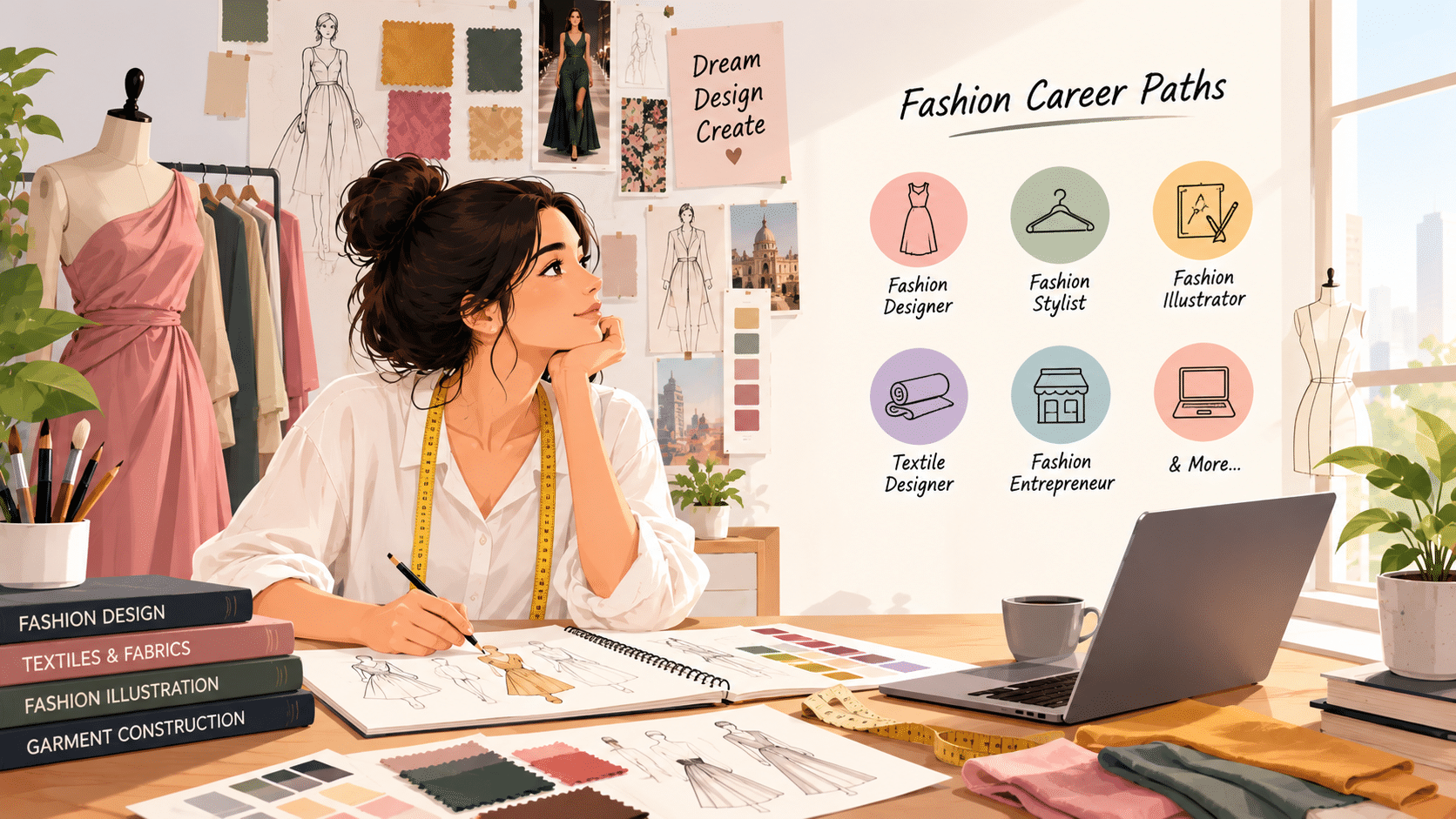
What if the clothes you imagine, the colours you love, and the styles you admire could become part of your future career? Fashion is much more than following trends. It is a creative world where ideas become designs, fabrics tell stories, and personal expression influences what people wear.
Today, fashion continues to evolve through digital tools, changing lifestyles, sustainable materials, and social media. This creates exciting possibilities for young people who enjoy experimenting with clothing, drawing designs, or discovering new styles.
However, building a career in fashion takes more than creativity alone. It requires practical skills, curiosity, and a willingness to learn. If you are considering a creative career after 12th, understanding the fashion industry can help you take your first step with confidence.
Why Is Fashion More Than Following Trends?
Trends come and go, but original thinking gives fashion its character. Designers often take inspiration from art, architecture, nature, culture, and everyday experiences. They use these influences to develop ideas that are both expressive and practical.
For example, a designer might draw inspiration from traditional Indian textiles and reinterpret them for contemporary clothing. Another might explore minimalism, bold colours, or recycled fabrics to create a distinctive collection.
Fashion also involves understanding people. Clothing must suit different preferences, occasions, climates, and lifestyles. Learning to balance appearance with comfort and function is an important part of the design process.
By exploring these elements, aspiring designers can begin developing their own creative perspective instead of simply copying what is popular.
How Is the Fashion Industry Changing?
The fashion industry is constantly exploring new ways to create, present, and sell clothing. Understanding these changes can help students recognise the skills they may want to develop.
1. Digital Tools Are Supporting Creativity
Design software can help fashion professionals create illustrations, develop mood boards, experiment with colours, and present concepts. These tools do not replace creative thinking; they offer additional ways to explore and communicate ideas.
Learning suitable digital tools alongside traditional design fundamentals can help students prepare for different types of creative work.
2. Sustainable Fashion Is Gaining Attention
Many designers and consumers are paying greater attention to material choices, garment durability, reuse, and waste reduction. This encourages designers to consider how clothing is made as well as how it looks.
Students can explore this approach by experimenting with leftover fabrics, learning about natural fibres, or designing garments intended to last longer.
3. Personal Style Matters More Than Ever
Social platforms make it easier for people to discover different styles and share their own ideas. As a result, fashion can be a way to express individuality rather than simply follow one popular look.
For aspiring designers, understanding different audiences and developing a recognisable creative identity can be valuable.
What Skills Do You Need to Build a Future in Fashion?
You do not need to know everything before starting. Most skills develop gradually through practice, feedback, and experimentation.
Fashion illustration: Sketching helps you communicate garment ideas, silhouettes, colours, and design details.
Fabric and textile knowledge: Understanding texture, weight, stretch, and drape helps you choose materials that suit your designs.
Pattern making and garment construction: These skills help transform a concept into clothing that can be made and worn.
Colour and trend research: Studying colour combinations, cultural influences, and changing preferences can help you develop relevant design concepts.
Communication and teamwork: Fashion projects often involve working with other creative professionals, presenting ideas, and responding to feedback.
A strong foundation in these areas can help you approach design challenges with greater confidence.
Choosing the Right Fashion Institute in Indore
If you want to turn your interest into a structured learning journey, researching a suitable fashion institute in Indore is an important step.
Start by comparing course content. Look for subjects that match your goals, such as fashion illustration, textiles, garment construction, styling, or digital design. Practical assignments are also important because they allow you to apply concepts rather than only study them.
Consider the faculty guidance, available facilities, course duration, eligibility requirements, and qualification offered. Ask how students develop their portfolios and what kinds of projects they complete during the programme.
It is helpful to review student work or speak with institute representatives before making a decision. Students exploring creative education can also contact Krishna Institute of Design (KID) for current details about relevant programmes and admissions.
Instead of choosing a course based only on advertisements or popularity, select one that supports your interests and helps you develop useful skills step by step.
What Career Opportunities Can Fashion Offer?
Fashion includes several career paths, and the right direction depends on your training, interests, and experience.
- Fashion designer: Develop clothing concepts, select materials, and create designs for different audiences.
- Fashion stylist: Coordinate clothing and accessories for photoshoots, campaigns, events, or individual clients.
- Fashion illustrator: Communicate design ideas through sketches and visual presentations.
- Textile designer: Explore prints, patterns, colours, and textures for fabrics.
- Fashion entrepreneur: With suitable industry and business knowledge, develop a clothing label or independent venture.
You could also explore fashion merchandising, production, or fashion communication through additional relevant training.
Keep in mind that completing a course does not guarantee employment. Building a portfolio, gaining practical experience, developing communication skills, and staying informed about the industry can improve your preparation for professional opportunities.
Start Building Your Fashion Portfolio Today
A portfolio is a collection of work that demonstrates your ideas, abilities, and progress. It does not need to begin with finished garments or professional photographs.
Start with sketches, colour experiments, fabric samples, mood boards, and concepts inspired by everyday life. You might create a small collection around a theme such as nature, local culture, or modern streetwear.
As your skills improve, organise your strongest projects and explain the thinking behind them. A well-presented portfolio helps others understand not only what you create, but also how you approach a design problem.
Most importantly, keep experimenting. Your early work is a starting point, and every project can teach you something new.
Your Ideas Can Shape Your Future
A career in fashion begins with curiosity: noticing details, imagining possibilities, and asking how an idea could become something real. With the right learning path and consistent effort, those interests can develop into practical creative skills.
You do not need to predict every step of your future today. Start by exploring what excites you, learning the fundamentals, and comparing courses that suit your goals.
The future of fashion is not just about what you wear. It is about what you imagine, what you create, and the ideas you choose to bring to life.