AI Can Generate Ideas in Seconds, But Can It Replace Human Creativity?
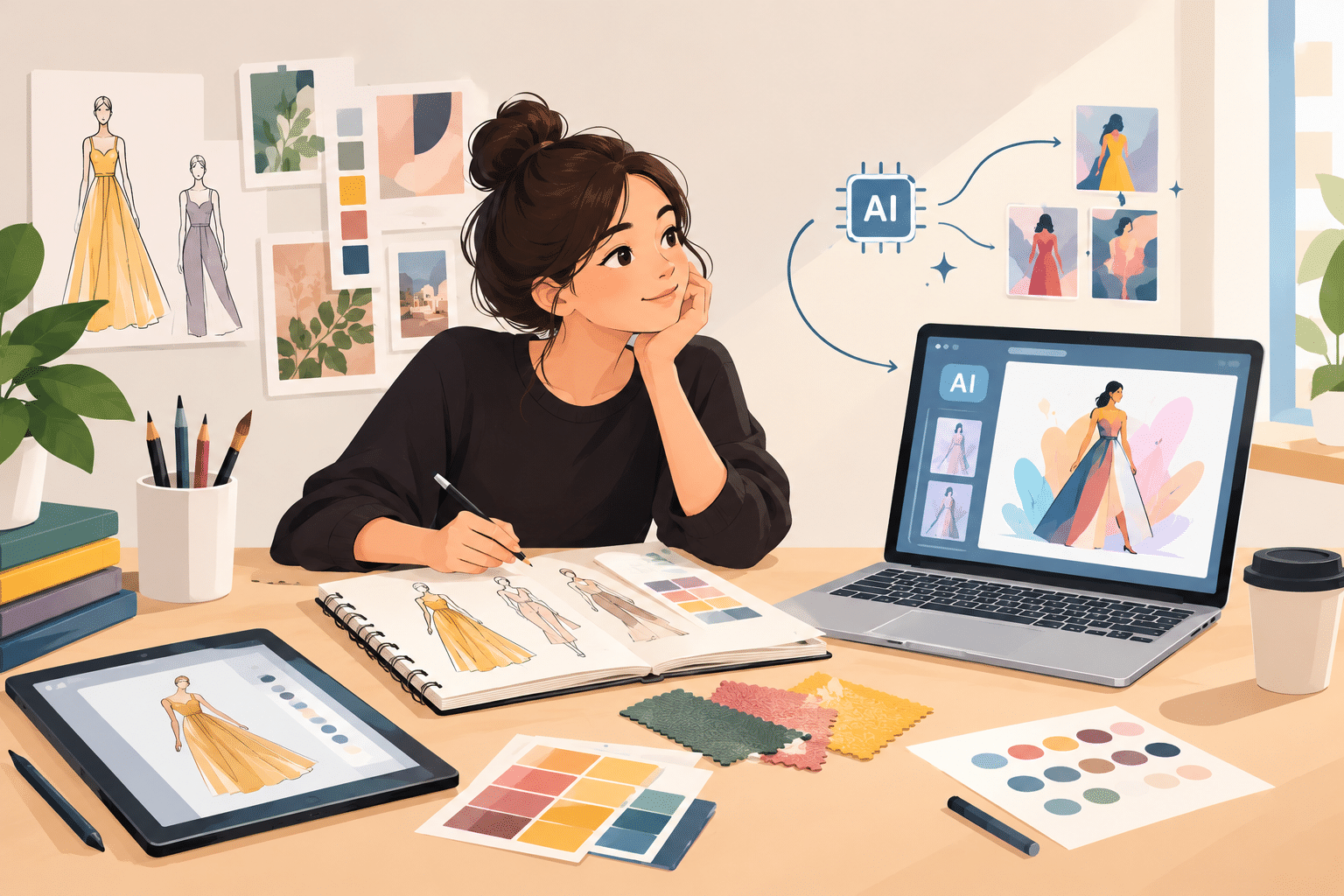
Artificial intelligence is changing the way people work, learn, and create. From generating digital artwork to suggesting colour combinations and producing visual concepts, AI tools are becoming part of everyday creative work.
For students interested in design, this development raises an interesting question: if technology can create images in seconds, what makes a human designer valuable?
The answer goes beyond knowing how to use software. Creativity involves understanding people, recognising problems, making thoughtful decisions, and giving ideas a purpose. AI can assist with parts of this process, but human judgement remains important.
The Rise of AI in the Creative World
Not long ago, creating a digital visual often required several tools and considerable time. Today, AI-powered applications can help users explore concepts, generate references, experiment with styles, and develop early ideas quickly.
Graphic designers may use these tools to explore visual directions. Interior designers can experiment with room concepts, while fashion designers may investigate colour palettes and silhouettes. Animation and visual effects workflows can also benefit from selected AI-assisted tasks.
However, generated results are not automatically accurate, original, or suitable for a particular project. They still need to be reviewed, refined, and adapted to meet real requirements.
The most useful approach is to treat AI as a creative assistant rather than a substitute for thinking.
Why Human Creativity Still Matters
Imagine asking an AI tool to design a comfortable bedroom for a small apartment. It might generate an attractive image, but a real design project involves more questions.
Who will use the room? How much storage is needed? Where are the doors and windows? What is the available budget? Will the furniture fit, and can people move around comfortably?
These questions require context and practical judgement.
The same applies to fashion and graphic design. A visually impressive concept may not suit the intended audience, communicate the right message, or work in practice.
Human creativity brings together experience, observation, emotion, cultural understanding, and purpose. These qualities help designers move beyond attractive visuals towards meaningful solutions.
The New Creative Skill: Knowing How to Use Technology
Learning a creative skill today can involve both traditional fundamentals and digital tools.
For example, graphic designers still need to understand typography, composition, colour, and visual hierarchy. Interior designers need to consider measurements, materials, lighting, and functionality. Fashion designers benefit from understanding fabrics, proportions, construction, and how clothing is worn.
Technology can support these skills, but it cannot remove the need to understand them.
Students can begin by learning the fundamentals of their chosen field and then exploring digital tools that make their process more effective. They should also learn to check generated information, recognise limitations, respect copyright, and consider whether a tool is appropriate for the task.
The goal is not to use every new application. It is to understand which tools genuinely improve the work.
How Students Can Prepare for a Changing Creative Industry
You do not need to become an AI expert overnight to prepare for the future. Start with small, practical steps.
1. Build your fundamentals. Learn the principles behind your chosen field before depending on automated tools.
2. Experiment with digital applications. Try tools that help with research, brainstorming, sketching, or visual exploration.
3. Create original projects. Develop concepts of your own rather than relying entirely on generated results.
4. Learn to evaluate your work. Ask whether your design solves the problem, communicates clearly, and meets the project’s requirements.
5. Document your process. Keep sketches, drafts, experiments, feedback, and final outcomes to demonstrate how your ideas develop.
These habits can help students become more confident and adaptable as creative technology evolves.
Why Practical Learning Makes a Difference
Watching tutorials and exploring AI tools can be useful, but applying knowledge to actual projects provides a different kind of learning.
A student might create several design concepts, compare their strengths, receive feedback, and revise the strongest option. Through this process, they learn to explain their decisions and understand why some approaches work better than others.
At KID – Krishna Institute of Design in Indore, students can explore creative projects, receive guidance, and develop portfolio work. Those considering a programme should review the current curriculum, facilities, and practical learning opportunities to understand how the course aligns with their goals.
A portfolio is particularly valuable because it can demonstrate more than a finished image. It can show the research, experimentation, decisions, and improvements behind a creative result.
The Challenges We Should Not Ignore
AI also brings important questions about originality, copyright, accuracy, and responsible use. Generated images may contain errors, reproduce familiar visual patterns, or create results that do not reflect the needs of a particular audience.
Creative professionals need to understand these limitations and use technology thoughtfully. They should also be transparent where required and avoid presenting automated output as work created entirely through their own effort when that would be misleading.
Learning to question a tool’s output is just as important as learning how to generate it.
The Future Belongs to Curious Creators
AI will continue to influence creative work, although the pace and impact will differ across industries. Some tasks may become faster, while other responsibilities will continue to depend heavily on human understanding, collaboration, and practical decision-making.
For aspiring designers, this is an opportunity to remain curious, develop strong fundamentals, and experiment with new methods without losing sight of the purpose behind their work.
The real advantage is not simply knowing how to make something quickly. It is knowing what is worth creating, who it is for, and how to make it better.
Technology can help generate possibilities, but thoughtful creativity gives those possibilities direction.