Designs have deeper meanings & hidden information
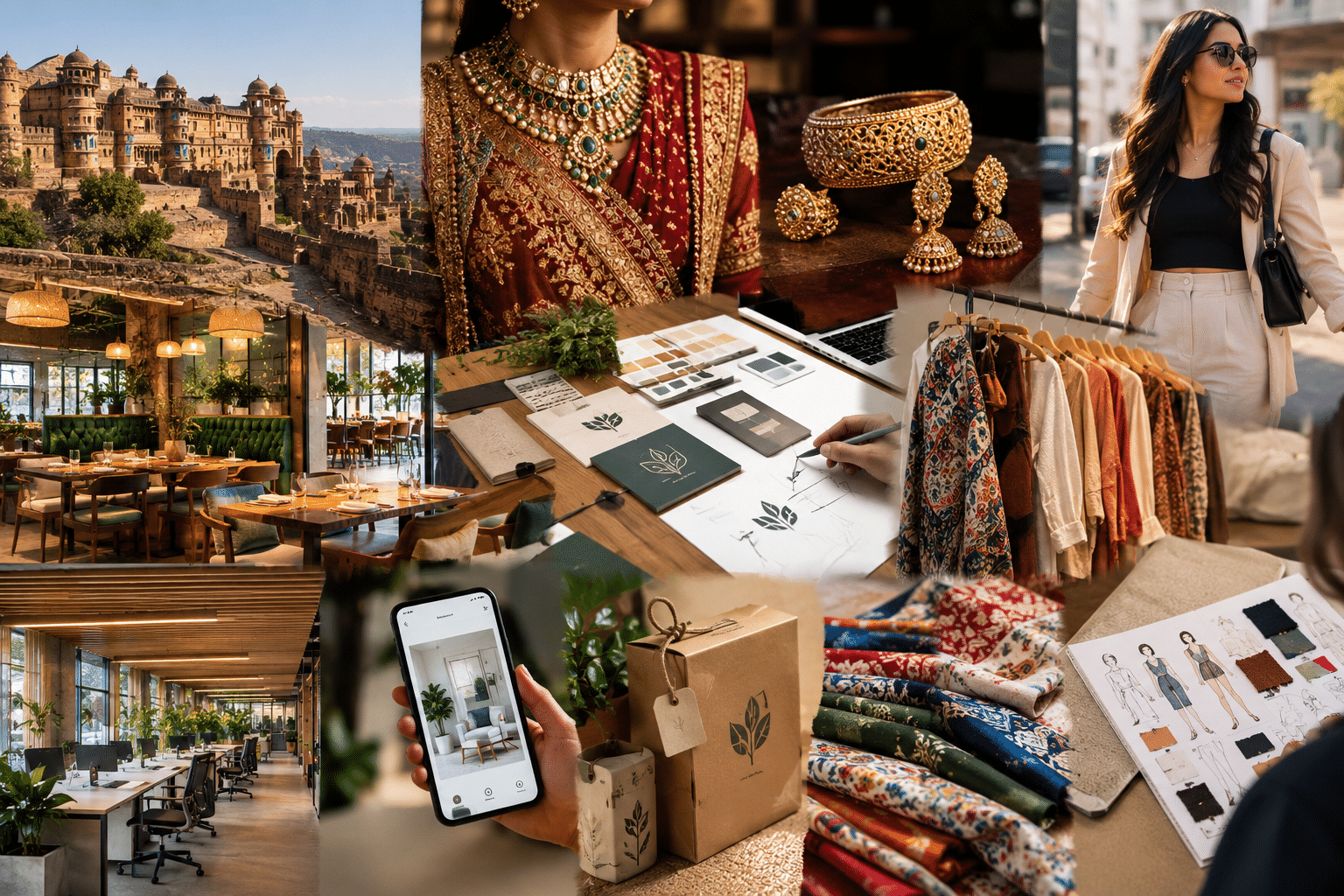
Designs are the gateway towards happiness.
Have you ever wondered how deeply design influences your everyday life? From the clothes to what we wear to the spaces we work in, from restaurants and brands to architecture and jewellery, design surrounds us everywhere. We may not always notice it consciously, but every colour, pattern, structure, and form communicates something. Design is not simply about making something look beautiful; it can carry history, identity, information, authority, culture, and emotion.
If we look back through history, we can see how deeply design was connected to power and identity. Kingdoms, royal palaces, forts, queens, and kings were all surrounded by carefully planned designs. Fort architecture, for example, was not created only for visual appeal. Its structures, pathways, walls, entrances, patterns, and positioning often served practical purposes such as protection, movement, surveillance, and direction. The design of a fort could communicate strength while simultaneously helping people understand how to navigate and defend the space.
Clothing and jewellery also carried powerful meanings. Kings and queens carefully selected their attire because what they wore represented their position, wealth, culture, and authority. Fabrics, colours, ornaments, crowns, and jewellery were often sourced from different parts of the world and designed with great attention to detail. Certain patterns, materials, or ornaments were reserved exclusively for royal families or specific social groups. These designs created a visual identity and immediately communicated who held power, status, or a particular designation.
Jewellery provides another fascinating example. Some pieces were created by specialised craft people and were made exclusively for particular families or individuals. Their designs could represent heritage, social position, authority, or belonging. In this way, jewellery was not merely decoration; it became a form of visual language. A person could communicate their identity without saying a single word.
The same principle continues today, although its expression has changed. Generation Z is strongly influenced by fashion trends, social media, visibility, individuality, and comfort. People often choose clothes, accessories, interiors, products, and even digital interfaces based on how they look and how they make them feel. Trends spread rapidly, creating a strong demand for new and innovative designs. As this demand has grown, design has also gained enormous economic importance. Businesses invest heavily in branding, packaging, fashion, architecture, product design, and user experience because people are increasingly influenced by visual presentation.
Design has therefore entered almost every part of modern life. A restaurant’s interiors can influence how we experience its food. A brand’s logo can make us recognise it instantly. The colours used in a workplace can affect the atmosphere. The design of an app can determine whether it feels simple or complicated. Even the clothes we wear can influence how others perceive us and how we perceive ourselves.
This is where the deeper power of design becomes visible. Design can provide information, communicate direction, create identity, establish authority, influence emotions, and shape behaviour. Colours and patterns can communicate messages even before words are spoken. A carefully designed object can make us feel comfortable, confident, inspired, or connected to a particular culture.
Ultimately, design is much more than decoration. It is a language that connects the past with the present. From ancient forts and royal jewellery to modern fashion, brands, products, and digital experiences, design tells stories and carries information. When used with purpose, creativity, and a sense of meaning, design can create an impact far beyond appearance. We live surrounded by designs, and perhaps the most interesting part is that every design has a story waiting to be understood.