Design with ethics & values.
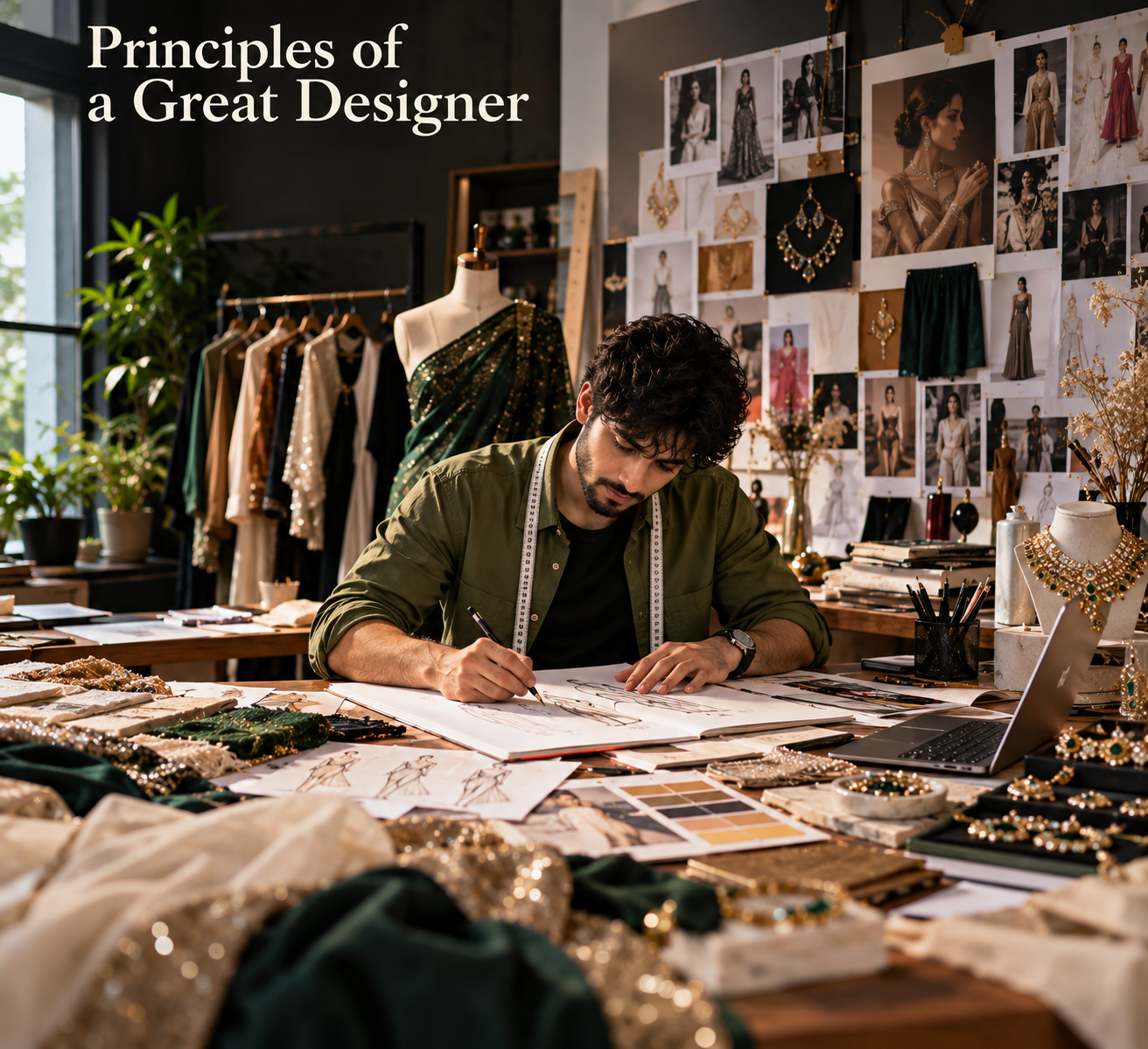
Designers journey towards growth and success.
Every designer follows certain important principles that help them develop their skills, improve their creativity, and grow both personally and professionally. A designers performance is not judged only by the final outcome of their work but also by their ethics, discipline, attitude, and approach towards learning. Principles provide a foundation for becoming a better professional and a responsible individual. They are a set of values and self-imposed rules that guide a person towards continuous growth. Every profession has its own principles and standards, and designers must understand and follow them to create meaningful and effective work.
A good designer is always curious and willing to learn. Reading, observing, experimenting, and understanding the world around them are important parts of a designer’s development. A designer should approach their work with genuine passion and dedication rather than treating it simply as a profession. Consistent practice and a growth mindset help designers improve their abilities over time. They should be willing to learn new techniques, understand new technologies, explore different ideas, and accept new challenges. Humility and obedience towards the learning process allow designers to develop their skills without becoming overconfident.
Another important principle is understanding and following the fundamental rules of design. These include elements such as size, shape, colour, texture, pattern, proportion, balance, contrast, hierarchy, alignment, and composition. These principles provide structure to creative work and help designers communicate ideas effectively. However, following design principles does not mean limiting creativity. A good designer understands the rules first and then learns how and when they can be adapted according to the purpose of the project. The needs of the audience, client, environment, and society should always be considered while making design decisions.
Understanding people and society is also an essential quality of a good designer. Design is created for people, and therefore designers should understand how people think, behave, and respond to visual communication. A designer should try to understand the needs, emotions, preferences, and cultural backgrounds of their audience. Knowing what makes people comfortable, interested, connected, or emotionally engaged can help create designs that are meaningful and relatable. Good design is not only about looking attractive; it should also communicate a message and solve a problem.
Exploration is another important principle in a designer’s journey. Travelling and experiencing different parts of the world can expose designers to different cultures, traditions, architecture, crafts, art forms, lifestyles, and visual languages. Researching different cultures helps designers develop creativity and analytical thinking. Every culture has unique patterns, colours, materials, symbols, and methods of expression. Learning from these differences can provide inspiration and help designers develop a broader perspective. However, cultural references should be approached with respect and understanding rather than being copied without context.
Originality and authenticity are also important qualities of a good designer. A designers work reflects their personality, imagination, knowledge, and creative thinking. Designers should develop their own visual language instead of simply copying the work or ideas of others. Inspiration is an important part of creativity, but it should be transformed through personal understanding and experimentation. Creativity is not something that remains fixed; it develops with time, practice, observation, research, and experience. A designer should continuously experiment with new ideas and learn from both success and failure.
Ethics and integrity should guide every stage of the design process. Designers should respect the intellectual property and ideas of other creators and avoid presenting someone else’s work as their own. They should be honest about their abilities, communicate clearly with clients and colleagues, and take responsibility for their decisions. A professional designer should also understand the social and environmental impact of their work. Design has the power to influence people, and therefore it should be used responsibly.
Finally, learning from mentors, teachers, colleagues, and other experienced professionals is an important part of becoming a successful designer. Knowledge becomes valuable when it is practiced and applied. A good designer listens with humility, accepts constructive criticism, and remains willing to improve. Learning is a continuous process, and there is always something new to discover.
In conclusion, the principles of a good designer are based on curiosity, discipline, creativity, originality, ethics, observation, research, and continuous learning. A designer should not only focus on creating beautiful work but also understand the purpose, people, culture, and responsibility behind that work. By following these principles with consistency, humility, and dedication, a designer can develop a strong professional identity and contribute meaningful and thoughtful designs to society.