Before You Choose Graphic Design, Read This: Skills That Actually Matter
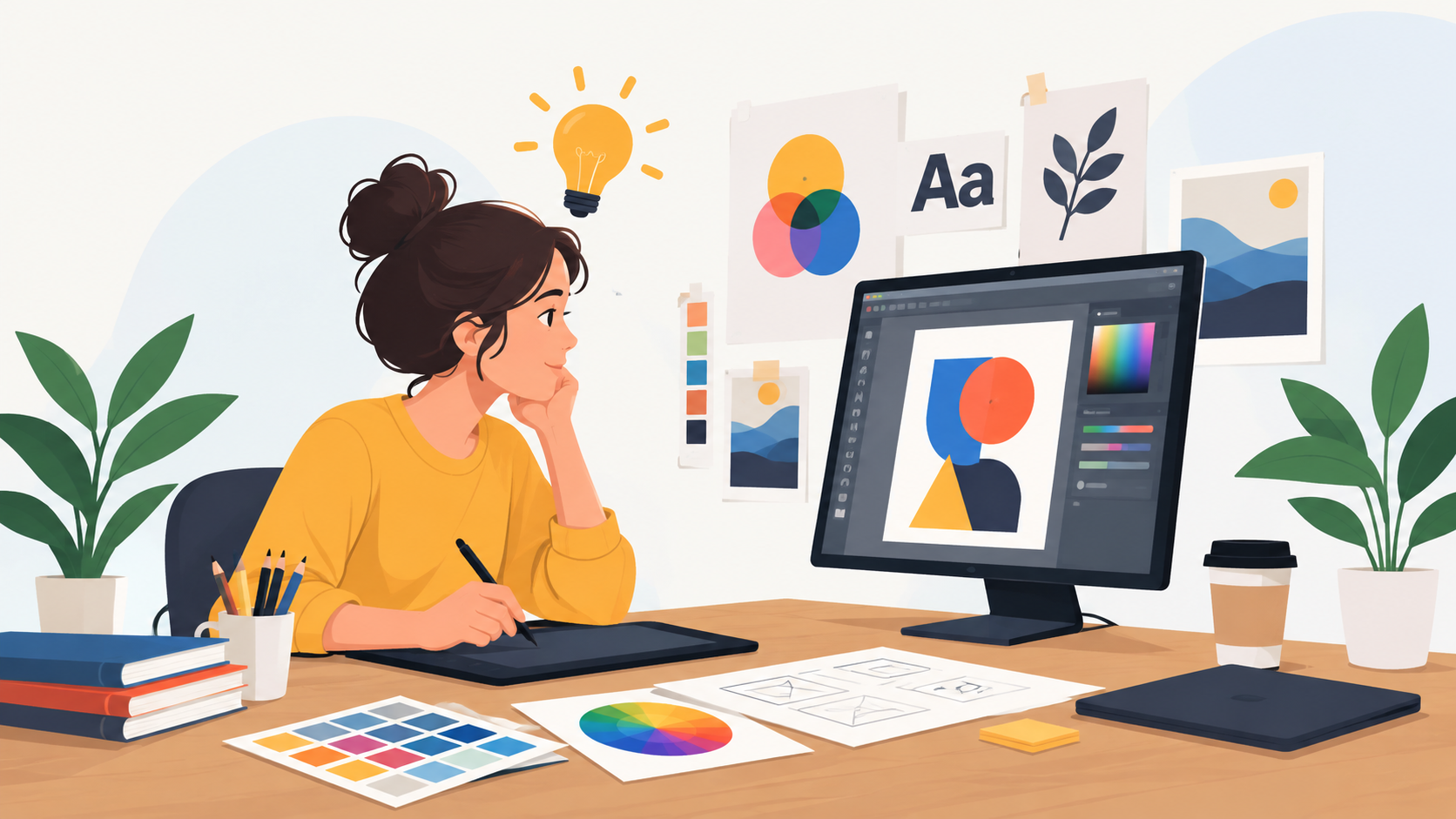
Graphic design looks exciting from the outside. A striking poster, memorable logo, attractive social media post, or polished brand identity can make the work appear simple. But behind every effective design is a combination of creative thinking, visual knowledge, technical ability, and plenty of practice.
If you are thinking about learning graphic design or building a creative career, there is something important to understand first: good graphic design is not just about knowing software. It is about knowing how to communicate an idea visually.
Creativity Is Only the Beginning
Creative thinking is one of the most valuable qualities a designer can develop. However, having ideas is only the first step.
A designer needs to understand what an audience should notice, what message needs to be communicated, and how different visual elements can support that message.
For example, a poster may contain beautiful colours and impressive graphics, but if the main information is difficult to find, the design has not solved its communication problem.
This is why graphic design combines creativity with purpose.
Learn the Fundamentals Before Following Trends
Design trends change quickly. One year, a particular style may appear everywhere, and the next year, something completely different may become popular.
Instead of depending entirely on trends, aspiring designers should first understand the fundamentals.
Typography, colour theory, composition, spacing, contrast, alignment, balance, and visual hierarchy are essential parts of effective design.
These principles help designers organise information and guide the viewer’s attention. Once the fundamentals become stronger, experimenting with different styles becomes easier and more meaningful.
Software Is a Tool, Not the Designer
Learning design software is certainly important. Tools can help you create illustrations, edit images, develop layouts, and prepare professional visual content.
However, software cannot decide what a design should communicate.
Two people can use the same software and create completely different results. The difference often comes from their understanding of design, observation, creativity, and decision-making.
Therefore, when learning graphic design, do not focus only on remembering where every tool is located. Try to understand why you are using it.
Learn to Solve Visual Problems
Every design project has a purpose.
A brand may need an identity that feels professional. A restaurant may need packaging that attracts attention. A business may need social media graphics that communicate information quickly. A campaign may need visuals that connect with a particular audience.
These are not simply drawing or decoration tasks. They are communication problems.
A good designer learns to ask questions before opening the software:
- Who is the audience?
- What is the main message?
- What should people notice first?
- What feeling should the design create?
- Where will the design be used?
Answering these questions can give the creative process a much clearer direction.
Practice Is Where Real Learning Happens
Reading about graphic design can give you knowledge, but creating designs helps turn that knowledge into a skill.
Try creating different types of projects. Design a fictional brand identity. Create a poster for an imaginary event. Develop social media graphics. Experiment with packaging. Redesign an existing concept simply as a learning exercise.
Every project presents a different challenge.
Sometimes your first idea will work. Sometimes it will not. You may discover that the typography feels wrong or that the layout is too crowded. That is part of learning.
Practical work teaches you how to review your own decisions and make improvements.
Build a Portfolio While You Learn
Many beginners wait until they feel completely ready before creating a portfolio. There is no need to wait that long.
Your portfolio should gradually become a collection of your strongest work. More importantly, it should show how you think as a designer.
Instead of adding dozens of similar designs, choose projects that demonstrate different skills. You might include branding, typography, social media design, posters, packaging, illustration, or digital layouts.
Whenever possible, show some of the process behind a project. Explain the challenge, your idea, the visual direction, and the final result.
This can make your portfolio much more interesting than a collection of finished images alone.
Develop Your Own Visual Style
A common question among new designers is, “How do I find my style?”
The answer usually comes through practice.
Your personal style does not need to appear immediately. It can develop naturally as you experiment with colours, typography, layouts, imagery, illustration, and different design approaches.
Look at work from different designers and industries. Observe what catches your attention, but avoid simply copying it.
Instead, ask yourself what you like about a particular design. Is it the simplicity? The typography? The composition? The colour combination?
Understanding what attracts you can help you develop your own creative direction.
Learn to Accept Feedback
Design is often subjective, but feedback can still be extremely useful.
Another person may notice that a headline is difficult to read, that the visual hierarchy is unclear, or that the design does not communicate the intended message.
Instead of seeing feedback as criticism, use it as another perspective.
At KID – Krishna Institute of Design, students can explore practical creative projects, receive guidance, experiment with ideas, and develop portfolio work while building their design skills.
Working on projects and receiving feedback can help students become more confident in explaining and improving their creative decisions.
Keep Your Creative Eye Active
Design learning does not stop when a class or project ends.
Look around you.
Notice advertisements on the street, packaging in stores, websites, mobile apps, magazine covers, menus, posters, and social media content. Ask yourself why certain visuals attract attention while others do not.
This simple habit can strengthen observation skills.
You can also recreate small design exercises for practice, experiment with different layouts, or challenge yourself to communicate the same message in several visual styles.
The more you observe and create, the more naturally design decisions can begin to develop.
Choosing the Right Learning Environment
If you are considering a graphic design institute in Indore, do not judge a course only by its name or the list of software it teaches.
Look at the overall learning experience. Are there practical projects? Can you experiment with different ideas? Is guidance available when you need it? Will you have opportunities to develop a portfolio?
These factors can make a significant difference because graphic design is a skill that grows through application.
Your Creativity Needs Direction
Graphic design can be an exciting field for people who enjoy creating, observing, experimenting, and solving problems.
But creativity alone is not enough.
You need fundamentals to structure your ideas, technical skills to create them, practical experience to improve them, and a portfolio to present them.
Most importantly, you need curiosity.
The goal is not simply to learn how to make beautiful designs. It is to learn how to make designs that communicate, solve problems, and leave an impression.
That is where creativity becomes a real design skill.