A Beginner’s Guide for Aspiring Designers.
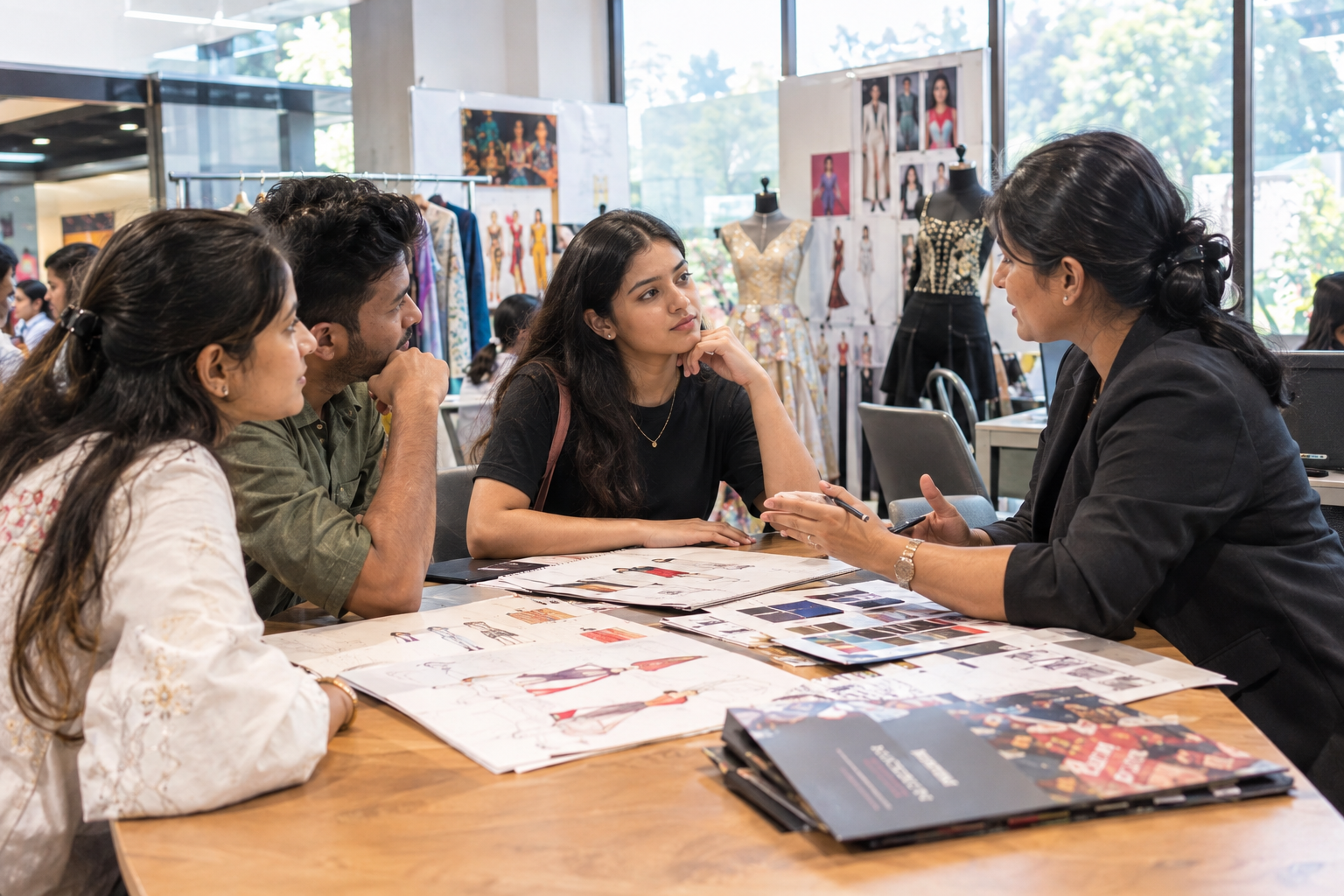
Students often go through a brief but important period of uncertainty after school. One of the biggest questions they face is, “What course should I pursue to build a successful career?” Almost every student seeks advice from parents, teachers, seniors, mentors, and well-wishers before choosing a future path. While career guidance is valuable, students should also understand their own interests, strengths, creativity, and passion before making an important decision.
For students who are naturally interested in art, fashion, aesthetics, technology, and innovation, design can be an exciting career direction. Choosing a course connected to personal interests can make learning more engaging while helping students develop skills that can remain useful throughout their careers.
Why Are More Students Exploring Design?
The fashion industry, in particular, has experienced significant growth over the years. The global fashion market is projected to reach around $1.6 trillion by 2030. The industry continues to evolve as consumers look for new styles, luxury products, unique designs, sustainable materials, and personalised experiences.
Digitalisation and social media have also changed the way people discover fashion, designers, brands, and trends. Platforms such as Instagram, Pinterest, and other digital channels allow designers to showcase their creativity to audiences around the world.
As a result, more young people are becoming interested in fashion and other creative industries. They are also recognising that design is not limited to clothing.
Design Offers Different Creative Directions
Design includes several areas, such as fashion design, jewellery design, interior design, fashion modelling, and game design. Each field has its own creative process and technical requirements.
Students interested in these areas can consider specialised design education, such as the courses offered by Krishna Institute of Design in Indore, to develop their creative and technical foundations.
The important step is to understand what type of work genuinely interests you. A student fascinated by fabrics and clothing may enjoy fashion design, while someone interested in spaces and aesthetics may find interior design more suitable.
Build a Strong Foundation Early
Starting early can be useful for aspiring designers. A strong educational foundation can help students understand the fundamentals of their chosen field, develop practical skills, and gradually create a portfolio of their work.
Instead of simply following trends, students can learn how trends are created, how consumer preferences change, and how creativity can be converted into practical products and experiences.
A portfolio can become especially valuable because it gives students an opportunity to demonstrate their ideas, technical development, experimentation, and progress.
How Has Fashion Changed Across Generations?
The fashion industry has changed significantly across generations. In earlier times, particularly in many traditional Indian households, clothing choices were often more conservative and practical. People generally owned fewer clothes and frequently reused the same outfits for years.
Fashion was influenced by cultural traditions, family preferences, affordability, and practicality.
Younger generations have grown up in a very different environment. Greater access to global fashion, e-commerce, social media, entertainment, and international brands has exposed young consumers to a much wider range of clothing, accessories, footwear, and styles.
College students and young professionals may choose different outfits for different occasions while paying closer attention to colours, patterns, brands, comfort, and personal expression.
Changing Preferences Create New Opportunities
This changing consumer behaviour creates opportunities for creative professionals. Designers can work in fashion houses, clothing brands, jewellery companies, interior studios, entertainment companies, gaming organisations, advertising agencies, e-commerce businesses, and other sectors.
Some professionals may also choose entrepreneurship and establish their own brands or design studios after gaining sufficient knowledge and experience.
However, aspiring designers should understand that creative careers require more than passion.
Creativity Needs Technical Knowledge
Design is both a creative and analytical discipline.
A fashion designer, for example, needs to understand fabrics, colours, textures, patterns, stitching, production techniques, and consumer preferences. Similarly, an interior designer needs knowledge of space, materials, functionality, lighting, colours, and aesthetics.
A game designer may need to combine storytelling, technology, visual concepts, user experience, and problem-solving.
Therefore, students should focus on developing both creative thinking and practical skills.
Why Observation Matters in Design
Attention to detail is an essential part of becoming a capable designer. A small change in colour, texture, proportion, shape, or pattern can completely transform a design.
Students can strengthen this ability by observing their surroundings, studying different cultures and markets, understanding historical influences, and continuously exploring new ideas.
The more carefully you observe, the more possibilities you may notice.
Practice Makes Creativity Stronger
Creativity also requires patience. Not every idea becomes a successful design on the first attempt. Beginners may create several drafts before finding the right concept.
They may need to experiment with different materials, colours, techniques, and approaches. Mistakes are a natural part of this process.
Learning from those mistakes can help students improve their decision-making and become more confident in their abilities.
Gain Experience Beyond the Classroom
Practical experience can further strengthen a student’s understanding of the industry. Internships, workshops, competitions, portfolio projects, exhibitions, collaborations, and industry exposure can help students understand how professional design environments work.
Over time, these experiences can improve confidence, technical ability, communication skills, and problem-solving.
For students choosing a design course, it is therefore useful to look beyond the course name. The learning environment, practical projects, guidance, and opportunities to build a portfolio can all influence the overall experience.
Find the Design Field That Fits You
For beginners, one of the most important steps is identifying the area of design that genuinely interests them.
Fashion, jewellery, interiors, modelling, and game design each require different skills and approaches. Students should explore these fields before making a long-term commitment and choose an educational path that matches their interests and career goals.
The future of design will continue to be influenced by technology, changing lifestyles, social media, sustainability, and evolving consumer expectations. Designers who combine creativity with practical knowledge, research, technology, and adaptability can explore opportunities across many industries.
Turn Creativity Into a Professional Skill
Ultimately, a career in design is a journey of continuous learning. Passion may provide the initial motivation, but discipline, patience, practice, observation, education, and experience help transform creativity into professional skills.
For aspiring designers, building a strong foundation today can become the first step toward creating innovative work and developing a meaningful career in the years ahead.