Why Great Design Makes You Stop, Look and Think
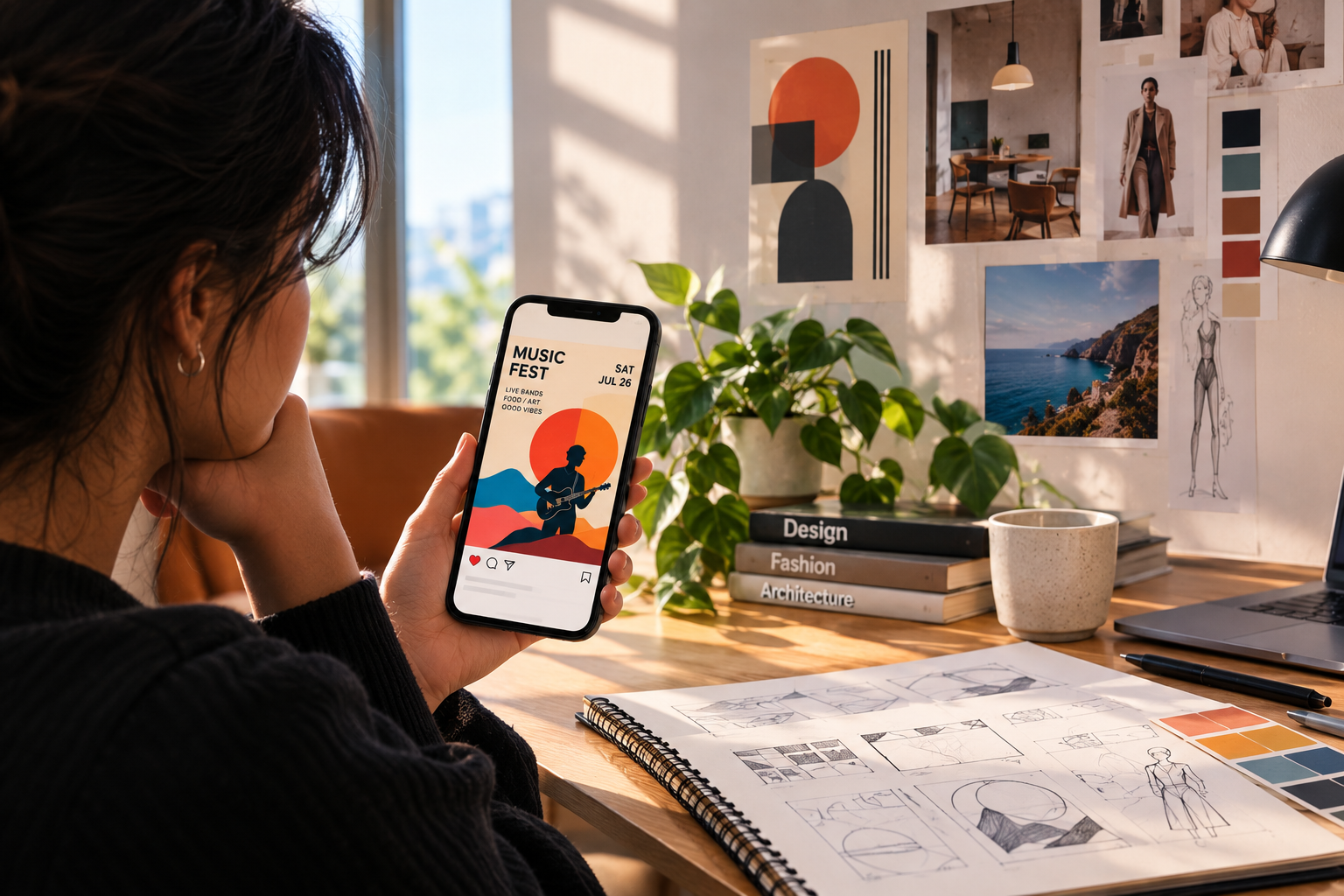
You are scrolling through your phone. Hundreds of posts pass by, and most disappear within seconds. Then something catches your attention. It might be a poster, an outfit, a beautiful room, a clever logo, or an animation that feels different. Why does one design make you stop while another is forgotten?
The answer is not always bright colours, complicated graphics, or advanced software. Instead, it often comes down to the thinking behind the work. Design thinking helps creators understand what people should notice, feel, understand, or remember. When creativity has a clear purpose, even a simple design can leave a lasting impression.
Great Design Starts Before You Create
When people imagine a designer working, they often picture someone sitting at a computer, choosing colours and arranging images. However, the real process starts much earlier.
Before creating anything, a designer needs to understand the purpose. Who is going to see it? What should they notice first? Which message needs to stand out? What kind of response should the design create?
For example, imagine creating a poster for a music event. You could fill it with photographs, fonts, colours, and information. However, if people cannot quickly understand what the event is about, the poster has missed its purpose. In many cases, removing unnecessary elements can make the final design much stronger.
Why Do Some Designs Feel Right?
You have probably experienced this without consciously thinking about it. You enter a room and immediately feel comfortable. A website opens, and you instantly know where to click. Perhaps you see product packaging and feel curious enough to pick it up.
These reactions are influenced by design choices such as colour, spacing, typography, texture, proportion, imagery, and placement. Although people may not analyse every detail, they still respond to the overall visual experience.
For this reason, design thinking is about more than making something attractive. It is about understanding how individual choices work together and influence the person experiencing the design.
A Designer Is More Than Someone With Good Taste
Having a good eye can certainly help, but design also involves problem-solving.
Suppose a brand wants to appear modern while still feeling friendly. In that situation, a designer cannot simply choose a favourite colour and start creating. Instead, they need to consider the audience, message, competition, brand personality, and where the design will eventually appear.
Rather than asking only, “What looks good?”, a designer learns to ask, “What works here, and why?”
That small change in thinking can completely transform the creative process.
Your First Idea Might Not Be Your Best
Every creative person eventually discovers that the first idea is not always the strongest one.
You might begin with a rough sketch that looks promising. Then, after changing the colour or moving an element, the composition may feel better. Perhaps removing something completely makes the message clearer. Sometimes, taking the idea in a different direction produces an even stronger result.
That is why experimentation is so important.
A design that does not work is not necessarily wasted effort. Instead, it can show you what needs to change. As a result, every attempt can teach you something about your creative process.
Design Is Already All Around You
You do not need to be inside a design studio to learn about design.
Look at your favourite café and consider why it feels different from another café. Notice how a clothing brand creates a particular impression through its colours, photography, packaging, or store design. Similarly, compare two social media posts and ask yourself why one makes you stop scrolling.
These everyday experiences contain countless design decisions.
The more carefully you observe, the more you begin to understand how colour, space, images, materials, typography, and composition influence people. Over time, ordinary surroundings can become a useful source of creative inspiration.
Different Fields, Different Creative Possibilities
Design can take you in many directions. For example, a fashion designer thinks about clothing, fabrics, silhouettes, colour, and personal expression. Meanwhile, an interior designer considers space, lighting, materials, movement, and functionality.
A graphic designer focuses on visual communication, typography, branding, and composition. Similarly, animation combines movement, timing, storytelling, and visual effects, while jewellery design can involve form, proportion, materials, detail, and craftsmanship.
Although the tools and techniques vary, the creative process remains connected: observe, understand, create, test, and improve.
Creativity Becomes Stronger When You Practise It
Collecting inspiration can be useful, but creativity becomes stronger when you actually use it.
Try redesigning a poster you see every day. Create a logo for an imaginary brand. Sketch an outfit based on something around you. Draw a simple room layout or turn a short story into an animation concept.
These small exercises can reveal your strengths while also teaching you how to approach creative problems from different angles. More importantly, regular practice helps you become comfortable with experimentation.
At KID – Krishna Institute of Design, students can explore creative disciplines through practical projects, guidance, experimentation, and portfolio development. Through project-based work, learners can move from an initial idea to an actual creative outcome while understanding the decisions involved along the way.
The Best Designers Keep Asking Questions
Design continues to evolve because technology, trends, and people’s expectations keep changing. Therefore, designers need more than technical skills; they also need curiosity.
Ask yourself: Why does this work? Why doesn’t that work? What happens if I change it? Could the same idea be communicated differently?
Questions like these encourage deeper thinking. Instead of simply following a fixed formula, you begin to understand the reasons behind creative decisions.
Start Looking at the World Differently
The next time a poster makes you stop scrolling, take a moment to think about why it caught your attention. When you enter a beautiful space, notice the elements that create its atmosphere. Likewise, when you see an outfit you love, look beyond the clothing and observe the colours, proportions, textures, and details.
Gradually, design becomes more than something you simply look at. It becomes something you understand.
Ultimately, that is where the real value of design thinking begins. Once you start seeing everyday things through a designer’s eyes, even ordinary surroundings can become a source of ideas.
Sometimes, great design does not shout for attention. It simply gives you a reason to stop and look.