Why Typography Is Becoming the Star of Modern Graphic Design
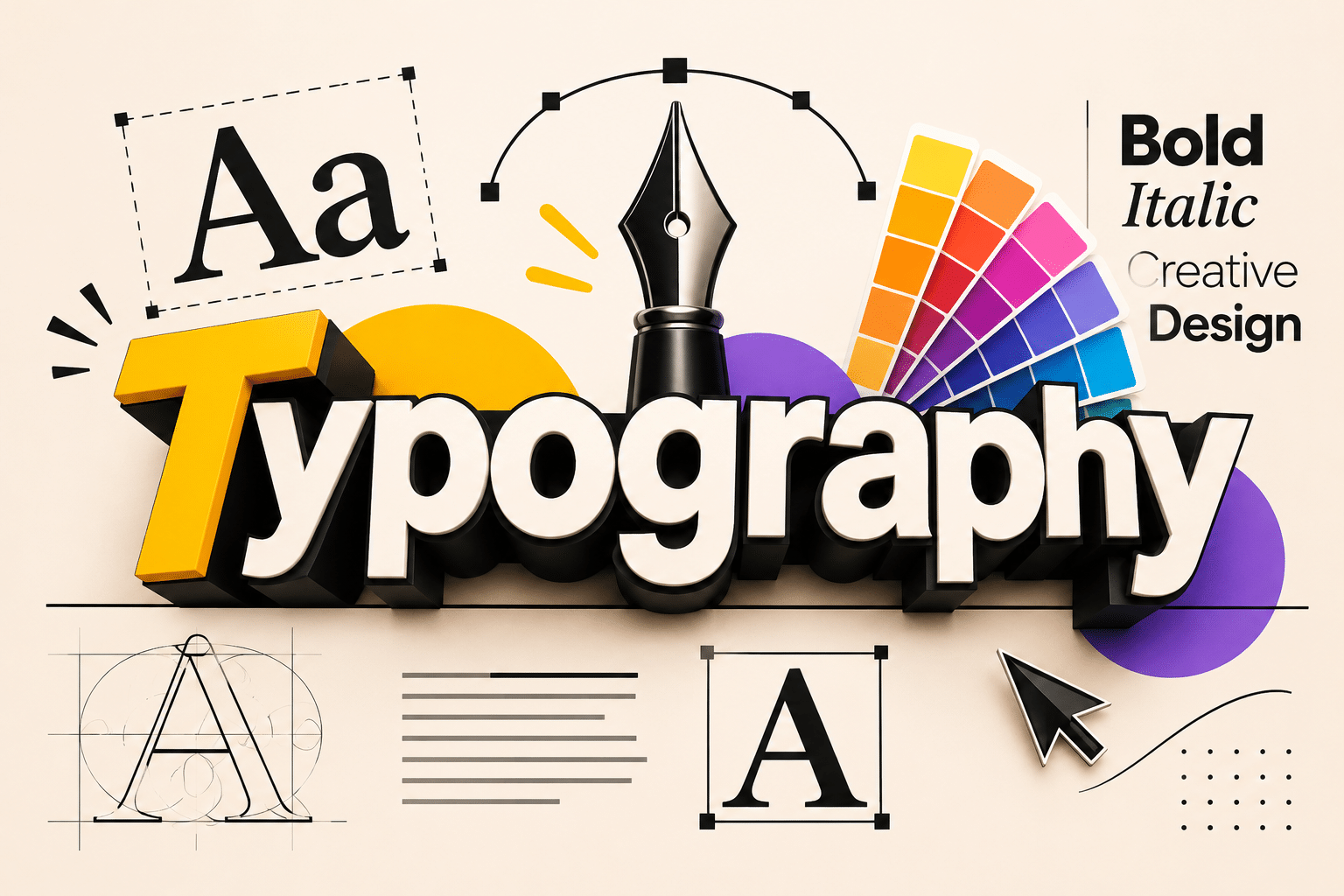
Look at your favourite advertisement, a social media poster, a magazine cover, or a brand logo. What catches your attention first? Sometimes, it is not the photograph or the colours. It is the way the words are designed.
Typography has become one of the most powerful elements of modern graphic design. Letters are no longer used only to communicate information. Their shapes, sizes, spacing, and arrangement can create emotion, express personality, and make a visual message unforgettable.
From oversized headlines and experimental fonts to bold lettering and minimalist layouts, designers are discovering new ways to make typography the centre of their creative work.
What Makes Typography So Important in Graphic Design?
Typography is the art of arranging letters and text in a visually appealing and readable way. It includes selecting fonts, adjusting spacing, creating visual hierarchy, and deciding how written content should appear within a design.
Imagine two posters containing exactly the same message. One uses ordinary text with little attention to spacing, while the other uses carefully selected fonts, strong headlines, and balanced composition. The second poster may communicate the message more effectively because its typography guides the viewer’s attention.
Good typography makes information easier to understand while giving a design its own visual identity.
1. Bold Typography Is Taking Centre Stage
One noticeable direction in modern graphic design is the use of large, expressive lettering. Oversized headlines, heavy fonts, and strong text arrangements are being used in posters, advertisements, websites, and social media graphics.
Instead of treating text as a small supporting element, designers often make it the main visual attraction.
For example, a promotional poster might use a single powerful headline across most of the layout, supported by a few simple graphic elements. This creates a clear message without making the design unnecessarily complicated.
Bold typography works particularly well when designers want to create strong visual impact and communicate information quickly.
2. Experimental Fonts Are Creating New Visual Identities
Modern designers are increasingly exploring fonts that have unusual shapes, proportions, and personalities.
Some typefaces look futuristic, while others feel playful, elegant, traditional, or handmade. These different characteristics allow designers to choose typography that matches the purpose of a project.
For example:
- Rounded fonts can create a friendly and approachable appearance.
- Serif fonts can communicate elegance and tradition.
- Geometric fonts can give a design a clean, contemporary feel.
- Handwritten fonts can add a personal and expressive touch.
- Condensed fonts can create dramatic headlines in limited spaces.
However, choosing an attractive font is not enough. It should also suit the audience, message, and overall visual style.
3. Minimalist Design Is Giving Typography More Space
Minimalist graphic design focuses on simplicity, clarity, and purposeful use of visual elements. In this approach, typography often becomes the most important feature.
A simple background, one carefully selected typeface, and a strong headline can create a memorable composition.
This style is popular for editorial layouts, branding, posters, and digital communication because it allows the message to remain clear.
The key is to use empty space thoughtfully. Proper spacing around letters and text blocks can make a design feel organised, balanced, and professional.
4. Typography Is Becoming an Important Part of Brand Identity
A brand is recognised through more than its logo. Its colours, imagery, language, and typography all contribute to its visual personality.
Some brands use bold lettering to appear energetic and confident. Others choose elegant serif fonts to communicate a premium feel. A technology brand might prefer clean geometric typography to create a modern impression.
Consistent typography helps a brand maintain a recognisable appearance across websites, packaging, advertisements, social media, and printed materials.
This is why selecting the right typeface is an important part of building a visual identity.
5. Motion Typography Is Changing Digital Storytelling
Typography is no longer limited to static designs. With motion graphics and animation, letters can move, transform, appear, disappear, and interact with other visual elements.
Motion typography is commonly used in video advertisements, promotional reels, animated titles, presentations, and digital campaigns.
Imagine a headline that gradually appears on screen, with individual letters moving in rhythm with music. The message becomes part of the visual experience rather than simply appearing as text.
For aspiring graphic designers, learning basic animation and motion design can open new creative possibilities.
6. AI and Digital Tools Are Expanding Typography Experiments
Modern design software gives designers more opportunities to explore type treatments, create layouts, and experiment with visual concepts. AI-assisted tools can also support brainstorming, image creation, and early-stage design exploration.
However, technology does not replace the need for design understanding.
A designer still needs to consider readability, font licensing, spacing, hierarchy, contrast, and the purpose of the communication. AI-generated lettering may also require correction, especially when exact spelling and precise text are important.
The strongest results come from combining digital tools with human judgement and creative direction.
7. How Can Students Develop Their Typography Skills?
Typography is a skill that improves through observation and regular practice. Students interested in graphic design can begin with simple exercises before moving towards more advanced compositions.
Here are a few useful ways to practise:
- Study fonts used in posters, magazines, advertisements, and websites.
- Create a poster using only text, without photographs or illustrations.
- Experiment with different font combinations.
- Practise adjusting letter spacing, line spacing, and alignment.
- Redesign an existing layout using a completely different typographic style.
- Explore motion typography through simple animation projects.
It is also useful to build a portfolio that includes different typography experiments. This helps demonstrate both technical understanding and creative thinking.
Why Typography Matters for Future Graphic Designers
As visual communication continues to evolve, designers need to understand how every element contributes to a message. Typography is especially important because it connects written language with visual expression.
At Krishna Institute of Design (KID), Indore, students interested in graphic design can explore creative concepts, develop design skills, and gain practical experience through projects.
Learning typography, layout design, colour theory, and visual communication can help aspiring designers build a foundation for working across branding, advertising, digital media, and other creative fields.
Conclusion
Typography is becoming the star of modern graphic design because it can do much more than display words. It can establish a visual identity, create emotion, guide attention, and make communication memorable.
Whether it is a bold poster headline, an elegant brand identity, or animated text in a digital campaign, typography gives designers another powerful way to express ideas.
For anyone entering the world of graphic design, understanding typography is not just an additional skill. It is an essential part of learning how to communicate creatively.