Love Art? Discover How Your Passion Can Shape Your Future
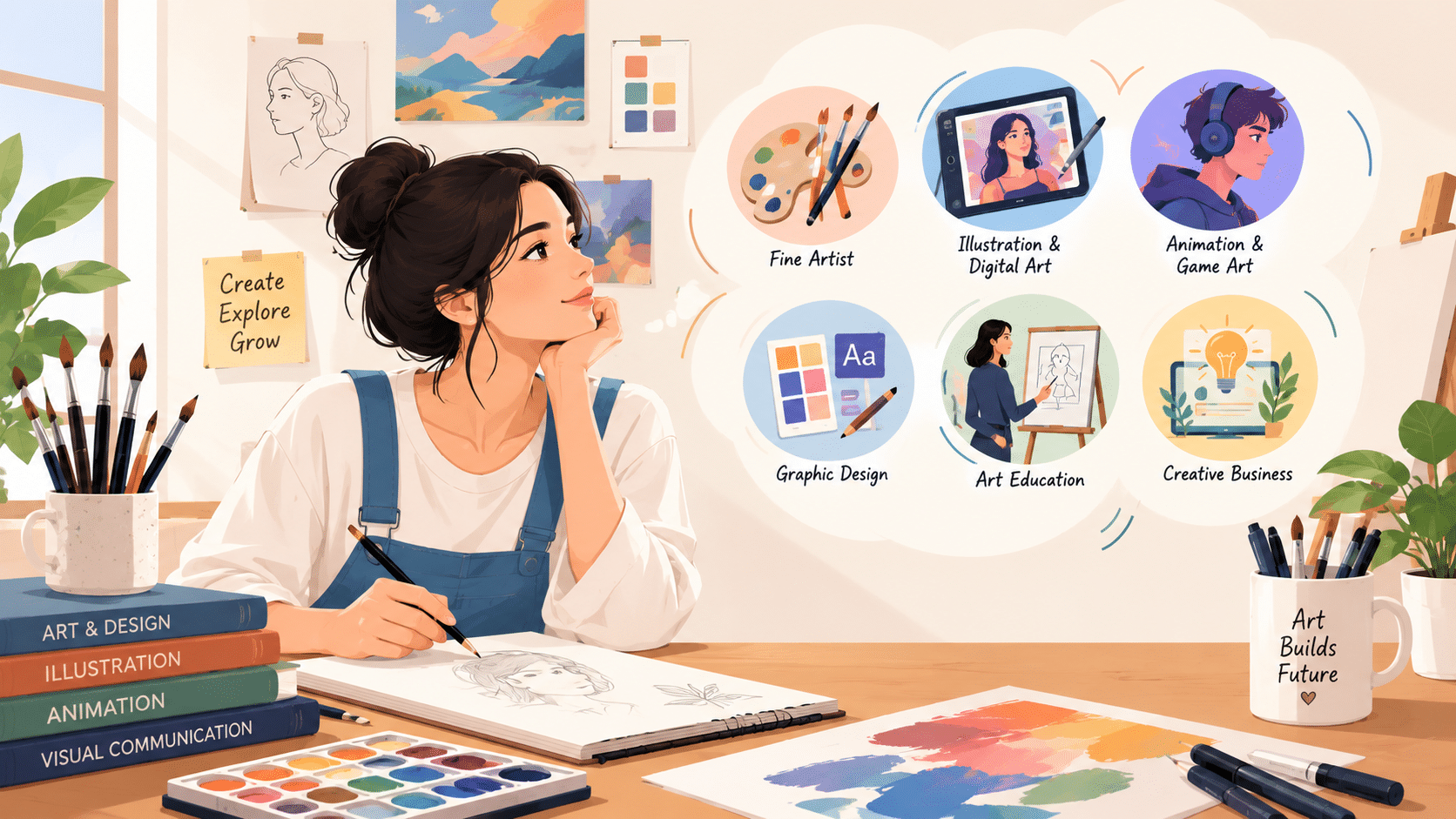
Have you ever picked up a pencil and started drawing without even realising how much time had passed? Perhaps you enjoy painting, experimenting with colours, sketching people, or turning simple ideas into something beautiful. If these activities make you happy, you may have wondered whether your love for art could become more than a hobby.
For many students, choosing a career after 12th is not easy. There is pressure to select a path that offers opportunities for the future, but personal interests matter too. The good news is that art is not limited to galleries or painting canvases. Creative skills can open doors to several fields, from illustration and animation to visual communication and digital design.
The first step is understanding your interests and discovering how you can develop them into practical skills.
Why Is Art More Than Just a Hobby?
Art allows people to communicate ideas, feelings, and experiences in ways that words sometimes cannot. A painting can express an emotion, an illustration can explain a complicated idea, and a carefully designed image can capture someone’s attention in seconds.
Practising art also teaches useful skills. You learn to observe details, solve problems, experiment with different approaches, and remain patient when something does not turn out as expected.
These abilities develop gradually. Your early sketches may not look the way you imagined, and your first painting may need several improvements. That is perfectly normal. Every attempt gives you an opportunity to learn something new.
When you begin treating creativity as a skill that can be developed, you start seeing possibilities beyond your sketchbook.
What Career Opportunities Can Art Lead To?
One of the most interesting things about studying art is the variety of directions you can explore. Your career will depend on your interests, training, experience, and the additional skills you develop.
1. Become a Professional Artist
If you enjoy creating original artwork, you can explore painting, drawing, illustration, or commissioned art. Artists may exhibit their work, collaborate on creative projects, or sell original pieces.
Building a career takes time and consistency. Developing your own style, creating a portfolio, and learning how to present your work professionally can help you move forward.
2. Explore Illustration and Digital Art
Illustration combines drawing skills with storytelling and visual communication. Illustrators may create artwork for books, magazines, advertising, educational content, and digital platforms.
Digital art also allows artists to experiment with different brushes, textures, and techniques using suitable software. A strong understanding of drawing and composition provides a useful foundation.
3. Discover Animation and Game Art
Do you enjoy imagining characters, fictional worlds, or stories that come to life? Animation and game art may be worth exploring.
These fields can involve character design, storyboarding, environment creation, and visual storytelling. Depending on your chosen role, you may need additional training in animation principles, digital tools, or 3D software.
4. Learn Graphic and Visual Design
Graphic design is another direction for students who enjoy working with images, colours, and layouts. Designers create visual material for brands, advertisements, packaging, websites, and social media.
Artistic knowledge can help you understand composition and colour, while learning typography and design software helps you apply those fundamentals to practical projects.
5. Explore Art Education and Creative Business
If you enjoy sharing your knowledge, you could explore art education after gaining the appropriate qualifications. You might also consider workshops, independent art projects, or a creative business.
These paths require communication, planning, and professional skills alongside artistic ability.
How to Start Developing Your Artistic Skills After 12th
You do not need expensive materials or advanced equipment to begin. What matters most is practising regularly and staying curious.
Start with simple exercises. Draw everyday objects, experiment with shading, study colour combinations, or paint a scene that interests you. Try working with different materials to discover which techniques you enjoy.
Once you feel comfortable, set yourself small creative challenges. Create a series of illustrations around one theme, design a poster for an imaginary event, or produce three paintings using different colour palettes.
Do not worry about making everything perfect. Instead, pay attention to what you learn during the process.
It can also help to maintain a sketchbook. Record your ideas, collect visual references, and revisit older work to see how your skills have changed. These small habits can make creative learning more consistent and enjoyable.
Why Practical Learning Makes a Difference
Reading about art can introduce you to new techniques, but practising them helps you understand how they work.
For example, studying colour theory is useful, but experimenting with colour combinations helps you recognise how different shades influence a composition. Learning about perspective becomes more meaningful when you apply it to an actual drawing.
This is why practical projects, constructive feedback, and opportunities to experiment are important when studying fine arts.
A good learning environment should encourage you to ask questions, explore different materials, and develop your own ideas. It should also help you understand where your work can improve rather than expecting you to get everything right immediately.
Choosing the Right Fine Arts Course in Indore
If you want to take your interest in art further, choosing a suitable course is an important decision.
When researching a fine arts course in Indore, look at the curriculum, practical assignments, faculty guidance, available facilities, and opportunities to build a portfolio. Check the qualification offered, admission requirements, course duration, and possible progression routes.
It is also helpful to understand how the course matches your interests. Someone who enjoys traditional painting may have different goals from a student interested in illustration or digital creativity.
Students exploring creative education can research Krishna Institute of Design (KID) and request current details about relevant programmes. Compare the available options carefully before deciding which course suits your goals.
Remember that the right course should help you develop your abilities step by step. You do not need to enter with years of experience or a portfolio full of perfect artwork to begin learning.
Build a Portfolio That Reflects Your Creativity
A portfolio is a collection of work that demonstrates your skills, ideas, and progress. It may include sketches, paintings, illustrations, experiments with materials, and selected digital projects.
Start by choosing pieces that show different aspects of your creativity. As you improve, replace weaker examples with stronger work.
You can also keep early sketches to remind yourself how far you have come. Looking back at your progress can be motivating, especially when a new technique feels difficult.
A thoughtful portfolio can help you present your abilities when exploring further education, creative projects, or professional opportunities.
Your Passion Could Be the Beginning of Something Bigger
You do not have to know exactly where your artistic journey will lead. Start by exploring what you enjoy, learning the fundamentals, and giving yourself time to improve.
Some days, your ideas will come easily. On other days, you may need to experiment, make mistakes, and try again. Both are part of becoming a better artist.
If art makes you curious about the world and gives you a way to express yourself, take that interest seriously. Practise consistently, seek feedback, and remain open to learning new skills.
Your passion may begin with a simple sketch, but with practice, guidance, and determination, it can grow into a meaningful part of your future.