Your Career Doesn’t Have to Follow the Crowd: Discover the Power of Creative Thinking
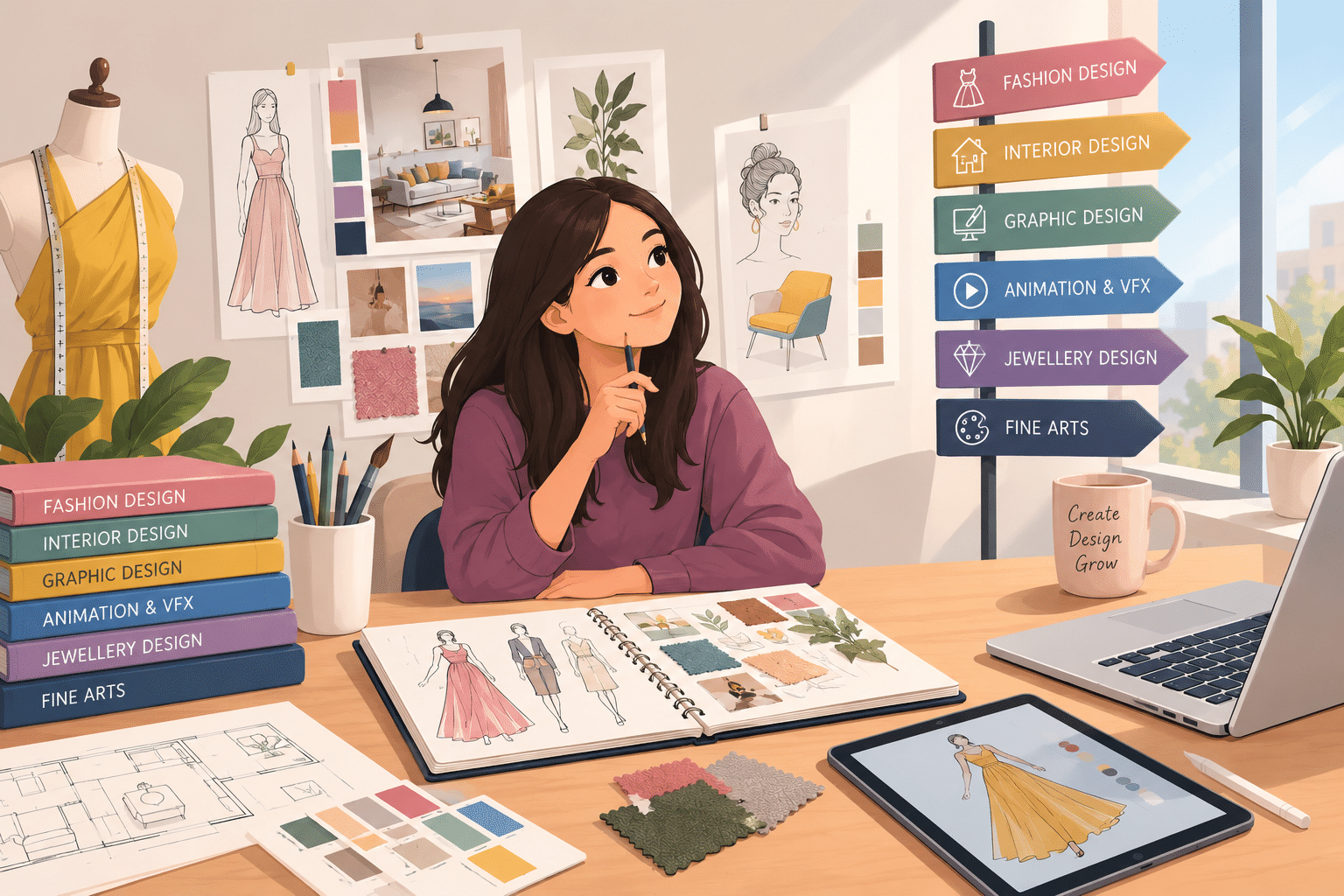
Have you ever looked at an ordinary object and imagined how it could look different? Perhaps you have wondered how a room could feel more comfortable, how a simple outfit could become more interesting, or how an image could tell a powerful story.
These small moments of curiosity are often the beginning of creative thinking.
When students think about their future after school, they frequently hear about conventional career options. While those paths suit many people, they are not the only possibilities. Some students enjoy drawing, experimenting with colours, designing clothes, arranging spaces, or creating digital visuals. For them, a creative career may be worth exploring.
The important question is not simply what career is popular. It is what kind of work allows you to use your strengths, develop new skills, and remain curious about what you do.
Creativity Is More Than Having Good Ideas
Many people believe creativity means being naturally talented at drawing or coming up with unusual ideas. In reality, creativity also involves observation, experimentation, patience, and problem-solving.
A designer may need to find a practical solution for a small room. A fashion designer might explore different fabrics to achieve the right look. A graphic designer may need to communicate a complicated message through a simple visual.
Each situation requires imagination, but it also requires careful thinking.
Creative professionals learn to test ideas, recognise problems, accept feedback, and improve their work. These abilities develop through practice rather than appearing overnight.
That is why enjoying a creative activity can be a useful starting point, even if you do not yet consider yourself an expert.
Explore the Creative Fields Around You
One of the most interesting things about creative education is the variety of directions it can offer.
Fashion Design
Fashion design combines clothing, fabrics, colours, silhouettes, and personal expression. Students interested in style can explore garment concepts, fashion illustration, and the process of developing clothing ideas.
Interior Design
Interior design focuses on creating spaces that look appealing and function well. It involves furniture arrangements, lighting, materials, colour schemes, and understanding how people use different environments.
Graphic Design
Graphic design brings images and typography together to communicate ideas. Posters, brand identities, social media graphics, packaging, and digital content are examples of where visual communication plays an important role.
Animation and VFX
Animation and visual effects combine storytelling, visual imagination, and digital techniques. These fields may appeal to students who enjoy films, motion, characters, visual worlds, and computer-based creative work.
Jewellery Design and Fine Arts
Jewellery design explores form, materials, details, and wearable objects. Fine arts offers opportunities to develop artistic expression through drawing, painting, and other visual approaches.
These fields have different requirements, so it is worth exploring their everyday work before choosing a direction.
How Can You Discover What Suits You?
You do not need to make a permanent career decision immediately. Instead, begin by paying attention to the activities that naturally interest you.
Ask yourself a few questions:
- Do you enjoy creating images, objects, or visual concepts?
- Would you rather design a physical product or create something digitally?
- Do you like solving practical problems through creative ideas?
- Are you curious about colours, materials, clothing, spaces, or storytelling?
- Would you enjoy developing one idea through several rounds of improvement?
Your answers can help you identify fields worth investigating.
You can also try small projects. Design a poster for an imaginary event, sketch a room layout, create a clothing mood board, or draw a series of illustrations. Notice which activities make you want to keep learning.
Sometimes, practical experimentation reveals more than simply reading about a profession.
Why Practical Learning Matters
Interest can introduce you to a field, but practical experience helps you understand what working in it might involve.
For example, a student interested in interior design may enjoy choosing colours but discover that measuring spaces and planning furniture layouts are equally important. Someone interested in graphic design may enjoy making images and then learn how typography, spacing, and visual hierarchy influence communication.
Working on projects allows students to experience these details.
At KID – Krishna Institute of Design, Indore, students can explore creative projects, receive guidance, and develop portfolio work. Students considering a programme should review the current curriculum, facilities, and practical learning opportunities to understand whether the course suits their goals.
The aim is to build skills gradually, experiment with ideas, and learn how to improve work through feedback and practice.
Build a Portfolio, Not Just a Collection of Finished Work
A portfolio is a useful way to demonstrate creative development. However, it does not have to contain only perfect final pieces.
Early sketches, reference boards, colour experiments, design alternatives, and refined projects can all help explain how your thinking develops.
For each project, try recording the original idea, the challenge you wanted to solve, the choices you made, and what you learned from the result.
This process can help you understand your strengths and identify areas for improvement. It can also give you useful material to present when applying for further study, internships, or relevant opportunities.
Choose Your Path With Curiosity, Not Pressure
There is no single creative career that suits everyone. Some people enjoy working independently, while others prefer collaborating with a team. Some are drawn to physical materials, while others enjoy digital tools and visual storytelling.
Before choosing a course, compare the subjects taught, practical assignments, learning environment, and portfolio opportunities. Look at actual student work where available, and ask questions about the skills you will develop.
Also remember that a creative career requires commitment. Inspiration matters, but regular practice, communication, adaptability, and continued learning are important too.
Your First Step Can Be Small
You do not need a complete career plan to begin exploring your interests. Start with one project, one sketch, one new technique, or one field you want to understand better.
Notice what excites you. Learn what challenges you. Give yourself time to improve.
Your future does not have to look like everyone else’s. The right direction may begin with something you already enjoy, followed by the willingness to practise, experiment, and discover what you can do with it.
Sometimes, the best career decision starts not with following the crowd, but with asking yourself what you would genuinely like to create.