Think You Have an Eye for Design? Here’s Where It Can Take You
Have you ever walked into a room and instantly noticed something that others didn’t? Maybe the furniture feels out of place, the colours don’t work together, or the lighting makes the room feel completely different. If you naturally notice these details, you may already have the beginning of a designer’s mindset.
Interior design starts with the ability to look at a space differently. It is not simply about choosing beautiful furniture or following the latest trends. A good interior needs to feel comfortable, function properly, and reflect the purpose of the people using it. That is why learning interior design involves both creativity and practical thinking.
For students who enjoy creating, observing, sketching, experimenting with colours, or imagining better spaces, a diploma in interior design can be a way to turn that interest into practical knowledge and creative skills.
What Makes Interior Design More Than Decoration?
Decoration can make a room look attractive, but interior design goes much deeper.
Imagine an empty living room. Before selecting a sofa or choosing a wall colour, a designer needs to think about how people will use the space. Where should the furniture go? How much room is needed for movement? Where does natural light enter? Which materials will suit the environment?
These decisions may not always be obvious when you look at the finished room, but they are what make the space work.
Interior designers learn to bring together appearance, comfort, function, and purpose.
Your Creativity Needs Direction
Having lots of ideas is a great starting point, but turning those ideas into workable designs requires practice.
A concept may look impressive on paper but create problems when applied to a real space. A furniture arrangement may leave too little walking area. A colour palette may look different under natural light. A material that looks attractive may not be suitable for the purpose of the room.
These situations are part of the learning process.
Students gradually learn to question their first ideas, test different possibilities, and make decisions based on both creative and practical requirements.
Learn to Understand Space
One of the most important parts of interior design is space planning.
Before adding anything to a room, designers need to understand its dimensions, proportions, movement, openings, lighting, and purpose. Even a small change in layout can influence how comfortable a space feels.
This is why observation matters.
Look at a café the next time you visit one. Notice where the tables are placed. Think about how customers move around. Observe the lighting, colours, textures, and seating.
You may start noticing that every detail contributes to the experience.
Practical Projects Turn Ideas Into Skills
Interior design becomes much easier to understand when students get opportunities to practise.
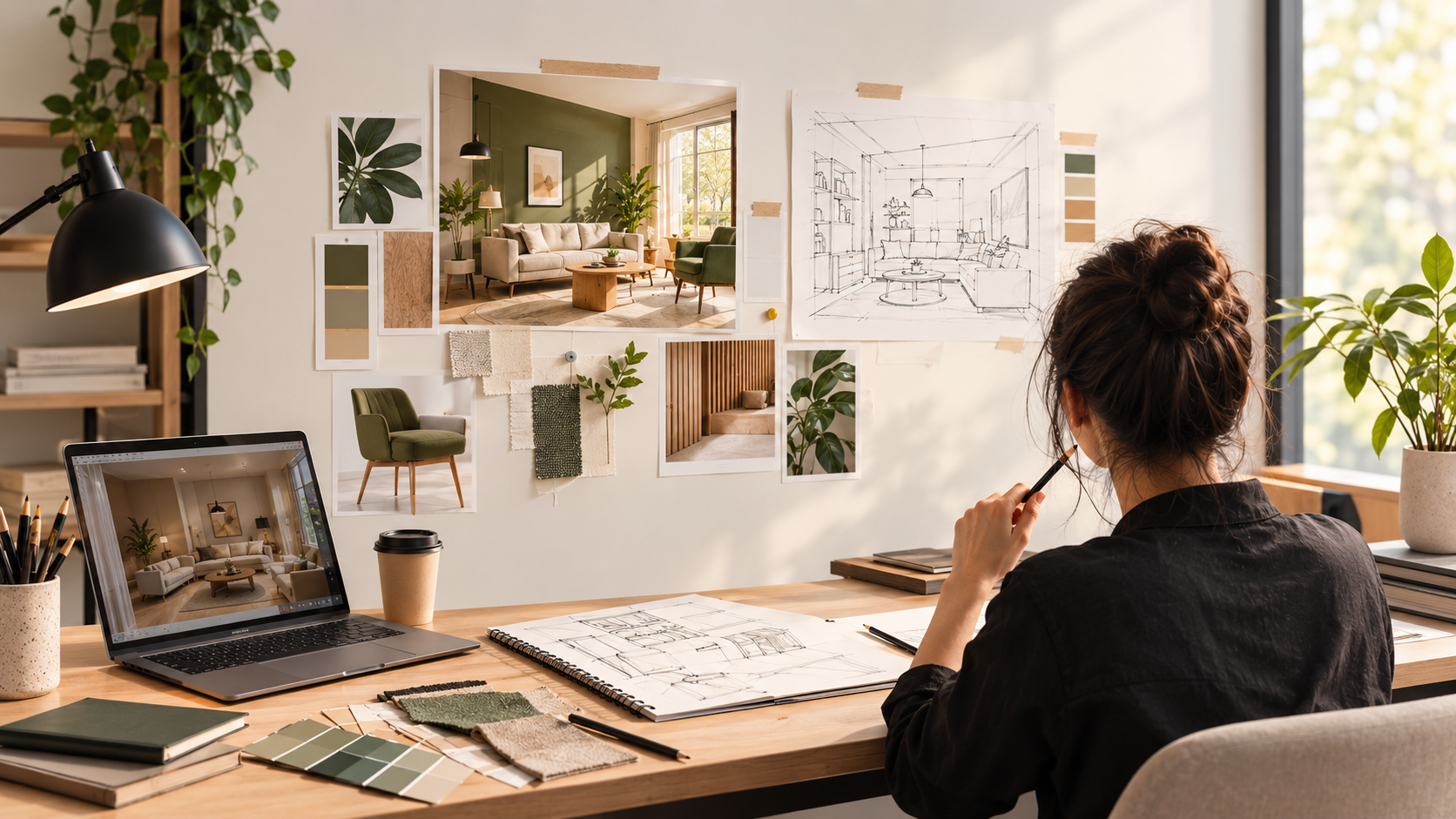
Instead of only studying concepts, project-based learning allows students to develop ideas from the beginning. A project might start with a basic requirement and gradually develop through sketches, layouts, colour combinations, mood boards, material choices, and visual presentations.
Feedback also becomes an important part of this process.
A design can be reviewed, changed, improved, and presented again. Each round helps students understand what works and what needs more attention.
At KID – Krishna Institute of Design, students can explore practical projects, receive guidance, experiment with creative ideas, and work on portfolio development while building their design skills.
Materials and Colours Can Change Everything
Interior design is also about understanding how different elements influence a space.
Wood can introduce warmth and natural character. Glass can create a feeling of openness. Textured fabrics can add softness. Metal can bring a contemporary quality.
Colours can influence the mood and visual balance of a room as well.
Learning about these elements helps students make decisions with greater purpose. Instead of choosing something simply because it looks good, they can begin asking why it belongs in a particular space.
That shift from “I like this” to “This works here because…” is an important part of becoming a designer.
Build Something You Can Show
Learning becomes more valuable when you have work to demonstrate.
Students can gradually create a portfolio containing sketches, layouts, mood boards, material explorations, colour studies, visualisations, and completed projects.
A portfolio does more than display finished images. It can show how an idea developed and how the designer approached a particular problem.
That process can help students understand their own strengths and identify areas they want to improve.
It also gives them a visual record of their creative growth.
Interior Design Can Lead in Different Directions
Not every designer follows the same path.
Some may enjoy residential interiors and creating comfortable homes. Others may prefer offices, retail spaces, restaurants, hospitality environments, styling, furniture-related work, or digital visualisation.
Exploring different areas during your learning journey can help you discover what interests you most.
The more projects you experience, the easier it can become to understand your preferred creative direction.
What Should You Look for Before Choosing a Course?
If you are considering a diploma in interior design, do not look only at the course name.
Pay attention to the learning experience.
Ask whether the course allows you to work on practical projects. Look at the type of guidance available. Consider whether you will have opportunities to explore different design concepts, develop presentations, experiment with ideas, and build a portfolio.
A good learning environment should encourage you to practise rather than simply memorise information.
After all, interior design is a skill that develops through doing.
Your Eye for Design Is Only the Beginning
You may already have the habit of rearranging your room, noticing beautiful interiors, sketching furniture, saving design references, or imagining how an empty space could look better.
Don’t underestimate those small interests.
They can become the starting point for something much bigger when combined with proper learning, practice, feedback, and patience.
A diploma in interior design can help you understand the principles behind great spaces while giving you opportunities to develop practical skills and build a portfolio of your work.
Because the best designers are not simply people who know what looks beautiful.
They are people who know how to make a space work beautifully.