Think First, Design Better: The Secret Behind Great Design
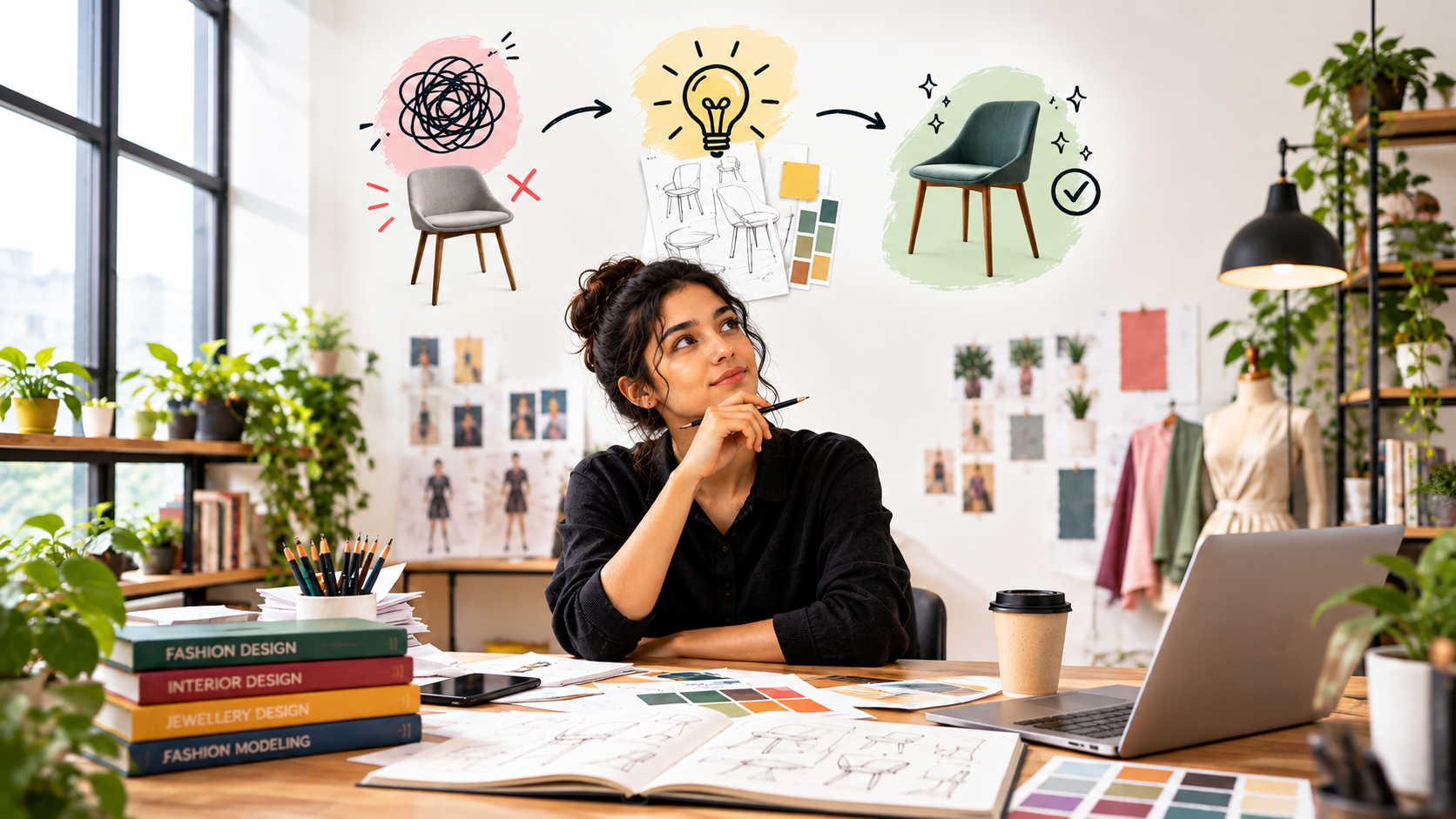
The best designs do not begin with “What should I create?” They begin with “What needs to work better?”
Think about a chair that feels uncomfortable, a website that is difficult to navigate, a room that feels crowded, or a poster that nobody notices. These may look like completely different situations, but they have something in common: each one presents a problem that design can help solve.
For students entering the creative world, this is an important shift in thinking. Design is not simply about making something attractive. It is about understanding people, identifying needs, exploring possibilities, and creating solutions that have a purpose.
What Does Design Thinking Really Mean?
Design thinking is a problem-solving approach that places people and their needs at the centre of the creative process.
Instead of jumping directly into colours, shapes, software, or materials, designers first try to understand the situation. Who will use the design? What are they trying to achieve? What is frustrating them? What could make their experience easier?
These questions provide a starting point.
The process can be useful across many creative fields, including graphic design, fashion, interior design, product design, animation, and game design.
Start by Observing, Not Designing
One of the most valuable skills for a designer is observation.
Students can learn a lot simply by paying attention to everyday experiences. Watch how people move through a space. Notice where they stop, what they ignore, and what causes confusion.
For example, an interior designer might notice that people struggle to move comfortably through a room. A graphic designer might realise that important information disappears because a poster has too many competing elements.
These observations can reveal problems that are not immediately obvious.
When you learn to see the problem clearly, the solution becomes easier to imagine.
Ask Better Questions
A weak question can lead to a weak design brief.
Instead of asking, “How can I make this look better?” ask, “Why does this need to be better?”
You can then explore questions about the audience, purpose, function, emotion, materials, accessibility, budget, and environment.
For students, this habit can make creative assignments more meaningful. Rather than designing something simply because it looks interesting, they begin to understand why each decision matters.
Research Gives Creativity Direction
Creativity does not mean working without information.
Research helps designers understand their audience, competitors, cultural influences, materials, trends, and practical limitations.
Imagine a student designing a fashion collection. Before choosing fabrics and colours, they might research the intended audience, occasion, climate, current preferences, cultural references, and material options.
Similarly, an interior design project may require research into the people using the space, available materials, lighting, functionality, and overall atmosphere.
Research does not restrict creativity. It gives creative ideas somewhere useful to go.
Your First Idea Is Only the Beginning
Students sometimes become attached to their first concept. It feels exciting, so changing it can seem unnecessary.
However, the first idea is rarely the only possibility.
Try developing several concepts. Make one simpler. Make another more experimental. Change the layout. Remove unnecessary elements. Combine two approaches.
This process can reveal a stronger solution.
Good design is often less about having one brilliant idea and more about being willing to explore several possibilities before choosing one.
Test Your Design Before Calling It Finished
A design may look perfect to its creator but feel confusing to someone else.
That is why testing matters.
Show your work to classmates, teachers, friends, or potential users. Ask what they notice first. Find out whether they understand the message or know how to use the design.
Their reactions can reveal problems you may not have noticed.
For example, a graphic may look beautiful but communicate its message poorly. A room may look stylish but create movement problems. A game concept may be visually impressive but difficult to understand.
Feedback provides an opportunity to improve.
Mistakes Are Part of the Process
One of the biggest fears among creative students is making something that does not work.
But mistakes can be useful.
A failed colour combination can teach you about contrast. A weak layout can help you understand hierarchy. An unsuccessful concept can show you what your audience actually needs.
Instead of asking, “How do I avoid making mistakes?” ask, “What can this mistake teach me?”
That mindset can make experimentation much easier.
Build Skills Through Practical Projects
Design becomes more meaningful when students get opportunities to apply what they learn.
Projects allow them to research a problem, develop ideas, create something, receive feedback, and make improvements. Over time, this process can develop creative thinking, technical ability, communication, and problem-solving skills.
At KID – Krishna Institute of Design, students can explore creative disciplines through practical projects, guidance, experimentation, and portfolio development. Working through projects can help students understand how an idea develops from an initial thought into a finished piece.
Design Is Everywhere Around You
You do not need to wait for a design assignment to practise design thinking.
Look at the world around you.
Why is one website easier to use than another? Why does one shop feel more welcoming? Why does a particular outfit work so well? Why does one poster immediately attract attention?
These simple questions can train your eye and strengthen your understanding of design.
The more you observe, the more problems and possibilities you begin to notice.
Great Design Solves Something
A beautiful design can attract attention, but a useful design can make a lasting difference.
For students, learning to think beyond appearance can be one of the most valuable steps in developing as a designer. Tools and techniques matter, but they become much more powerful when guided by observation, research, purpose, and problem-solving.
Great design does not simply decorate the world. It helps improve the way people experience it.
So the next time you begin a creative project, do not rush to open your design software or pick your colours.
Pause.
Look closely.
Ask questions.
Find the problem first.
Then start designing.